
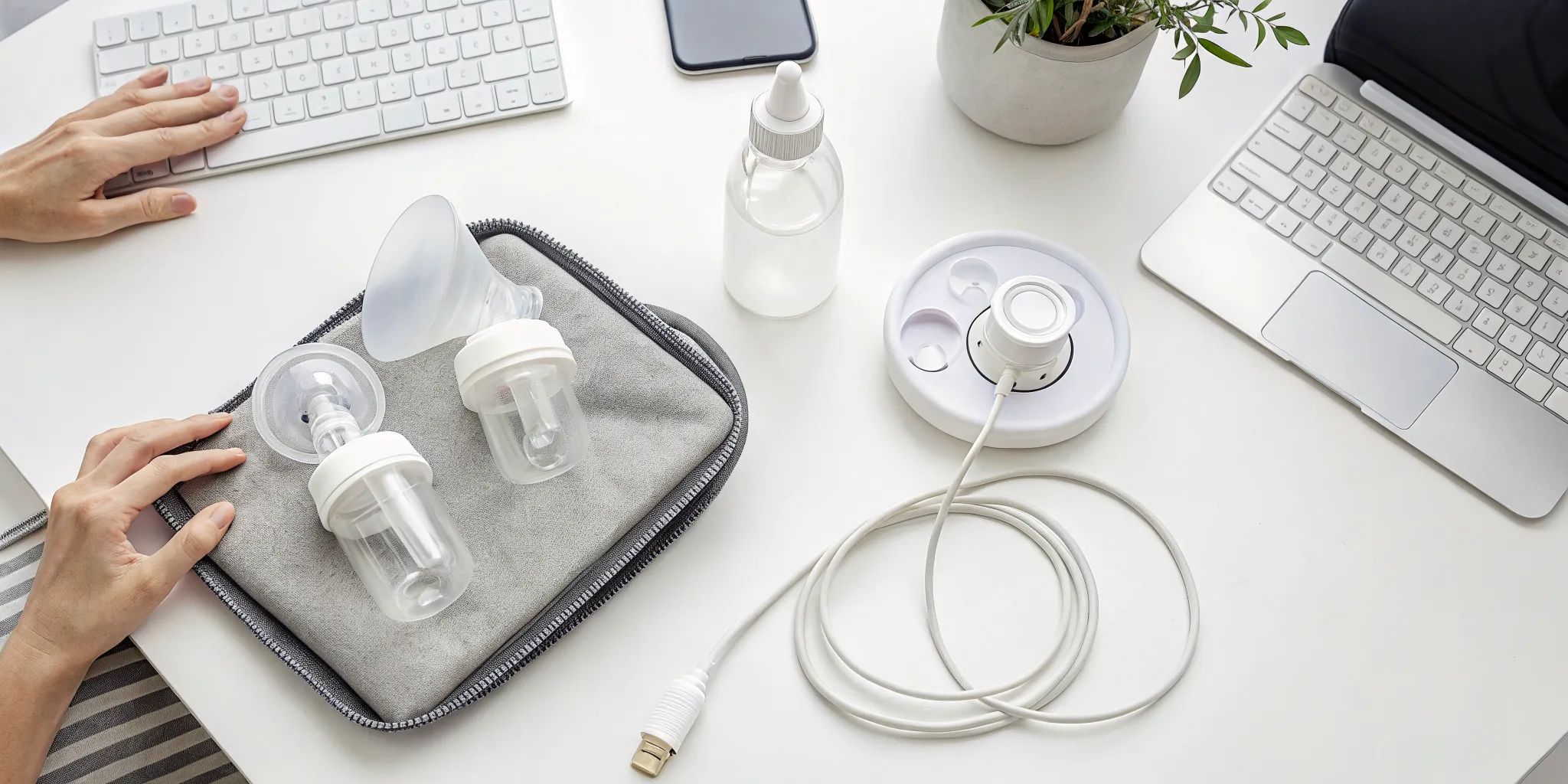
While most health insurance plans cover a breast pump, the model offered might not fit your lifestyle. This is where your Health Savings Account (HSA) becomes a game-changer. It gives you the freedom to choose the pump that truly works for you, whether it’s a discreet wearable model for pumping on the go or a hospital-grade rental for extra support. Using your HSA funds means you aren’t limited to a single option. This guide will show you how to use your pre-tax dollars to get the perfect HSA eligible breast pump and all the accessories that support your personal feeding goals.
Key Takeaways
- Use your HSA for all pumping essentials: Your pre-tax funds can cover any type of breast pump, including electric, wearable, or manual models, along with necessary accessories like storage bags, replacement parts, and nipple cream.
- Always save your itemized receipts: This is your proof of purchase, which you will need if you pay out-of-pocket and file for reimbursement or if your HSA provider ever requests verification.
- Combine your HSA with insurance benefits: While your insurance plan likely covers a basic pump, you can use your HSA to pay for a model upgrade, a second pump for work, or any extra supplies your plan doesn’t include.
What Makes a Breast Pump HSA Eligible?
Using your Health Savings Account (HSA) for a breast pump is a smart way to manage your expenses as you prepare for your new baby. But what exactly makes a pump eligible? It all comes down to how the IRS classifies these devices. Thankfully, the rules are pretty straightforward, and once you understand them, you can shop with confidence. Let’s walk through what you need to know about medical necessity and the simple paperwork you’ll want to hold onto.
Understanding the IRS Rule for Medical Necessity
The simple reason you can use your HSA funds for a breast pump is that the IRS officially recognizes it as a medical expense. Because pumps and related supplies are used to assist with lactation, they fall under the category of qualified medical care. This means you don’t need a special doctor’s note or prescription just to make the purchase eligible. The IRS guidelines are clear that breast pumps and the supplies that help you produce and store milk are covered, making it easy to use your pre-tax dollars for these essential items.
The Paperwork You’ll Need to Keep
While you don’t need a prescription to buy a pump with your HSA, keeping good records is a must. Always hang on to your itemized receipts. This is your proof that the purchase was for a qualified medical expense, just in case you ever need to verify it. Whether you pay directly with your HSA card or use another card and file for reimbursement, that receipt is your key. It’s a simple habit that can save you a lot of hassle later on, so be sure to save your proof of purchase in a safe place.
Which Breast Pumps Can You Buy with an HSA?
When you’re preparing for a new baby, figuring out what’s covered by your Health Savings Account (HSA) can feel like a puzzle. The good news is that when it comes to breast pumps, the rules are refreshingly simple. Because they are used to produce and store breast milk, the IRS considers them a qualified medical expense. This means you can use your HSA funds to purchase one.
The even better news? This applies to all kinds of pumps. Whether you’re looking for a standard electric model, a discreet wearable pump, a simple manual one, or even a hospital-grade rental, you can use your pre-tax dollars to pay for it. This flexibility lets you choose the best pump for your body, lifestyle, and feeding goals without worrying about eligibility.
Popular Electric Breast Pump Models
Standard electric breast pumps are the go-to for many parents, and for good reason. They are efficient, reliable, and great for establishing and maintaining your milk supply, especially if you plan to pump regularly. You’ll find that models from well-known brands like Medela, Spectra, and Lansinoh are all HSA-eligible.
Whether you need a double electric pump to save time or a more compact single model for occasional use, you can confidently use your HSA card for the purchase. Most major retailers that sell breast pumps are set up to accept HSA payments, making the process straightforward. Just be sure to check the eligibility list if you’re considering a lesser-known brand.
Manual and Hospital-Grade Options
Your HSA eligibility isn’t limited to electric pumps. Manual pumps, which are lightweight, portable, and perfect for travel or occasional relief, are also a qualified medical expense. They’re a fantastic, low-cost option to have on hand, and you can buy one without hesitation using your HSA funds.
On the other end of the spectrum are hospital-grade pumps. These are powerful, multi-user pumps often recommended for parents who need to establish a supply or are dealing with certain medical situations. While they are expensive to buy outright, they are commonly rented. The great news is that these rental fees are also an HSA-eligible expense, ensuring you have access to the equipment you need.
What About Wearable Pumps?
Yes, those discreet, hands-free wearable pumps you’ve seen are absolutely HSA-eligible. This is a game-changer for parents who need to pump on the go, at work, or while caring for other children. Brands like Willow, Elvie, and Momcozy have made it possible to pump without being tied to a wall outlet, and you can use your HSA to invest in that freedom.
For example, many popular Momcozy pumps are eligible, including their M5, S12 Pro, and V2 models. As these pumps have become essential tools for modern parents, they are widely recognized as a qualified medical expense, making them an accessible option for your feeding journey.
What Pumping Accessories Are HSA Eligible?
When you’re planning for a new baby, it’s great to know that your Health Savings Account (HSA) can cover more than just the breast pump itself. Many of the accessories you’ll need for a smooth and comfortable pumping experience are also considered qualified medical expenses. This means you can use your pre-tax HSA dollars to purchase them, which helps your budget go further. Think of it this way: if an item is essential for collecting and storing breast milk, there’s a good chance it’s eligible. Let’s get into the specifics of what you can stock up on.
Milk Storage Bags and Bottles
One of the most practical parts of your pumping journey is figuring out how to store all that liquid gold. Thankfully, your HSA funds can be used to buy both milk storage bags and bottles. These are considered essential for safely preserving breast milk for your baby. Whether you’re building a freezer stash before returning to work or just need a way to store milk between feedings, you can purchase these supplies with your HSA card. This eligibility makes it much easier for nursing mothers to store and transport breast milk without paying entirely out of pocket.
Essential Replacement Parts
To keep your breast pump working effectively and hygienically, you’ll need to replace certain parts over time. The good news is that all of these essential components are HSA-eligible. This includes items like tubing, flanges of different sizes, valves, membranes, and backflow protectors. Wear and tear on these parts can reduce your pump’s suction and overall performance, so being able to replace them with HSA funds is a huge help. Keeping your pump in top shape is crucial for maintaining your milk supply, and thankfully, all the essential replacement parts are covered.
Nursing Pads and Other Comfort Items
Your comfort is a key part of the breastfeeding and pumping process, and your HSA can help with that, too. Items that make the experience more manageable are often eligible for purchase. This includes nursing pads, both disposable and reusable, which help you stay dry and comfortable throughout the day. Additionally, you can use your HSA to buy nipple creams and ointments, such as lanolin, to soothe and protect your skin. These comfort items are recognized as necessary supplies, ensuring you can take care of yourself while you take care of your baby.
How to Buy a Breast Pump with Your HSA
So, you know a breast pump is an HSA-eligible expense, which is great news. But what are the actual steps to buy one using those pre-tax dollars? It’s simpler than you might think. You generally have two main options: paying directly with your HSA card or paying with your own money and getting reimbursed later. The best path for you depends on where you’re shopping and what your HSA provider allows. Let’s walk through exactly how each method works so you can choose the one that feels easiest for you.
Pay Directly with Your HSA Card
The most straightforward way to buy your breast pump is to use your HSA card at checkout, just like you would with a regular debit card. Many retailers, both online and in-store, are set up to process these payments directly. When you’re shopping, keep an eye out for items clearly marked as “HSA-eligible” to ensure a smooth transaction. Your HSA card pulls funds directly from your health savings account, so there’s no need to file paperwork for reimbursement later. It’s a simple, one-step process that lets you use your funds immediately for the supplies you need.
Get Reimbursed for Your Purchase
If a retailer doesn’t accept HSA cards directly, or if you simply prefer to use your personal credit card (hello, points!), you can pay out-of-pocket and get reimbursed. Just buy the breast pump with your own money and hold onto the itemized receipt. This part is crucial. You’ll then need to submit a claim with that receipt to your HSA provider. They will process it and either send you a check or make a direct deposit into your bank account. It’s an extra step, but it ensures you can get your money back for any eligible purchase, no matter where you shop.
Find Retailers That Accept HSA
Finding a place to buy your breast pump with an HSA is getting easier all the time. Many large retailers like Target and Walmart, as well as pharmacies like CVS and Walgreens, accept HSA cards for qualified medical expenses. You can also shop at specialty online stores that focus on breastfeeding supplies. These sites often make it very clear which products are eligible and allow you to use your HSA card just like a regular credit card at checkout. To avoid any guesswork, look for an HSA/FSA Store section on a retailer’s website or check for eligibility labels on the product page before you buy.
Can You Use an FSA for a Breast Pump?
Yes, you absolutely can. Using a Flexible Spending Account (FSA) is a smart way to cover the costs of a breast pump and other essential supplies. Think of it as using pre-tax dollars to buy the things you need for your feeding journey, which can save you a good amount of money.
It’s not just about the pump itself. Many related items are also covered. This means you can use your FSA funds for things like milk storage bags, replacement pump parts, and even nursing pads. It’s all about making the process a little easier on your budget so you can focus on what matters most.
How FSA Eligibility Works
So, how does this all work? The IRS gives the green light to “breast pumps and supplies that assist lactation” as qualified medical expenses. This is the official rule that makes these items eligible for purchase with your FSA funds. Because the language is a bit broad, it covers a wide range of helpful breastfeeding supplies.
If you ever find yourself wondering whether a specific item is covered, the best approach is to check with your FSA provider before you buy. A quick call or email can give you the confidence that your purchase will be approved, saving you any potential headaches later on.
HSA vs. FSA: Key Differences to Know
You might also hear about Health Savings Accounts (HSAs) and wonder how they differ from FSAs. An FSA is an account you set up through your employer to set aside pre-tax money for healthcare costs. An HSA, on the other hand, is typically paired with a High Deductible Health Plan (HDHP).
The biggest difference is that HSA funds roll over year after year and can even grow with tax-free interest, making it a long-term savings tool. FSA funds usually have a “use it or lose it” rule, meaning you need to spend the money within the plan year. It’s also worth noting that you can’t have an HSA if you’re enrolled in Medicare or certain other health plans.
Where to Buy Your HSA-Eligible Breast Pump
Once you know which breast pump and accessories you need, the next step is figuring out where to buy them. The great news is that you have plenty of options, whether you prefer the convenience of shopping from your couch or want to see the products in person. Most major retailers and specialty stores make it easy to use your HSA funds. The process is usually as simple as using a debit card, but there are a few things to keep in mind to make sure your purchase goes smoothly. Let’s walk through how to handle both online and in-store shopping.
Shopping Online
Shopping online is often the most convenient way to buy your breast pump. Many websites that specialize in maternity and baby gear allow you to pay directly with your HSA debit card at checkout. They often have entire sections dedicated to FSA and HSA eligible items, which takes the guesswork out of your purchase. If an online store doesn’t accept HSA cards directly, don’t worry. You can simply use your regular credit or debit card to complete the purchase. Just be sure to save the itemized receipt from your order so you can submit it to your HSA provider for a quick reimbursement.
Buying In-Store
If you prefer to shop at a physical store, you can still easily use your HSA funds. Many large retailers, like Target or Walmart, and pharmacies are set up to accept HSA cards right at the register. You can use it just like you would any other debit card. Before you head to the checkout line, it’s a good idea to confirm with the store that they accept HSA payments. If a store doesn’t take HSA cards, you can pay with another method and get reimbursed. Just ask for a detailed receipt that clearly lists the breast pump and any other eligible supplies you bought.
What Proof of Purchase Do You Need?
Buying a breast pump with your Health Savings Account (HSA) is a smart move, but the process doesn’t end at checkout. To make sure everything is squared away with your account administrator, you need to keep good records. Think of it as the final, simple step to confirm your purchase. The main goal is to have clear proof that you bought a qualifying medical device.
You’ll need to hold onto itemized receipts that spell out exactly what you bought and when. This isn’t just any receipt; it needs to show the specific item, like “Electric Breast Pump,” rather than a generic “store purchase.” This documentation is your proof if your HSA provider ever asks for it. Keeping your paperwork organized from the start saves you from scrambling to find it later. It’s a small habit that provides peace of mind and ensures you’re using your health funds correctly.
How to Save Your Receipts Correctly
Keeping the right kind of receipt is key to a smooth HSA experience. If you pay for your breast pump with a personal debit or credit card and plan to get reimbursed, saving the receipt is non-negotiable. You’ll need it to submit your claim. The best receipt is an itemized one that clearly lists the breast pump and any other HSA-eligible supplies you bought.
If you’re shopping at a store that accepts HSA cards directly, the transaction might feel simpler, but it’s still wise to keep the receipt. If a store doesn’t take HSA cards, just use your own card and ask for a detailed receipt. This little piece of paper is what confirms your purchase meets the requirements for reimbursement.
When You Need a Prescription
While you often don’t need a prescription to buy a breast pump, having one can be incredibly helpful for your HSA records. A prescription or a letter of medical necessity from your doctor or a lactation consultant officially confirms that the pump is a medical need. This document can be a powerful tool to have on hand, especially if your HSA administrator requests more detailed proof. It removes any doubt about the eligibility of your purchase. Think of it as extra insurance that guarantees your expense will be approved without any issues.
How to Get the Most from Your HSA
A Health Savings Account is more than just a way to pay for things; it’s a tool to help you manage your health expenses wisely. When you’re preparing for a new baby, every dollar counts, and using your HSA effectively can make a real difference. Think of it as your dedicated health fund, ready to support you with pre-tax money when you need it most.
Getting the most from your HSA means being proactive. It involves a little planning, understanding how it works with your insurance, and knowing what common pitfalls to sidestep. By thinking ahead about your maternity needs, you can cover essential items like your breast pump and supplies without the financial strain. You can also use your HSA to fill in the gaps left by your insurance policy, ensuring you get exactly what you need. A few simple steps can help you use your account with confidence and make your money go further.
Plan Your Maternity Expenses
Using your HSA is a smart way to save money on essential breast pumps and breastfeeding supplies. Because the money in your HSA is pre-tax, you’re essentially getting a discount on every eligible item you buy. This can significantly lower your out-of-pocket costs for necessary gear during your pregnancy and postpartum journey. Before your baby arrives, take some time to list the items you’ll need, from the pump itself to milk storage bags and replacement parts. This helps you budget your HSA funds and ensures you’re prepared from day one.
Combine Your HSA with Insurance Coverage
Your health insurance and your HSA can work together. The Affordable Care Act (ACA) requires most insurance plans to cover one breast pump for each pregnancy. However, you might want a second pump for work, an upgrade to a model your insurance doesn’t fully cover, or extra parts. This is where your HSA comes in. You can use your HSA funds to pay for these additional expenses that your insurance policy doesn’t include. This combination gives you the flexibility to get the basic necessities covered while using your savings for the extras that make your life easier.
Avoid These Common Mistakes
A little bit of caution can prevent some common headaches when using your HSA. First, if you’re ever unsure whether a product is a qualified medical expense, it’s always best to ask your HSA provider before you buy it. A quick call or email can save you from an unexpected out-of-pocket cost. Second, make it a habit to keep all receipts for your breastfeeding-related purchases. Your HSA provider might ask for them as proof of an eligible expense, so having them organized in a folder or digitally will make the process smooth and stress-free.
Related Articles
- 24 FSA & HSA Eligible Expenses You Didn’t Know About (2025)
- The Ultimate Guide to HSA Eligible Products
- 5 Platforms for HSA/FSA Eligibility & Reviews
Frequently Asked Questions
Do I need a prescription to use my HSA for a breast pump? No, you typically don’t need a prescription. The IRS already considers breast pumps and lactation supplies to be qualified medical expenses, so you can buy them without a doctor’s note. However, having a letter of medical necessity from your doctor can be helpful for your own records, just in case your HSA administrator ever needs extra proof.
My insurance covers a basic pump, but I want a better one. Can I use my HSA for the upgrade? Yes, this is a great way to use your HSA funds. You can use your insurance benefit to get the covered pump and then use your HSA to pay for a second pump, like a wearable model for work, or to cover the cost of an upgrade that your insurance doesn’t fully pay for. This gives you the flexibility to get the equipment that truly fits your needs.
Are hands-free wearable pumps really HSA-eligible? They absolutely are. The rules for eligibility apply to any device that assists with lactation, which includes all those convenient, hands-free pumps from brands like Willow, Elvie, and Momcozy. You can use your HSA card with confidence to purchase a wearable pump that gives you the freedom to pump on the go.
Besides the pump, what are the most useful accessories I can buy with my HSA? Your HSA can cover many of the supplies you’ll use daily. Milk storage bags are one of the most practical eligible items for building a freezer stash. It’s also smart to use your funds for essential replacement parts like flanges, valves, and tubing to keep your pump working well. Comfort items like nursing pads and nipple cream are also covered and can make your experience much more pleasant.
What happens if I accidentally buy something that isn’t eligible with my HSA card? It’s a common worry, but it’s usually an easy fix. If you realize you’ve purchased a non-qualified item, the best thing to do is contact your HSA provider. They can walk you through the process of returning the funds to your account to avoid any tax issues. To prevent this, it’s always a good idea to confirm an item’s eligibility before you check out.