
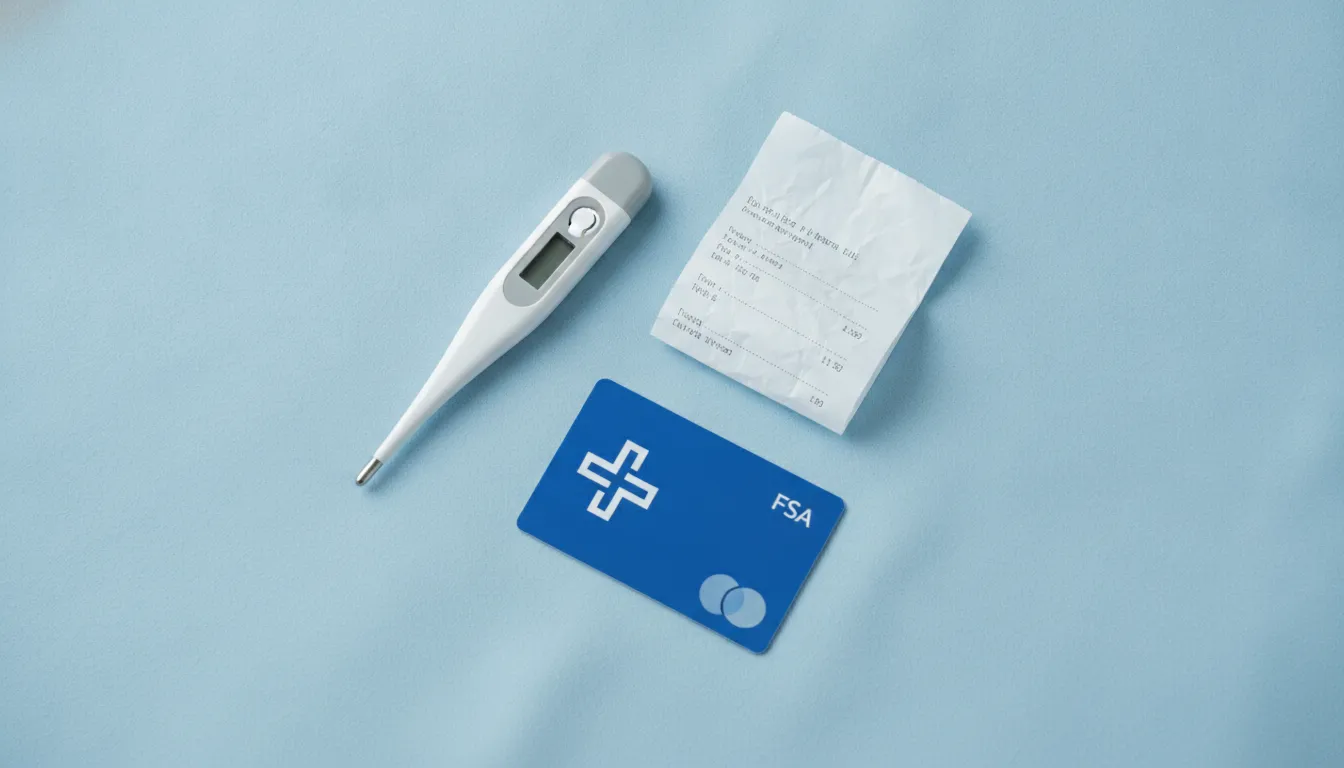
A declined FSA card does not mean the thermometer in your cart is ineligible. The missing piece is often the retailer’s checkout system, not the medical device itself.
Ready to shop with fewer FSA surprises? Use Daylii to check FSA eligibility before you buy.
An FSA eligible thermometer is generally any body-temperature device bought to monitor health, including digital, infrared, forehead, ear, oral, underarm, and rectal models. These over-the-counter medical devices usually qualify without a prescription, but they are not covered by a Limited-Purpose FSA or Dependent Care FSA. You can pay with your FSA card at a compatible retailer or pay another way and request reimbursement if the card declines. Keep an itemized receipt with the merchant, date, product description, price, and total; FSAFEDS says credit card receipts alone do not meet acceptable documentation requirements. Your plan makes the final decision, so confirm unusual models or bundles directly with your FSA plan administrator before buying.
The real question is not just whether thermometers qualify, but how to buy one without creating a reimbursement headache. Start with the core eligibility rule, then separate approval from payment. From there, the process gets easier: pick a medical thermometer, confirm your account type, keep the right receipt, and know what to do if checkout says no.
FSA eligible thermometer: the quick answer
Are thermometers FSA eligible?
Yes. A thermometer generally qualifies for FSA reimbursement because it is a diagnostic medical device used to check body temperature. It may also qualify through an HSA or HRA. For broader context, see Daylii’s guide to FSA eligible products.
Eligibility does not always mean an FSA card will work at checkout. A card may be declined when a store’s payment system cannot confirm that the item qualifies. In that case, you may need to pay another way and request reimbursement from your plan.
Which account types may cover a thermometer?
A standard health FSA, HSA, or HRA will generally cover a thermometer used to monitor health. The final decision still rests with your plan or account administrator. Review your plan documents before buying if the product includes added features that are not clearly medical.
A limited-purpose FSA, or LPFSA, is different. It is usually limited to dental and vision costs, so a thermometer generally does not qualify. A dependent care FSA, or DCFSA, pays eligible care costs rather than medical products. It generally will not cover a thermometer either.
Account names can look similar, but their rules serve different needs. If you are unsure which account you have, check the plan portal or ask the administrator. Daylii’s guide to FSA eligible items can also help explain the basic eligibility rules.
What should you keep for reimbursement?
Save an itemized receipt even if your benefits card works. The receipt should clearly show the seller, purchase date, thermometer description, price, and total paid. A plain card slip may not be enough if your administrator later asks for proof.
Documentation rules can vary by plan, so follow the instructions in your benefits portal. The federal FSAFEDS program notes that the IRS may request itemized receipts to verify expenses. It also states that credit card receipts alone do not meet acceptable documentation rules. See the FSAFEDS eligible expense guidance for that standard.
The practical answer is simple: a thermometer is generally eligible under a health FSA, HSA, or HRA. Confirm your account type, keep a clear receipt, and follow your plan’s claim process if the card is declined.
Which thermometer types usually qualify?
A thermometer usually qualifies when its main purpose is checking body temperature for health care. The format matters less than the medical use. Digital, ear, forehead, no-touch, and smart models can all be an FSA eligible thermometer.
Still, a product listing should clearly call the item a thermometer or medical device. Avoid bundles whose main value comes from unrelated wellness features. Daylii’s guide to FSA eligible products explains how product purpose shapes eligibility.
Common thermometer formats
Each format has tradeoffs in speed, contact, placement, and ease of use. The best choice is the one your household can use as directed. Check the details before buying, since technique and the intended measurement site can affect the reading.
| Type. | Use. | Benefit. | Caution. |
|---|---|---|---|
| Digital oral, rectal, or underarm. | Direct contact reading. | Simple and often low cost. | Confirm approved measurement sites. |
| Ear. | Reading inside the ear canal. | Fast for many families. | Check age guidance. |
| Forehead or temporal. | Reading across the forehead. | Quick with little discomfort. | Follow placement directions. |
| Infrared or no-touch. | Reading without skin contact. | Useful when limiting contact. | Confirm body temperature use. |
| Smart thermometer. | Reading with app tracking. | Stores results and trends. | Separate medical features from extras. |
Medical use and product labels
Look for clear wording about body-temperature measurement, not room, food, bath, or industrial use. A general infrared scanner may look similar to a no-touch medical thermometer. Yet its stated purpose can make the eligibility case much weaker.
Smart models also need a clear medical purpose. App syncing and saved readings can support that purpose, but unrelated add-ons should not drive the purchase. For more examples across health categories, review Daylii’s guide to FSA eligible items.
Receipt and checkout checks
Before checkout, confirm the receipt will name the thermometer instead of showing only a vague department code. Keep the product page or packaging if the item name is unclear. These records can help explain what you bought during a reimbursement review.
An FSA card decline does not always mean the thermometer is ineligible. The store or checkout system may not process the item correctly. If you submit a claim, use an itemized receipt. FSAFEDS says credit card receipts alone do not meet documentation requirements.
Why an eligible thermometer can still decline at checkout
An FSA eligible thermometer may qualify as a medical expense, yet the card can still decline. Eligibility describes the product and its medical use. Card acceptance depends on the store, its checkout system, and the purchase details sent for approval.
Why the register says no
Many FSA cards rely on retailer and product coding to approve a purchase at the register. A health-focused merchant is more likely to have systems that flag eligible products correctly. At another store, the same thermometer may not be recognized by the card system.
Product data can also cause trouble. The retailer may have an incomplete or incorrect eligibility flag for that thermometer’s SKU. This is a checkout data issue, not proof that the thermometer fails the plan’s rules.
A mixed cart adds another layer. Eligible health items may sit beside groceries, beauty products, or other purchases that do not qualify. Some checkout systems separate those charges, while others may decline the card or ask for another payment method.
- The merchant may not support FSA or HSA card payments.
- The thermometer’s SKU may lack the right eligibility flag.
- A mixed cart may include products the card cannot cover.
- The available account balance may be lower than the eligible total.
A simpler checkout retry
First, ask the cashier to ring up the thermometer by itself. This removes unrelated products from the approval request. If the card still declines, try a health-focused retailer or choose a clearly labeled option from its eligible product section.
Before buying, compare the product against a trusted guide to FSA eligible items. Also check your plan details and account balance. An item’s general eligibility does not guarantee that every plan or card network will approve it at checkout.
Online checkout can present the same issue. Confirm that the seller accepts FSA or HSA cards, then review which cart items show as eligible. If needed, place the thermometer in a separate order and use another payment method for the rest.
What to do after a decline
A declined card does not always end the purchase. You can pay with a personal card and seek reimbursement from your plan administrator. Save the full itemized receipt, not only the payment slip or card statement.
FSAFEDS says the IRS may request itemized receipts to verify eligible expenses. Its guidance also says credit card receipts alone do not meet documentation rules. Keep a receipt that shows the merchant, purchase date, item description, price, and total.
- Take a clear photo of the itemized receipt before it fades.
- Keep the product page or package showing the thermometer model.
- Submit the claim through your plan’s reimbursement process.
- Contact the plan administrator if the claim needs more proof.
For more context before submitting a claim, review Daylii’s guide to FSA eligible products. Plan rules and document requests can vary, so follow the instructions from your own administrator.
What documentation should you keep?
Keep an itemized receipt for every thermometer purchase, even when your FSA card works at checkout. Your plan administrator may ask for proof that the expense was eligible. The FSAFEDS documentation guidance says credit card receipts alone do not meet acceptable documentation rules.
Details your receipt should show
A useful receipt makes the purchase easy to review. It should name the merchant or provider and show the purchase date. It should also list the product description, each item’s price, and the total amount paid.
- Merchant or provider name
- Date of purchase
- Clear product description, such as digital oral thermometer
- Itemized price for the thermometer
- Total purchase amount
Check that the product description is clear before leaving the store. A vague label, product code, or shortened name may not show that you bought a thermometer. If needed, save the product page or order confirmation with the receipt. These extra records can help explain an unclear line item.
Why a card receipt may not be enough
A credit card slip usually proves only that you paid a merchant on a certain date. It often does not show what you bought. That missing detail matters when a plan administrator reviews whether an expense qualifies.
An FSA card approval also does not replace your records. Eligible items can face checkout issues at some retailers, while an approved charge may still need review. Keep the full itemized receipt with your account records instead of relying on the card statement.
If you are unsure how a thermometer fits within broader eligibility rules, review Daylii’s guide to FSA eligible items. Your plan documents remain the final source for its claim rules and required proof.
A simple recordkeeping routine
Take a clear photo of the receipt as soon as you buy the thermometer. Paper receipts can fade, tear, or get lost. Give the file a simple name with the purchase date and product, then store it with any claim confirmation.
For online orders, download the final invoice after the item ships. A cart screenshot may not show the completed purchase or final amount. Keep the invoice, order confirmation, and any message from your plan administrator together.
Save proof that links the exact model to its medical use when the receipt uses a vague label. Daylii’s overview of an FSA eligible thermometer can provide useful context, but it does not replace your plan’s required documents.
Before submitting a claim, compare the receipt with your plan’s requested fields. Make sure the merchant, date, description, itemized price, and total are easy to read. This quick check can prevent delays caused by missing or unclear proof.
How to buy a thermometer with pre-tax dollars
Buying a thermometer with pre-tax dollars is often simple, but a little planning can prevent delays. Follow this process whether you plan to use an FSA card or request reimbursement later.
Checks before checkout
Start by confirming that your account can cover the purchase. A standard health FSA may cover a medical thermometer, while other account types can have narrower rules. Your plan administrator can confirm the terms that apply to you.
Next, choose a device made to measure body temperature for health needs. A basic digital, ear, forehead, or contactless model may fit that purpose. Avoid assuming that every product labeled “smart” or “temperature” is a medical thermometer.
-
Verify your plan rules. Check your plan portal or ask the administrator whether the thermometer qualifies. Also confirm that you have enough available funds.
-
Choose a medical thermometer. Review the product description before buying. It should clearly state that the device measures body temperature.
-
Check the merchant and cart. Look for an eligibility label beside the item. Keep noneligible products in a separate order when possible, since mixed carts can cause payment issues.
-
Try your FSA card. Use the card at checkout if the merchant accepts it. A decline does not always mean that the thermometer is ineligible.
-
Save an itemized receipt. Keep a receipt showing the seller, purchase date, product description, price, and total. A card slip alone may not be enough.
-
Request reimbursement if needed. Pay with another method after a card decline, then submit the itemized receipt through your plan portal. Keep the approval and payment records.
When an FSA card declines
An FSA eligible thermometer may still trigger a decline because the merchant or checkout system cannot confirm the item. Do not keep retrying the same card without checking the cart. Instead, remove unrelated items or ask the seller whether its system accepts benefit cards.
If the card still fails, pay out of pocket and use the plan’s claim process. Daylii’s reimbursement tools can help organize this next step. Reimbursement remains subject to your plan’s review, so do not treat submission as guaranteed approval.
Receipts and long-term records
Keep the itemized receipt even when the FSA card works. The FSAFEDS documentation guidance says the IRS may request itemized receipts, and card receipts alone do not meet its standard. Save the product page or eligibility label too, especially if the receipt uses a vague product name.
Store the receipt, claim form, approval notice, and payment record together. A clear folder makes later questions easier to answer. For more examples before shopping, review Daylii’s guide to FSA eligible products.
How Daylii makes eligibility easier to verify before purchase
Check the item before checkout
Finding an FSA eligible thermometer should not require a deep read of plan rules. Still. Eligibility can feel unclear when product listings use broad labels or leave out key details. Daylii helps simplify the first step by making eligible health products easier to find and review.
Start in the DayliiMarketplace and confirm that the exact thermometer is marked as eligible. Check the product model, seller, and account type before you buy. This matters because an eligible item may not work with every type of health spending account.
Eligibility and card approval are different
An eligible thermometer can still trigger a card decline at checkout. The result may depend on how the retailer codes the item and processes FSA or HSA cards. A decline does not always mean the thermometer itself is ineligible.
Before paying, use a simple check:
- Confirm the exact thermometer is listed as eligible.
- Check whether the seller accepts your FSA or HSA card.
- Review your plan rules for limits or extra documentation.
- Save the full itemized receipt after purchase.
This short review helps separate product eligibility from payment method issues. It also gives you a clearer next step if the card does not go through. You can use another payment method, then seek reimbursement if your plan allows it.
A smoother path to reimbursement
Good records make manual reimbursement easier. Save the receipt, product name, purchase date, price, and seller details. The federal FSA program notes that credit card receipts alone do not meet documentation requirements, so keep the itemized version.
DayliiReimburse offers a guided path when an eligible purchase needs a claim instead of direct card payment. This can reduce guesswork after checkout, but it does not guarantee approval. Your plan administrator makes the final decision based on its rules and the documents you submit.
The easiest process starts before purchase. Verify the thermometer, check how the seller handles health spending cards, and keep the right proof. Those steps can make both checkout and any later claim less confusing.
Frequently Asked Questions
Do I need a prescription to buy an FSA-eligible thermometer?
Usually, no. A standard thermometer used to monitor body temperature is generally treated as eligible medical equipment rather than a prescription-only item. Confirm that the product listing identifies it as FSA eligible before buying. Your plan administrator has the final say, so check your plan documents if the thermometer has extra features unrelated to medical use.
Are all types of thermometers FSA eligible?
Most standard medical thermometers qualify, including digital oral, ear, forehead, rectal, underarm, and infrared models. Eligibility depends on the product’s primary medical purpose, not simply its technology. For example, the FSA Store eligibility list identifies thermometers as reimbursable medical items. Check the specific product label and your plan rules before purchase.
Can I use an FSA debit card to buy a thermometer?
Yes, an FSA debit card can often pay for an eligible thermometer at checkout. However, a card may decline when the retailer or checkout system cannot verify eligible items. A decline does not always mean the thermometer is ineligible. Pay another way, keep the itemized receipt, and submit a manual reimbursement claim through your plan administrator.
Are thermometers eligible with a Limited-Purpose FSA?
No, thermometers are generally not eligible through a Limited-Purpose FSA because that account usually covers qualifying dental and vision expenses. They are also not eligible through a dependent care FSA. The FSA Store eligibility list distinguishes these accounts from standard health FSAs. Review your plan documents before using account funds.
What documentation do I need for FSA thermometer reimbursement?
Keep an itemized receipt showing the merchant, purchase date, product description, price, and total paid. Save the product page or eligibility label if it clearly identifies the thermometer as FSA eligible. A basic card receipt is not enough because it does not describe the item. FSAFEDS notes that credit card receipts alone do not meet acceptable documentation requirements.
Ready to verify eligibility before you buy?
Waiting until checkout can leave you sorting out a declined card, unclear eligibility, or missing documentation when time is short. Starting now gives you time to compare thermometer options, confirm your plan’s rules, and keep the records needed for a smoother purchase. A quick eligibility check before buying can help you choose with confidence and avoid extra work later.
Ready to make an informed purchase? Visit the Daylii Marketplace to verify eligibility before purchase, then contact your plan administrator if you need plan-specific guidance. Start today so you have time to resolve questions before buying, rather than handling them after checkout. You can also save product details and receipts together as you go.