
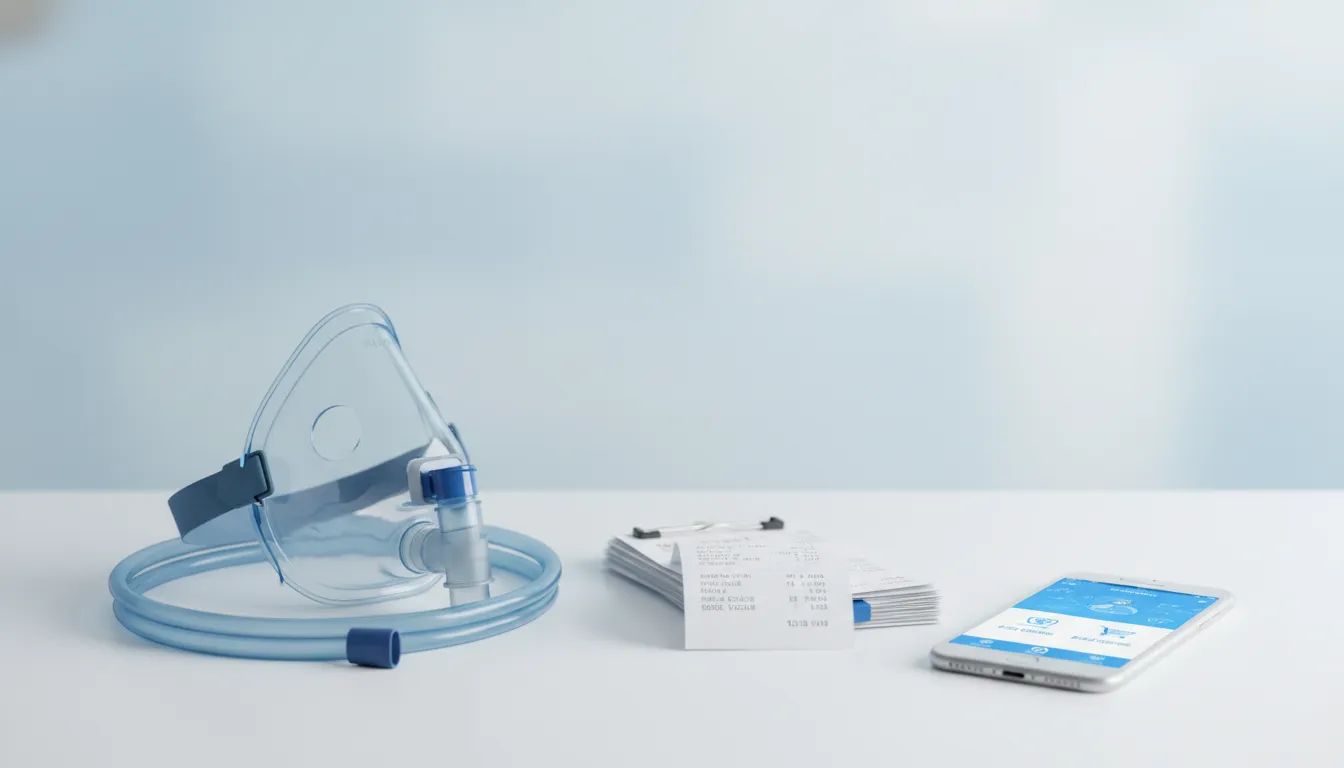
Replacing a worn CPAP mask should not mean paying more than necessary. With the right records, your FSA can help cover the machine, replacement parts, and supplies that keep therapy on track.
Discover FSA-eligible health products with Daylii
FSA eligible CPAP supplies generally include machines, prescribed masks, tubing, filters, cushions, headgear, humidifier parts, and other items used to treat sleep apnea. Because rules follow qualified medical expense standards in IRS Publication 502, confirm your plan’s requirements and keep prescriptions, itemized receipts, and claim records. You can often use an FSA card at checkout or pay yourself and submit documents for reimbursement through your plan administrator. For recurring purchases, follow your care team’s replacement schedule, verify each item’s eligibility, and organize receipts before filing, so routine care stays easier to manage. Daylii offers a smarter way to discover eligible health products at the SKU level and automate receipt parsing and reimbursement steps with less paperwork.
The central question is not only whether CPAP supplies qualify, but how to buy replacements without creating extra paperwork or missing plan rules. Before mapping documentation, recurring orders, and receipt habits, we will establish the core rule in “FSA eligible CPAP supplies: the short answer.” Here’s how:
FSA eligible CPAP supplies: the short answer
Short answer: yes. CPAP machines and core supplies used to treat diagnosed sleep apnea are typically eligible for FSA reimbursement. These items count as medical care because they support treatment, not general wellness. Still, your plan administrator may ask for a prescription, receipt, or other proof before approving a purchase or claim.
What usually qualifies
Common FSA eligible CPAP supplies include masks, cushions, headgear, tubing, and filters. A prescribed CPAP machine also typically qualifies. These items help deliver or maintain continuous positive airway pressure therapy. The therapy keeps the upper airway open during sleep, as explained in the Mayo Clinic’s CPAP treatment guide.
Eligibility becomes less clear for products built mainly for comfort, travel, or general cleaning. A product marketed near CPAP equipment is not automatically eligible. Check the item’s purpose and your plan’s rules before using FSA funds. Daylii’s broader guide to FSA eligible products can help you review those basic tests.
Why your plan may ask for proof
FSA eligibility follows federal rules for qualified medical expenses, but your plan administrator reviews each claim. The IRS Publication 502 explains which medical and dental costs may qualify. Your administrator may also set a process for showing that a CPAP purchase supports medical care.
Keep an itemized receipt that names the product, seller, purchase date, and amount paid. Also keep your prescription or a letter from your care team if your plan requests one. Clear records can help when a card payment is declined or you pay out of pocket and file for reimbursement later.
A smarter eligibility check
Before buying, confirm that the exact product is eligible, not just the product category. Then check whether your plan requires a prescription or other records. This step matters for replacement parts and add-ons, since similar-looking products may serve different purposes.
Daylii is designed to act as a smarter guide through product eligibility and reimbursement. Its planned tools will help check products at the item level and organize receipts for claims. This approach can reduce guesswork before checkout. It can also make later claim steps easier because the needed product details and records stay tied together.
Until those tools are available, use Daylii’s guidance to prepare, then confirm final requirements with your plan administrator. This helps you avoid treating every CPAP-related purchase as eligible without first checking its medical purpose.
Which CPAP items usually qualify?
Most FSA eligible CPAP supplies directly support treatment for sleep apnea. This group usually includes the machine and the parts needed to deliver clean, pressurized air. CPAP keeps the upper airway open during sleep, as explained by Mayo Clinic’s CPAP treatment guide.
Core equipment and replacement parts
Machines, masks, cushions, headgear, tubing, filters, and humidifier chambers are the clearest candidates. They each serve a direct role in prescribed CPAP therapy. Replacement parts can also qualify when they restore the machine or mask to proper use.
Eligibility still depends on the item, your plan, and the records requested by your administrator. Review the broader rules for FSA eligible CPAP supplies before you buy an unfamiliar part.
| Category | Usually eligible? | Notes | Documentation tip |
|---|---|---|---|
| CPAP, APAP, or BiPAP machine | Yes | Core equipment used to treat sleep apnea. | Keep the prescription, receipt, and item details. |
| Masks, cushions, nasal pillows, and headgear | Usually | Directly supports the fit and delivery of therapy. | Save the receipt with the exact product name. |
| Tubing, filters, and humidifier chambers | Usually | Used as operating or replacement parts. | Keep packaging or an itemized order record. |
| Prescribed CPAP accessories | Often | A direct treatment purpose makes the case clearer. | Keep the prescription or medical-need note. |
| CPAP pillows, wipes, and cleaners | Check first | Comfort or general cleaning items may face added review. | Ask the plan administrator before purchase. |
| Battery backups and travel power | Check first | Approval may depend on its medical use and plan rules. | Keep proof that it powers prescribed equipment. |

Why edge cases need a closer look
A mask cushion is part of the air-delivery system, while a standard bed pillow is mainly a comfort item. That difference can affect whether a plan approves the cost. The same issue applies to cleaning wipes, sanitizing devices, battery packs, and travel power products.
Do not assume every item labeled “CPAP” will qualify. Check whether the product is primarily used for medical care under IRS Publication 502. Then confirm the item with your plan administrator, since plans may request added proof.
Records that support a claim
Keep an itemized receipt that shows the seller, purchase date, product name, and amount paid. Save your CPAP prescription and any medical-need note with it. Clear records can help explain why an accessory supports treatment rather than general comfort.
If you pay out of pocket, retain the same records for a reimbursement claim. For an edge case, ask the administrator what proof is needed before buying. This simple check can prevent a rejected claim and reduce follow-up paperwork.
What documentation do you need for reimbursement?
Start with a simple rule: save proof of what you bought, why you needed it, and what you paid. Requirements can differ by plan administrator. Check your plan’s claim form before buying or submitting anything.
Prescription and diagnosis records
Keep a copy of your CPAP prescription if your clinician issued one. A plan administrator may ask for it to confirm that the machine or supply supports medical care. The prescription should be current and should match the patient named on the claim.
A diagnosis record or letter from a clinician may also help when an item’s purpose is unclear. For example, a general comfort accessory may receive more review than a mask or tube. These records do not guarantee approval, but they can explain the medical need.
The IRS guide to medical expenses is a useful starting point for understanding qualified costs. Your plan administrator still makes the final claim decision under your specific plan.
Itemized receipt details
An itemized receipt gives the reviewer enough detail to assess the claim. A card statement alone may show payment, but it often does not show the exact product. Save the full receipt or invoice rather than only the order total.
- Merchant or provider name.
- Product name and description, such as CPAP mask, filter, or tubing.
- Purchase or service date.
- Amount paid for each item.
- Total paid and payment method.
- Patient name, when shown.
Product details matter when one order includes both eligible and uncertain items. Review a broader guide to FSA eligible products before filing mixed purchases. Keep any merchant page or packaging that clearly names the item.
Checks before you submit
Compare the receipt, claim form, and prescription before sending them. Names, dates, and amounts should match across the records. If a merchant used a broad product label, ask for a more detailed invoice.
Follow your administrator’s preferred upload method and file type. Some plans may request more support or use different review steps. Keep copies of every document and any messages about the claim until the reimbursement is settled.
This guidance is practical information, not legal or tax advice. When a requirement is unclear, ask your plan administrator what proof it accepts before you submit the claim.
How to handle recurring CPAP purchases
Recurring purchases are easier when they follow your therapy needs, not the calendar alone. Build a simple routine for checking supplies, plan rules, and your available FSA balance.
Check which health products are FSA eligible before your next order
A practical replacement routine
Use this five-step routine to plan purchases without ordering items before you need them.
-
List each part you use, including masks, cushions, tubing, filters, and water chambers. Note its purchase date and current condition.
-
Check the maker’s care guidance and ask your equipment provider about replacement timing. Replace parts when that guidance or visible wear calls for it.
-
Review your plan documents before each order. Confirm the item is eligible, learn what proof is needed, and check whether a prescription is required.
-
Compare your planned purchases with your available FSA balance and any plan deadline. Schedule needed orders early enough to resolve payment or claim issues.
-
Save the itemized receipt, product description, prescription, and claim result together. Update your supply list after the order arrives.
Year-end planning without stockpiling
If your FSA has a use-it-or-lose-it deadline, start reviewing your needs well before year-end. First, confirm the deadline and any carryover or grace-period terms with your plan administrator.
Then inspect the parts you already own. Order supplies that match a real, near-term need and your usual replacement pattern. Avoid buying a large surplus only to spend the balance, since your plan may ask for support.
Before buying, confirm that each item fits the plan’s rules for qualified medical expenses. The IRS medical expense guidance is a useful starting point, but your plan administrator makes the claim decision.
A record system that stays useful
A basic spreadsheet or phone note can track the item, model, order date, expected check date, cost, and receipt location. Add a reminder several weeks before each planned review so you have time to inspect the part.
Keep receipts and related records by plan year, not only by product. Clear folders make it easier to answer a claim request and prevent repeat orders.
When checking a product, use a trusted eligibility source rather than relying on a broad category label. Daylii’s guide to FSA eligible CPAP supplies can help you prepare before confirming details with your plan.
How should you organize CPAP receipts?
A clear receipt system makes an FSA claim easier to prepare and review. Keep a complete record for each purchase, even when you pay with an FSA card. Start with the itemized receipt, then add any supporting files your plan requests.
Build one record for each purchase
Create a digital folder for each calendar year, with a separate file or subfolder for every CPAP order. Name each record with the purchase date, seller, and item. This structure helps you find the right proof without sorting through unrelated health expenses.
Each purchase record should show what you bought and how you paid. Save these details together:
- The itemized receipt or invoice.
- Product names, model numbers, or SKUs.
- The purchase date and amount paid.
- Proof of payment, such as a card receipt.
- Your prescription, when the seller or plan asks for one.
- Any Explanation of Benefits, claim form, or plan message tied to the purchase.
Product detail matters because a short card statement may not show whether an expense qualifies. For context, the IRS medical expense guide explains which types of medical costs may qualify. Your plan administrator can tell you which documents it needs for your claim.
Separate purchases from claim records
After you submit a claim, keep its confirmation with the matching purchase record. Add the claim number, submission date, decision, and any request for more details. If you reply to the plan, save that message too.
A simple status label keeps the folder useful: not submitted, under review, approved, or needs follow-up. Review open claims on a set day each month. This habit helps prevent a missing document from sitting unnoticed.
It also helps to save eligibility research beside the receipt. Daylii’s guide to FSA eligible CPAP supplies can help you review common qualified purchases before filing. Still, follow the document rules set by your specific plan.
Prepare for automated reimbursement
A consistent digital filing system is useful now and ready for future automation. Use clear scans or original PDF receipts, and avoid cropped images. Make sure the seller, item, date, and total remain easy to read.
Daylii is designed to reduce manual paperwork through automated receipt parsing and claim submission. Its planned automated reimbursement workflow can read purchase details and help move them into the claim process. Keeping complete source files gives that workflow better information to use.
How to avoid FSA card declines and denied claims
Why an eligible purchase can still decline
A declined FSA card does not always mean the CPAP supply is ineligible. Checkout systems must recognize both the seller and the exact item before approving the card. A mask, tube, or filter may qualify, yet its product code may be missing or unclear.
Your available balance, purchase date, or plan rules can also affect approval. Daylii reports that 54% of FSA and HSA users have faced card declines, even on eligible items. Treat a decline as a prompt to verify the purchase, not as the final answer.
Mixed carts can create another issue. One ineligible item may cause the full purchase to fail or require a separate payment method. Splitting eligible CPAP supplies from other goods can make the problem easier to find and fix.
Checks before you buy
Start with your plan administrator’s rules because documentation needs can differ by plan. Ask whether the item needs a prescription or letter of medical necessity. Then confirm that the seller accepts FSA cards and labels the exact product as eligible.
Review the item’s name, model, and purpose rather than relying on a broad category label. The IRS medical expense guidance provides the base standards for qualified expenses. Daylii’s guide to FSA eligible CPAP supplies can help you check common product types before checkout.
- Confirm your current FSA balance and the purchase deadline.
- Check the exact SKU, not just the product category.
- Save the detailed receipt, product page, and any required prescription.
- Ask your administrator what proof it needs before buying.
When the card still does not work
If the item checks out but the card declines, consider paying with another card and filing a reimbursement claim. Keep an itemized receipt that shows the seller, purchase date, product, and amount. Include any prescription or other proof requested by your plan administrator.
Do not assume reimbursement is guaranteed just because a product appears eligible online. Submit the requested records and respond if the administrator asks for more detail. If a claim is denied, review the stated reason before correcting and resubmitting it.
A denial notice may point to missing records, unclear product details, or a date that falls outside the plan period. Match your next submission to that reason. If the notice is unclear, ask the administrator what specific record would support the claim.
This is the friction Daylii is designed to reduce. Its SKU-level eligibility engine checks the exact item instead of relying only on broad product labels. Automated receipt parsing and claim submission can also reduce manual steps, while the plan administrator still makes the final decision.
A smarter way to manage sleep apnea purchases
Daylii is building a proactive way to find eligible health products and manage FSA or HSA reimbursement. The pre-launch platform will use AI to support product discovery, eligibility checks, receipt handling, and claim submission.
Instead of sorting through rules after checkout, shoppers can get ready to check eligibility earlier in the purchase process. That approach can make it easier to plan for ongoing sleep apnea needs without relying on a year-end spending scramble.
Plan purchases around eligible care
A good purchase plan starts with the supplies your prescribed therapy requires. CPAP can keep upper airway passages open during sleep, according to Mayo Clinic’s sleep apnea treatment guidance. Masks, tubing, filters, and other replacement parts may each play a role in that care.
Daylii plans to help users discover sleep apnea products while keeping benefit eligibility in view. Its marketplace may also group related items into sleep apnea bundles. Before buying, confirm that each item fits your care needs and plan rules.
Check each product before checkout
Broad product labels do not always give shoppers enough detail. Daylii’s planned AI eligibility engine will check products at the SKU level. This can help shoppers tell an eligible CPAP supply from a related item that may not qualify.
The eligibility check will draw on the rules used for qualified medical expenses. The IRS Publication 502 standards are a useful starting point, but each benefit plan may request its own records. Daylii’s guide to FSA eligible products offers more context on how product eligibility works.
- Review the exact product rather than relying only on its category.
- Keep any prescription or care documentation requested by your plan.
- Save an itemized receipt for every purchase.
Prepare reimbursement records as you shop
Paying out of pocket can create another task: filing a reimbursement claim. Daylii plans to reduce manual work through receipt parsing and claim submission support. Final approval and payment timing will still depend on the user’s benefit administrator and plan rules.
Users should keep clear, itemized receipts even when tools help organize the process. A complete record connects the product, purchase date, amount, and seller. That detail can help the administrator review a claim if more information is needed.
Daylii is not yet live. Shoppers can sign up before launch to get ready for a more proactive way to discover eligible products and organize reimbursement records.
Get ready for simpler FSA and HSA reimbursement with Daylii
Frequently Asked Questions
Do I need a prescription to buy CPAP supplies with an FSA?
Some CPAP machines and supplies require a prescription because of how they are regulated or sold, even when they qualify for FSA spending. Ask the seller and your FSA administrator what documentation they require before purchasing. Keep your prescription, itemized receipt, and any statement showing medical necessity in case the plan requests proof during claim review.
Can I use my FSA debit card to purchase CPAP equipment?
Yes, you can often use an FSA debit card for eligible CPAP equipment at a retailer that accepts benefit cards. A card approval does not replace your plan’s documentation rules. Save the itemized receipt and prescription, if applicable. If the card is declined, pay another way and submit a reimbursement claim to your FSA administrator.
How do I get reimbursed for out-of-pocket CPAP supply expenses?
Submit a claim through your FSA administrator’s portal or required form. Include an itemized receipt showing the product, purchase date, seller, and amount paid. Add a prescription or other supporting document if your plan requests one. Eligibility follows standards for qualified medical expenses described in IRS Publication 502, but your administrator decides what evidence is needed.
Are CPAP cleaning supplies and accessories FSA eligible?
CPAP cleaning supplies and accessories may be FSA eligible when they are used primarily to support prescribed sleep apnea treatment. Eligibility can vary for general-purpose cleaners, comfort products, or accessories that are not medically necessary. Check the exact item with your FSA administrator before buying, and keep the itemized receipt plus any requested prescription or medical-necessity documentation.
Are battery backups for CPAP machines FSA eligible?
A CPAP battery backup may qualify for FSA spending when it is needed to operate prescribed equipment away from a standard outlet or during an outage. Plans may review batteries differently from core supplies such as masks and tubing. Confirm eligibility with your FSA administrator before purchase, then retain the itemized receipt and any requested letter of medical necessity.
Ready for a smarter way to manage CPAP expenses?
Delaying your CPAP supply plan can lead to rushed purchases, scattered receipts, and avoidable questions when you are ready to submit a reimbursement claim. Starting now gives you time to review your plan rules, confirm which items qualify, and prepare each record before your next replacement date. A steady routine also helps you notice missing details early, instead of searching for documents after a purchase or near a spending deadline.
Get ready for Daylii’s smarter FSA and HSA experience and request updates on simpler product discovery, receipt organization, and automated reimbursement. Start planning today so you can approach future replacement purchases with a clear recordkeeping system and fewer last-minute tasks.