
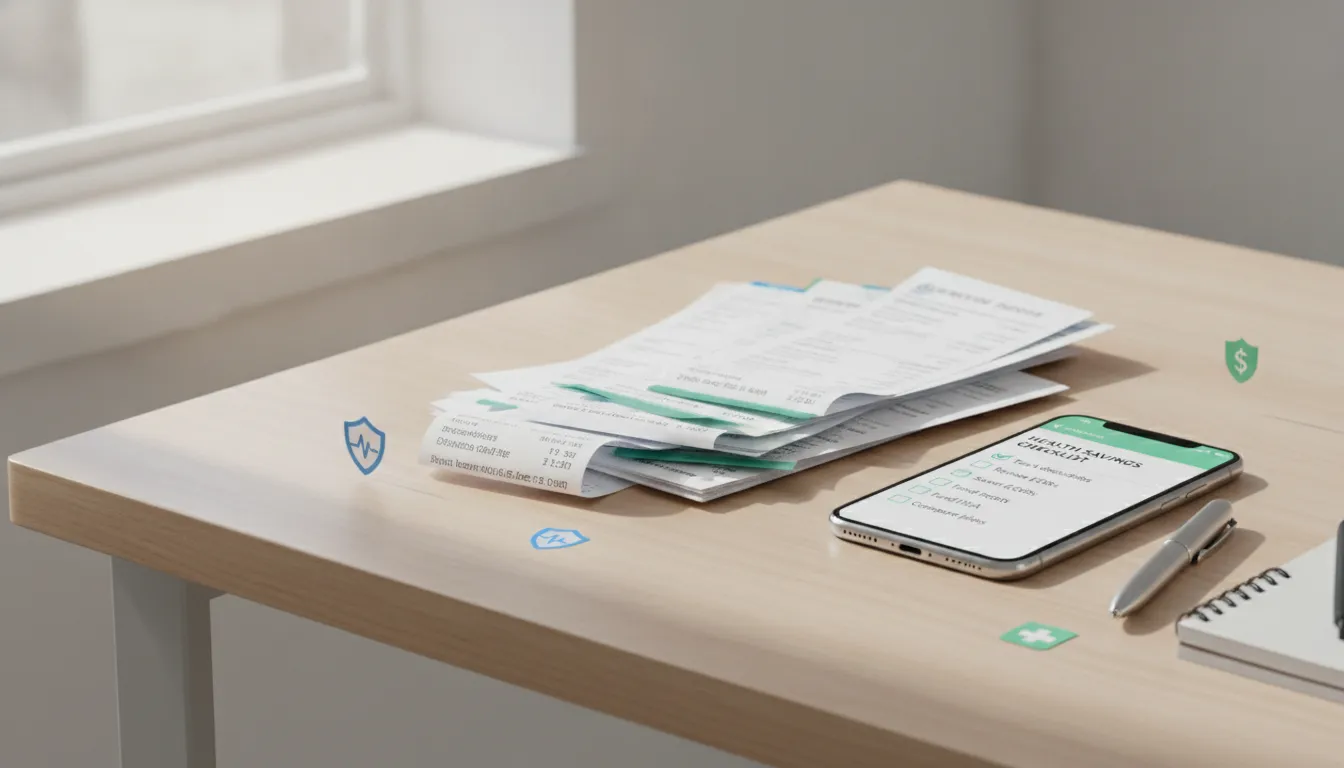
HSA reimbursement can be confusing because the tax rules, receipt requirements, and account-provider steps all matter. You might pay for an eligible medical expense with a regular card, save the receipt, and reimburse yourself later from your health savings account without losing the account’s tax advantages. The key is knowing what qualifies, what records to keep, and how to avoid double-dipping or undocumented withdrawals.
Explore daylii to see how smarter FSA and HSA tools can make healthcare spending easier to understand.
This guide explains HSA reimbursement rules in plain English, including eligible expenses, receipt details, delayed reimbursement, common mistakes, and where daylii fits into a simpler health spending workflow. This is general educational information, not personal tax, legal, or medical advice. Check your HSA administrator’s rules and consult a tax professional for personal tax questions.
Quick Answer: How HSA Reimbursement Works
HSA reimbursement lets you pay for a qualified medical expense out of pocket, then pay yourself back from your health savings account. In general, you need to make sure the expense is eligible, keep documentation, request a transfer or distribution through your HSA administrator, and retain receipts for your tax records.
- Pay for a qualified medical expense after your HSA is established.
- Keep an itemized receipt and any supporting documentation.
- Request reimbursement through your HSA provider or transfer funds to yourself.
- Save the receipt and confirmation in case you need to substantiate the distribution later.
What Is HSA Reimbursement?
HSA reimbursement is the process of paying yourself back from an HSA after you use personal funds for a qualified medical expense. Instead of using the HSA debit card at checkout, you pay another way and later take a distribution from the account for the eligible amount.
This can happen when a provider does not accept HSA cards, when an online checkout cannot verify eligibility, when you want to preserve HSA funds for investment growth, or when you simply forgot to use the account card. The reimbursement is generally tax-free when it is tied to a qualified medical expense and properly documented.
The HSA provider may call the action a reimbursement, distribution, transfer, or withdrawal. The label can vary, but the principle is the same: HSA money can be used to cover qualified medical expenses. Your responsibility is to keep records that show the expense was eligible and not reimbursed from another source.
HSA Reimbursement Rules to Know Before You Submit
HSA reimbursement rules are flexible in some ways and strict in others. Unlike FSAs, HSAs are individually owned accounts and do not usually have a use-it-or-lose-it plan-year deadline. However, the expense still has to qualify, the timing has to be correct, and the reimbursement cannot duplicate another tax benefit.
The expense must be qualified
The expense should generally fit the qualified medical expense rules described by the IRS. IRS Publication 502 is a useful reference for medical and dental expenses, and IRS Publication 969 explains HSAs and other tax-favored health plans. Your HSA administrator may also provide a searchable eligibility list or documentation policy.
The expense must happen after the HSA is opened
In general, you can reimburse qualified expenses that happen after your HSA is established. Expenses from before the account was opened are usually not eligible for HSA reimbursement, even if they would otherwise be medical expenses. If you are unsure about your account establishment date, check your HSA records before taking a distribution.
You cannot be reimbursed twice
You should not reimburse yourself from an HSA for an expense that was already paid by insurance, an employer plan, another reimbursement account, or another person. For example, if insurance pays part of a bill and you owe the remaining patient responsibility, only the unreimbursed portion may be relevant for HSA reimbursement.
You should not also claim the expense as a tax deduction
Do not use the same expense for both a tax-free HSA distribution and another tax deduction or tax benefit. This is one reason documentation matters. Records help you show what was paid, what was reimbursed, and which expenses were used for which purpose.
Keep records even if your provider does not require uploads
Some HSA administrators do not require you to upload receipts before taking a distribution. That does not mean receipts are optional. You are responsible for proving that HSA distributions were used for qualified medical expenses if questions come up later.
What Receipts Do You Need for HSA Reimbursement?
The safest receipt is an itemized record that clearly connects the amount reimbursed to a qualified expense. A credit card statement alone usually proves that you paid, but not what you bought or whether it was eligible.
A strong HSA reimbursement receipt file usually includes:
- Provider or merchant name.
- Date of service or purchase.
- Description of the product or service.
- Amount paid and any patient responsibility after insurance.
- Proof of payment when separate from the itemized bill.
- Patient or purchaser name when available or required.
- Explanation of Benefits if insurance processed the service.
- Letter of medical necessity when an item has both medical and general wellness uses.
If an item requires medical documentation, see daylii’s guide to a letter of medical necessity for HSA expenses. Keep the letter with the receipt so the reimbursement record is complete.
Which Expenses Are Eligible for HSA Reimbursement?
Eligible HSA reimbursement expenses generally include qualified medical, dental, vision, and prescription expenses. Common examples may include doctor visits, prescriptions, dental treatment, eye exams, contact lenses, glasses, many over-the-counter medicines, menstrual care products, and some medical supplies.
Eligibility can depend on the product, the reason for purchase, plan rules, and documentation. Some wellness items, supplements, fitness equipment, or personal care products may need a letter of medical necessity or may not qualify at all. Use IRS Publication 502 and your HSA administrator’s guidance as your starting point, then keep documentation that supports the specific expense.
For shopping-focused guidance, review daylii’s guide to HSA eligible items. That can help you understand why some purchases are straightforward while others require more documentation.
How to Reimburse Yourself From an HSA
Every provider has its own portal, app, or form, but the basic process is usually similar. Before you start, gather your receipt, confirm the expense date, and decide whether you are reimbursing the full expense or only the unreimbursed portion.
- Log in to your HSA administrator. Use the website or mobile app connected to your account.
- Find the reimbursement, distribution, or transfer area. Some providers label this as a withdrawal or payment to yourself.
- Enter the expense details. You may need the date, amount, category, provider, and notes.
- Upload documentation if supported or required. Add the itemized receipt, EOB, or letter of medical necessity.
- Choose the payment method. Many providers offer bank transfer, check, or another payout method.
- Save the confirmation. Keep it with the receipt so your records match the distribution.
If your provider does not ask for the receipt during the transfer, still save it. HSA recordkeeping is often self-directed, which means you need a reliable system for matching distributions to qualified expenses.
Is There a Deadline for HSA Reimbursement?
In general, the IRS does not set a standard deadline for reimbursing yourself from an HSA for a qualified expense that occurred after the HSA was established. This is one of the major differences between HSA and FSA reimbursement. Many people save receipts and reimburse themselves months or years later.
Delayed reimbursement can be useful, but only if your documentation is strong. If you plan to wait, store receipts in a searchable place, record the expense date, keep proof that the HSA existed before the expense, and avoid using the same receipt for another reimbursement or tax benefit.
Your HSA administrator may still have portal-specific requirements, documentation features, or practical limits. Confirm provider rules before assuming every old receipt will be easy to process through the same workflow.
Common HSA Reimbursement Mistakes
Most HSA reimbursement problems come from unclear eligibility, weak records, or confusion between different benefit accounts. Avoid these common mistakes before you take a distribution.
- Reimbursing an ineligible expense. General wellness products and personal items do not automatically qualify.
- Missing the itemized receipt. A card statement or order total may not show enough detail.
- Using an expense from before the HSA was opened. Timing matters.
- Double reimbursement. Do not reimburse an amount already paid by insurance, an FSA, an HRA, or another source.
- Confusing HSA rules with FSA deadlines. FSAs and HSAs have different ownership, rollover, and timing rules.
- Not saving confirmation records. Keep distribution confirmations with the receipt.
Want fewer questions about what qualifies? Explore daylii for a smarter way to understand FSA and HSA spending.
HSA Reimbursement vs. FSA Reimbursement
HSA and FSA reimbursement can look similar because both involve paying for healthcare expenses and keeping documentation. The rules are different enough that you should not treat them as interchangeable.
| Topic | HSA reimbursement | FSA reimbursement |
|---|---|---|
| Account ownership | Owned by the individual. | Usually employer-sponsored. |
| Deadline pressure | Generally no standard IRS reimbursement deadline for qualified expenses after the HSA was established. | Plan-year, grace period, carryover, and run-out rules can apply. |
| Funds rollover | Unused funds can remain in the account. | Unused funds may be lost unless carryover or grace period rules apply. |
| Documentation | Receipts should be retained for tax records. | Claims often require administrator review and substantiation. |
If you are comparing the two account types, read daylii’s FSA reimbursement guide for FSA-specific deadlines, receipt rules, and submission basics.
Where daylii Fits Into the Reimbursement Problem
The hardest part of HSA reimbursement is rarely a single rule. It is the workflow. People have to recognize eligible expenses, capture the right receipt, know when an item needs extra documentation, remember which account applies, and match every distribution to a record they can find later.
daylii is building a smarter health spending experience around that friction. The goal is to make FSA and HSA spending easier to understand by bringing eligibility clarity, receipt awareness, and simpler benefit navigation into one more proactive experience. For consumers, that means less guessing. For healthcare spending, it means fewer lost receipts, fewer declined-card dead ends, and more confidence about what to do next.
Join the smarter way to manage health spending with daylii.
FAQ
Can I reimburse myself from my HSA?
Yes. In general, you can reimburse yourself from an HSA for qualified medical expenses that happened after the HSA was established, as long as you keep documentation and do not get reimbursed twice for the same expense.
What receipts should I keep for HSA reimbursement?
Keep itemized receipts showing the provider or merchant, date, service or product, amount, and proof of payment. Keep any Explanation of Benefits or letter of medical necessity if the expense requires more support.
Can I reimburse myself from an HSA years later?
In general, there is no standard IRS deadline for reimbursing qualified expenses from an HSA after the account was established. If you delay reimbursement, keep excellent records and confirm your HSA administrator’s process.
What happens if I reimburse an ineligible HSA expense?
If an HSA distribution is not used for qualified medical expenses, it may be taxable and may be subject to an additional penalty depending on your age and situation. Ask a tax professional about personal tax consequences.
How long does HSA reimbursement take?
Timing depends on your HSA administrator, transfer method, bank processing, and whether documentation needs review. Some electronic transfers are quick, while checks or manual reviews can take longer.
HSA reimbursement is easier when you treat receipts as part of the purchase, not as an afterthought. Confirm eligibility, save the right documentation, avoid duplicate reimbursements, and keep records that connect each distribution to a qualified expense. With clearer tools and a better workflow, health spending can feel less reactive and more manageable.
Explore daylii to see how a smarter FSA and HSA experience can help make healthcare spending clearer.