
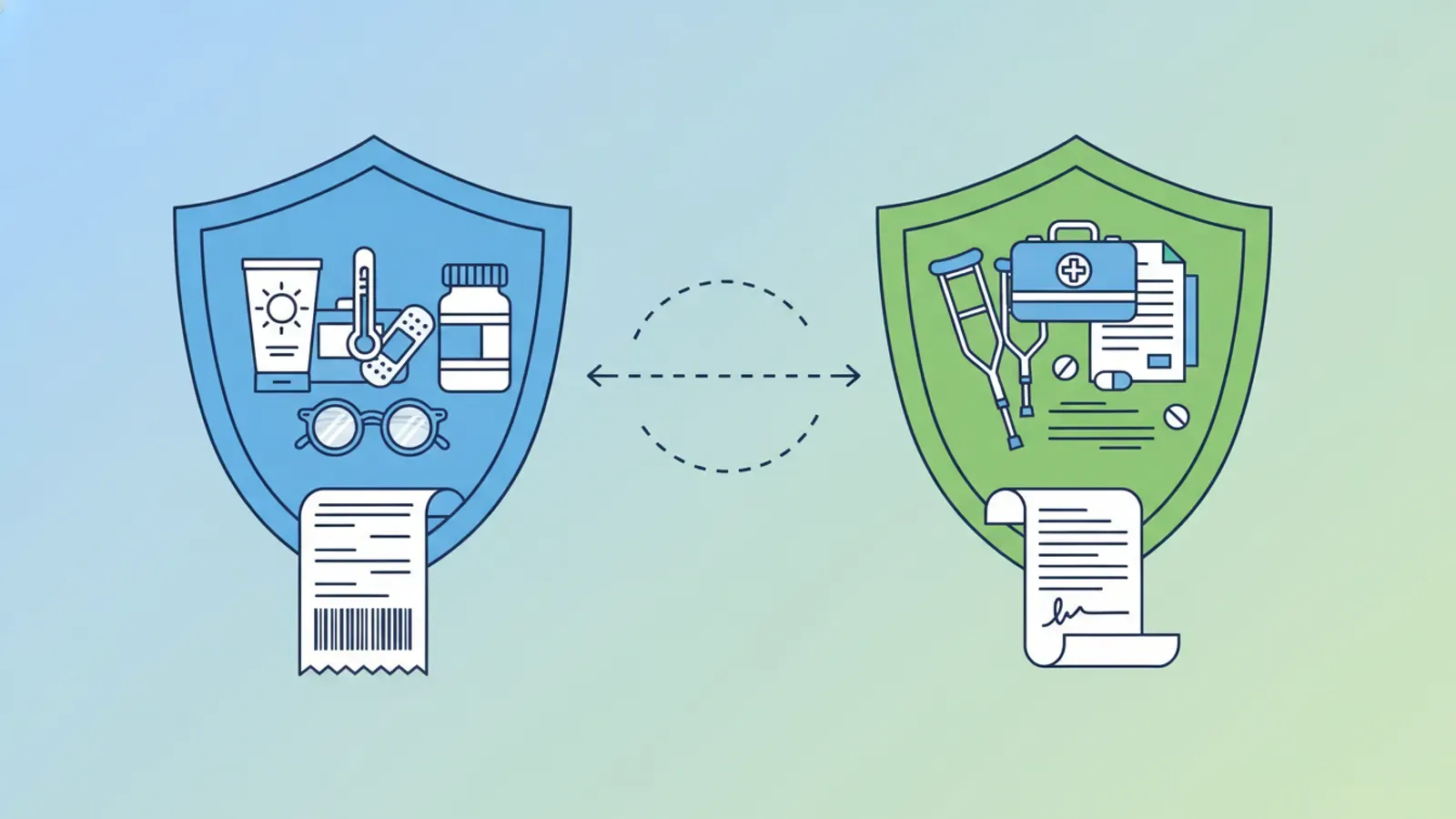
“FSA approved item” is commonly a retailer or platform label for a product expected to qualify, while “FSA eligible expense” is the broader reimbursement concept that can include products and services and remains subject to IRS rules, plan terms, and documentation. An approval label or successful card swipe is not a reimbursement guarantee.
That distinction matters when you are deciding what to buy, how to pay, and which records to keep. A product can look eligible at checkout but still require documentation. A healthcare service can be reimbursable even though no retailer would call it an “approved item.” The safest approach is to verify the expense against your plan before spending.
This article is for general education only and is not medical, tax, or legal advice. FSA plan policies vary. Confirm eligibility, documentation, and reimbursement rules with your plan administrator.
FSA Approved Items vs. Eligible Expenses: The Short Answer
People often use “approved” and “eligible” as if they mean the same thing. In practice, they describe different parts of the purchase and reimbursement process.
- FSA approved item usually describes a product a retailer, benefits platform, or eligibility database expects to qualify under common FSA rules.
- FSA eligible expense describes a cost that may be paid or reimbursed from an FSA under applicable rules and your plan’s terms. It can be a product or a service.
A retail label is a helpful screening signal. It is not the final reimbursement decision. Your plan administrator evaluates claims and can request an itemized receipt, prescription, Letter of Medical Necessity, or other evidence. For a broader look at common products, see daylii’s FSA eligible items guide.
What Does “FSA Approved Item” Mean?
“FSA approved” is not a universal government certification stamped onto every product. Retailers and platforms commonly use the phrase for products their systems identify as likely FSA-eligible based on product data and prevailing eligibility guidance.
The label can make shopping easier. It may help separate products with an established medical purpose, such as certain first-aid supplies, from ordinary household or general-wellness products. You can explore more examples in daylii’s guide to FSA eligible products.
Still, product details and circumstances matter. Variants, bundles, shipping charges, and mixed carts can complicate a purchase. Some products are eligible only when used for a diagnosed condition or supported by additional documentation. Always keep an itemized receipt and check your plan when the status is unclear.
What Is an FSA Eligible Expense?
An FSA eligible expense is a broader concept. It may include a product, a medical service, treatment, diagnostic test, prescription, or another qualifying healthcare cost. Services such as an office visit or eligible therapy can never be “items,” but they may still qualify as expenses.
IRS Publication 502 is a useful reference for understanding medical expenses, including costs related to diagnosing, curing, mitigating, treating, or preventing disease. However, Publication 502 is not a complete rulebook for every FSA claim or plan. Your plan documents and administrator remain essential sources for reimbursement requirements.
Eligibility also does not mean every payment method will work automatically. Learn more about what you can use an FSA card for and when paying out of pocket for later reimbursement may be appropriate.
Key Differences at a Glance
| Question | FSA approved item | FSA eligible expense |
|---|---|---|
| What does it describe? | A product commonly expected to qualify | A potentially reimbursable healthcare cost |
| Can it include services? | No, it describes an item | Yes, it can include products and services |
| Who makes the final decision? | The label itself does not decide reimbursement | Your plan administrator applies plan terms and documentation rules |
| Can documentation be required? | Yes | Yes |
| Does card acceptance guarantee reimbursement? | No | No |
Products vs. Products and Services
An approved-item label applies to something you can buy as a product. Eligible expenses include those products plus qualifying services. That is why an eligibility list centered only on store products cannot capture the full range of possible FSA expenses.
Retail Labels vs. Reimbursement Decisions
A retailer can identify a product using inventory and eligibility data, but it does not administer your FSA plan. The administrator makes the reimbursement decision under your plan’s terms. A label can support a confident purchase, but it cannot replace plan-specific verification.
Documentation Requirements
Both approved items and eligible expenses may require proof. Even clearly eligible purchases can trigger a request for an itemized receipt. Conditional expenses may require an explanation from a licensed healthcare provider. Keep records until your claim and any substantiation review are complete.
Why an Approved Label Does Not Guarantee Reimbursement
Several checkpoints sit between a retail label and final reimbursement:
- The exact product must qualify. Similar-looking variants may have different eligibility.
- The purchase must comply with plan terms. Plans may have specific claim procedures and substantiation requirements.
- The expense may need documentation. A receipt, prescription, or provider statement may be necessary.
- The amount and timing must be valid. Your claim must relate to the applicable coverage period and available benefit.
A successful FSA card swipe only shows that a payment system accepted the transaction. It does not prevent a later request for substantiation or make an otherwise ineligible expense eligible. If a claim requires follow-up, daylii’s FSA reimbursement guide explains the process and records commonly involved.
Which Expenses May Need Extra Documentation?
Think of eligibility in three practical categories:
- Generally eligible: Expenses commonly recognized as medical care and usually supported by an itemized receipt.
- Eligible only with supporting documentation or medical necessity: Expenses that may qualify when recommended to treat a specific diagnosed condition and supported as required.
- Generally ineligible or general health: Personal, cosmetic, or general-wellness expenses without a qualifying medical purpose.
These categories are useful for planning, not guarantees. Circumstances and plan terms can change the outcome.
Itemized Receipts
An itemized receipt normally identifies the merchant or provider, date, product or service, and amount paid. A credit-card statement usually proves that money changed hands but may not show what you bought. Save detailed receipts, especially for mixed purchases containing eligible and non-eligible items.
Letters of Medical Necessity
A Letter of Medical Necessity can explain why an otherwise personal or general-wellness expense is needed to treat a diagnosed condition. It does not automatically make any purchase eligible. The letter and expense must meet your plan’s requirements. Review daylii’s guide to Letter of Medical Necessity requirements and confirm the required format with your administrator before buying.
How to Verify an FSA Purchase Before You Spend
- Identify the exact expense. Note the product variant, service, provider, price, and intended use.
- Check your plan’s eligible-expense guidance. Start with your administrator’s portal, plan documents, or support team.
- Use authoritative references for context. Review IRS Publication 502 and the FSAFEDS eligible Health Care FSA expenses resource, while remembering that your plan controls its own claims process.
- Ask whether extra documentation is needed. Confirm whether an itemized receipt, prescription, or Letter of Medical Necessity is required.
- Keep complete records. Save receipts, provider documentation, claim confirmations, and administrator messages.
- Do not rely on the card swipe alone. Be prepared to substantiate the purchase if requested.
If you still cannot confirm eligibility, contact your plan administrator before spending. A short verification step can reduce the risk of a denied claim or an unexpected repayment request.
Common Examples: Eligible, Conditional, and Usually Ineligible
The examples below show how the categories work. They are intentionally cautious and are not an exhaustive list.
| Practical category | Illustrative examples | What to verify |
|---|---|---|
| Generally eligible | Common first-aid supplies, many prescription costs, qualifying medical visits | Exact item or service and itemized receipt requirements |
| Conditional | Certain general-wellness products or services used to treat a diagnosed condition | Whether a Letter of Medical Necessity or other provider documentation is required |
| Usually ineligible | Ordinary personal-care, cosmetic, or general-health purchases without a qualifying medical purpose | Do not assume eligibility merely because the product is sold by a pharmacy or healthcare retailer |
Context is decisive. The same broad product category may contain both eligible and ineligible versions. Services can also have eligible and non-eligible portions. Verify the exact expense rather than relying on a category name.
Use Your FSA With More Confidence
The most useful way to understand the difference is simple: “approved item” is a shopping signal, while “eligible expense” is a reimbursement determination. The first can guide you toward likely qualifying products. The second depends on the exact expense, applicable rules, your plan’s terms, and any required documentation.
Before spending, check the exact product or service, review your plan guidance, ask about supporting documents, and save an itemized receipt. Never assume that a retailer label, product barcode, card approval, or platform recommendation guarantees reimbursement.
This content is educational and does not replace guidance from your plan administrator or professional tax, legal, or medical advice. Confirm uncertain expenses with your plan before purchase or claim submission.