
Genetic testing may be FSA or HSA eligible when it is used to diagnose, treat, or prevent a medical condition. Ancestry-only testing does not qualify, and only the medical portion of a mixed-use kit may be reimbursable. Confirm coverage with your plan administrator and keep itemized documentation.
Explore FSA and HSA eligible products with daylii before you purchase, then verify your test and documentation requirements with your plan administrator.
Eligibility depends on the test’s medical purpose, the account type, and the records supporting the claim. The sections below explain how to distinguish diagnostic testing from ancestry or wellness products, document a qualified expense, and avoid preventable denials.
When is genetic testing FSA eligible?
You can use your Flexible Spending Account (FSA) for genetic testing when the test is for a medical goal. The IRS sets the rules for what counts as a qualified medical cost. For a test to be eligible, it must help find, cure, or stop a physical or mental illness. This means your FSA and HSA eligible products list often includes health DNA kits.
Most people find that tests for specific health risks are easy to prove. If you have a family history of a certain disease, your doctor may suggest a test to look for those signs. However, you must prove the test is needed for your health care rather than for personal interest. Keeping your receipts and any notes from your doctor will help you when you send in your claim to receive reimbursement.
IRS views on genetic testing
The IRS has shared clear help on how to treat the cost of DNA kits. As per an IRS Private Letter Ruling, the price of health DNA reports can be a valid medical cost. The ruling notes that these tools give people a deeper look at their health risks. This data helps people and doctors work together to find an illness or plan a care path.
Keep in mind that this rule only applies to the health part of a test. If a kit offers both health data and family history, you may not get back the full price. You might need to break down the cost to see how much was for the medical report. This makes it easier to use your pre-tax dollars for the part that the IRS allows.
Plan administrator requirements
While the IRS defines the federal medical-expense standard, your plan administrator reviews claims and applies the plan’s documentation requirements. Some administrators may request an itemized receipt, a cost allocation for a mixed-use kit, or a Letter of Medical Necessity before approving reimbursement. Review your plan documents and confirm requirements before purchasing a test.
A Letter of Medical Necessity (LMN) is a statement from a qualified healthcare provider explaining why a test is needed to diagnose, treat, or prevent a specific condition. Tools like dayliiDiagnosis can help connect medical needs with relevant eligible products. Preparing documentation before submitting a claim can reduce delays and avoid preventable denials.
Ineligible DNA tests
There are several types of DNA tests that the IRS does not cover. Ancestry kits that only trace your family tree are the most common case. Since these tests do not find or treat a disease, they are not seen as medical care. While these reports are fun to read, they do not meet the legal bar for FSA spending.
This also applies to lifestyle tests that look at traits like your taste in food or your sleep patterns. If you want to use your FSA funds, you should look for tests that focus on health risks. This includes tests for carrier status, health risks, or how you might react to certain drugs. By choosing the right test, you can make the most of your health goals.
Diagnostic testing vs. ancestry and wellness tests
Not all DNA kits are the same when you want to use your pre-tax funds. The IRS looks at the goal of the test to decide if it is a qualified medical expense. To be FSA and HSA eligible products, these tests must help diagnose or treat a health issue. This means a test for personal interest or family history will not qualify on its own.
Finding the medical need
Genetic tests that look for health risks or disease markers are often eligible. These tests give you and your doctor data to make a plan for your care. Based on IRS data, some DNA services with health reports count as medical care. This is because they help you find risks that need more testing or treatment. You may need a doctor to sign a form to show the test is for a medical reason. This form is often called a Letter of Medical Necessity.
Some tests do not look for a current illness but check for future risks. These are often called preventive screening tests. If these tests provide medical data to help prevent a disease, they may be eligible. But wellness tests that only give advice on diet or sleep are often not covered. You should check with your plan administrator before you buy. Many wellness kits are seen as personal care rather than medical care.
Why ancestry tests fall short
Tests that only show your ancestry do not count for your FSA. These kits do not treat or find a medical illness. The IRS does not see these as medical care because they are for personal use. Even if a kit also offers health reports, the part you pay for ancestry is not eligible. You must only use your funds for the health part of the test. Most plans will ask for a receipt that breaks down the costs of each part.
Handling mixed-use kits
Some kits offer both family history and health risk reports in one box. For these mixed kits, only the health part of the cost is eligible for your plan. Some providers help you find the exact amount you can claim using a calculator. You can also upgrade an old ancestry kit to add a health report later. This upgrade fee is often eligible for reimbursement as a medical expense. Always keep your receipts to show how much you spent on the health part.
| Test Type | FSA/HSA Eligible | Documentation Needed |
|---|---|---|
| Diagnostic Tests | Yes | Letter of Medical Necessity |
| Ancestry Kits | No | N/A |
| Health Risk Kits | Yes (Health Part) | Cost breakdown |
| Wellness Reports | Varies | Doctor’s Note |
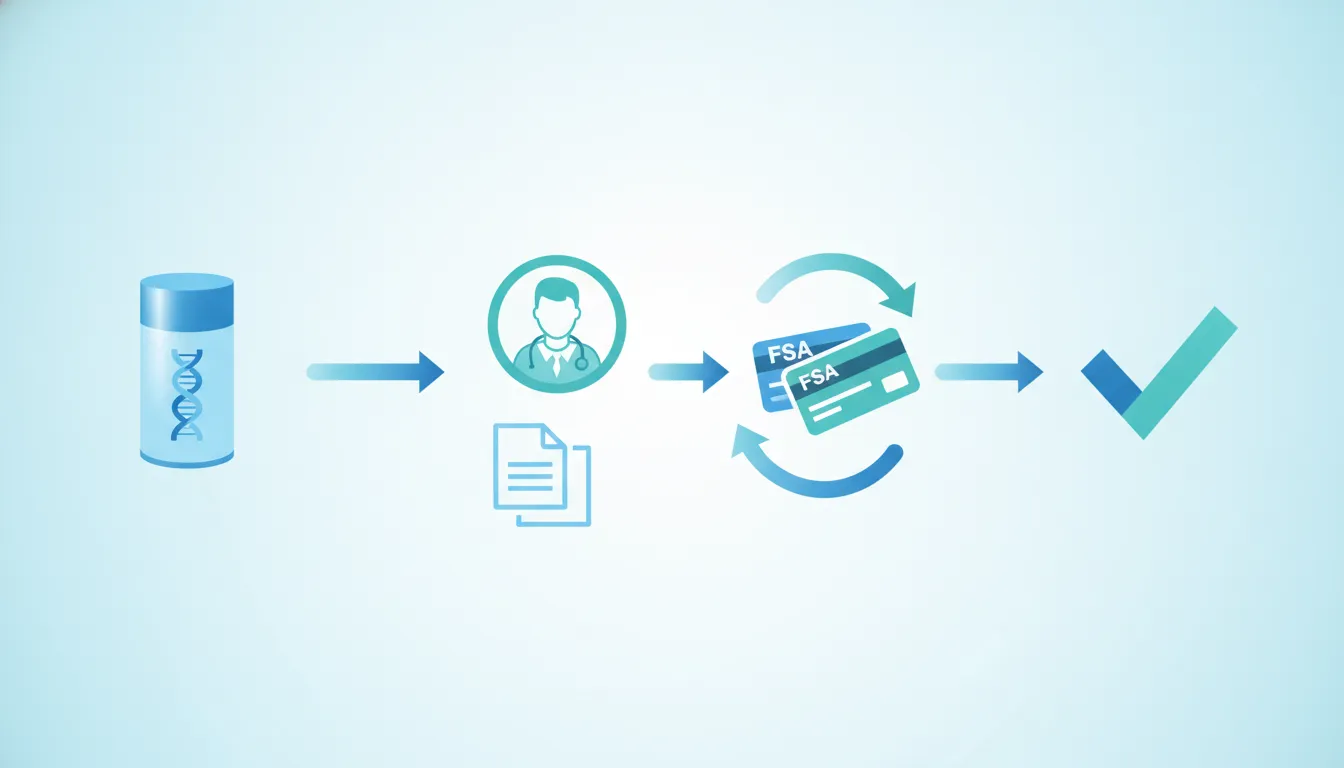
Do FSA and HSA rules differ for genetic tests?
Most people want to know if they can use their tax-free funds for DNA kits. The short answer is yes. Flexible Spending Accounts (FSAs) and Health Savings Accounts (HSAs) follow very similar paths. Both accounts use the rules from IRS Publication 502 to decide what counts as a medical expense. If a test helps find or treat a health issue, it is usually genetic testing FSA eligible. But there are still a few small gaps between how these two plans work in daily life.
Shared rules for medical care
For both types of accounts, the test must be for medical care. This means the kit should help find, cure, or prevent a health problem. Standard DNA tests for family history or traits like hair color do not count. The IRS made this clear in a private letter ruling that showed health reports are the key part of medical care. Because of this, you may need a letter of medical necessity from your doctor to show why the test is needed. This letter proves to your plan administrator that the kit is not nonmedical purposes.
Both plans also have the same rules for tests that mix health and family data. You can often only get back the money spent on the health part of the kit. Some kit makers give you a price list for this reason. Since the goal is a deeper view of health risks, the kit must lead to a clinical discussion with a doctor. This shared focus on health value is the main rule for both FSA and HSA users.
Key differences in plan types
While the rules for what counts as a test are the same, the plan types are not. You can use a standard health FSA or a normal HSA for most health-linked DNA kits. However, some special plans have much tighter rules. For example, a limited-purpose FSA (LPFSA) is only for dental and vision care. You cannot use an LPFSA for genetic testing because it does not fit those two groups. The same is true for a child care FSA, which is only for day care costs.
Another difference is when you can ask for your money back. FSA funds usually have a “use it or lose it” rule at the end of the year. This means you must buy your kit and file your claim before the plan year ends. HSA funds stay with you forever, so there is no rush to spend. This makes HSAs a bit more flexible for people who are still picking which test to buy. But for the purchase, both accounts treat HSA eligible products with the same strict focus on medical need.
Paying and getting your money back
How you pay for your kit can also vary by plan. Many DNA test firms now let you use your FSA or HSA card at checkout. This is the fastest way to pay since the money comes right out of your account. If the card works, you may not need to file more forms later. But you should still keep your receipt and your doctor’s letter. Your plan administrator might ask for these documents to prove the purchase was for a real health need.
If you cannot use your card at checkout, you will have to pay out of pocket. In this case, you must file a claim with your plan to receive reimbursement. Most people find that daylii tools help make this process much faster. By keeping track of your receipts and letters, you can avoid the stress of paper claims. Whether you pay now or receive reimbursement later, the goal is the same. You must show the test was a documented part of your care.
How to confirm eligibility before you buy
Buying a DNA kit can feel like a significant purchase. If you want to use your pre-tax funds, you must be sure the kit is genetic testing FSA eligible. Most plans cover these tests only when they help a doctor find or treat a health issue. You should not just guess if your kit counts. If you buy the wrong one, you might have the claim denied. To support the claim, you should follow a clear path to check your status.
Check your plan type
Not every health account works the same way. Most standard FSAs and HSAs cover medical tests. However, a limited-purpose FSA often only pays for dental or vision care. You should read your plan summary or call your admin before you spend. This helps you avoid a denial later. Knowing your plan rules is the first move in using your FSA and HSA eligible products budget well.
Talk to your doctor
The IRS says that medical care must find or treat a health issue to count as an expense. An IRS Private Letter Ruling shows that health-related DNA tests can be medical care. This is because they help you know your health risks. To prove this to your plan, you usually need a note from a doctor. This note is often called a Letter of Medical Necessity. It tells the plan why you need the test for your health.
- Check your plan details. Look at your plan documents to see if they list DNA kits as a covered item. Some plans have specific rules about which brands they will pay for.
- Get a doctor’s note. Visit your doctor to get a Letter of Medical Necessity. This paper must state that the test is for a medical reason and not nonmedical purposes or to explore ancestry.
- Verify the kit brand. Look at the kit company’s site. Some brands have tools that show you how much of the cost is for health. This lets you know the exact amount to pay with your FSA card.
- Keep your proof. Save the kit box, the receipt, and your doctor’s note in a safe place. You will need these files to show your plan administrator that the purchase was for medical care.
- File your claim. If you did not use your card at checkout, send your files to your plan administrator. You can use tools to automate your reimbursement and receive reimbursement faster.
Verify the test brand
Some DNA kits focus only on your ancestry. These are not medical tests and do not count for FSA use. Only the health portion of a kit is eligible. Many top brands now give you a break-down of the cost. This helps you know the exact amount you can claim. Checking this early saves you from filing for the wrong amount later.
What documentation should you collect?
To use your health funds for DNA tests, you must show the cost was for medical care. The IRS has specific rules for what counts as a qualified medical expense. To support the claim, you should keep every piece of paper from your purchase. This helps prove that your genetic testing FSA eligible purchase meets the law. If your plan administrator asks for proof, having these files ready will save you time and stress.
Receipts and itemized statements
You need a full receipt for every test you buy. A simple credit card slip is not enough. The receipt must show the date of purchase, the name of the test, and the price. It should also show the name of the store or lab. If you buy a kit that has both health and ancestry parts, you must show the cost of the health part alone. Some brands give you a tool to find this split amount. You can use these details to automate your reimbursement through our platform.
Keep these files for at least three years. The IRS may check your claims long after you file your taxes. Saving digital copies in a safe spot is a practical step. This way, you do not have to worry about lost or faded paper receipts. Clear records are the best way to keep your tax-free status and avoid fees.
Letter of medical necessity
Most plans need a letter of medical necessity from your doctor. This letter is a formal note that explains why you need the test to find or treat a health issue. It should link the DNA test to a specific medical risk or condition. For example, a test to check for risks of a disease is often seen as medical care by the IRS. Without this letter, your plan may reject the claim. It is best to get this note before you buy the test.
Prescriptions and provider notes
In some cases, a standard prescription from your doctor is enough. Like the letter of medical necessity, this script proves a medical need. You should also save any notes from your clinic visits where the test was discussed. These notes show that the test is part of a real plan for your health. If your test leads to more care, keep those records too. They help show the test had a clear medical goal. Sharing these risks with your doctor can help you get a deeper understanding of your health and next steps.
Common reasons a genetic test claim is denied
Getting a claim denied can be a letdown when you try to use your pre-tax funds. While many health tests fit the rules, some do not meet the strict guidelines set by the IRS. Knowing why a genetic testing FSA eligible claim might fail helps you plan your spending with more care.
Tests for lifestyle or ancestry
The most common reason for a denial is the goal of the test. If a kit only looks at your family tree or traits like how you handle caffeine, it will not count as medical care. The IRS rules state that a test must help find or treat a real health issue. Since ancestry kits do not give medical data, they are not FSA and HSA eligible products.
Missing medical documents
Most plan administrators need proof that your test is a need, not just a want. If you do not have a letter from your doctor, your claim may be denied. This paper should show that the test helps with a diagnosis or treatment plan. Many people buy kits first and ask for a letter later, but having it ready can stop a denial. You can use tools like dayliiReimburse to help track your documents and keep your claims on track.
Wrong account type
Not every tax-free account works the same way. While a standard FSA often covers these costs, a limited-purpose FSA is much more strict. These accounts only cover dental and vision costs until you hit your deductible. If you try to pay for a health test with this type of plan, it will likely be denied. Always check your plan rules before you buy a kit to make sure your account allows for medical testing costs.
Examples: which genetic tests may qualify?
Not all DNA kits meet the rules for tax-free spending. The IRS has clear goals for what counts as health care. To see if your genetic testing is FSA eligible, you must check the goal of the test. Tests must help find or treat a health issue to count as FSA and HSA eligible products. Tests that only show your ancestry do not count toward your health care limit.
Doctor-ordered health tests
A doctor may order a test to find the cause of a health problem. This is a clear case of health care. For example, a test for the BRCA gene can show a high risk for breast cancer. These tests are often covered because they lead to a plan for your care. They help your doctor find the best way to keep you healthy or treat a risk.
You will often need a note from your doctor to prove the test is a medical need. This note shows the test is to treat or find a health issue. This is needed under IRS section 213(d) rules. Without this proof, your claim might be denied by the plan administrator. Keeping good records will help you receive reimbursement fast.
Mixed ancestry and health kits
Some popular kits show both your past and your health risks. Only the part that deals with health can be paid for with pre-tax funds. You cannot use these funds for the part that shows your family roots or tree. Some kit makers give a list of the price for each part to make it easy for you. You can then submit just the health part for payment.
If you have an old kit, you might buy a health report later. This upgrade is often a qualified health cost that you can claim. The kit maker may provide a tool to find the exact cost of the health part. This helps you use your funds the right way without breaking any tax laws. Using these tools makes it simple to manage your health spending.
Wellness and carrier tests
Carrier screens look at your genes to see if you could pass a trait to a child. These tests are useful for family planning and health talks with your partner. Since they help find health risks, they often count as care under most plans. You should share these facts with your doctor to plan your next steps for a healthy life.
General health tests for traits like sleep or diet are harder to cover. These must link back to a real health issue to qualify for your FSA or HSA. Always check your plan rules before you buy one of these tests. Some plans are more strict than the IRS on what they will pay for. This is why you should verify the rules with your plan administrator first.
Note that this is not tax advice. Each plan is different and rules can change over time. You should talk to a tax expert or check with your plan administrator to be sure about your costs. They can help you stay on the right side of the law while you save money on health care.
Frequently Asked Questions
How much of my 23andMe+ Premium kit purchase is FSA/HSA eligible?
You can use your tax-free funds to cover the health part of your 23andMe+ Premium kit. The IRS sees these health reports as medical care. However, the ancestry part of the kit does not qualify for payment. To find the exact amount you can claim, you should use the brand’s own online tool. According to daylii, these tools help you split the costs between health and ancestry. This makes sure you only use your funds for allowed medical costs.
Can I use FSA/HSA funds for a previous genetic test purchase?
A previous purchase may be reimbursable if it was incurred while your account was eligible and the test meets the medical-care standard. HSA owners can generally reimburse themselves later for qualified medical expenses incurred after the HSA was established, provided they retain supporting records and have not already deducted or reimbursed the expense. FSA reimbursement timing follows the applicable plan year and plan rules. Submit an itemized receipt and any medical-necessity documentation requested by your plan administrator.
Is a health upgrade to an existing DNA kit eligible for health fund payment?
Yes, you can usually use your health funds to pay for a health upgrade. If you already have an ancestry kit, adding health reports counts as medical care. You must make sure the upgrade is for finding health risks or medical needs. According to daylii, these fees are often allowed because they give key health data. You should save the itemized bill from the brand to prove what you bought. This helps your plan check that the cost was for health services.
Have the rules for genetic testing and FSAs changed for 2026?
The core medical-care standard remains the same for 2026: the reimbursable expense must primarily support diagnosis, treatment, mitigation, or prevention of disease. A plan may request a Letter of Medical Necessity or other documentation depending on the test and claim. The IRS private letter ruling offers useful guidance on allocating the medical portion of a mixed-use genetic testing service, but it applies only to the taxpayer who requested it. Confirm current requirements and plan limits with your plan administrator.
Are you ready to manage your health spending with confidence now?
Waiting to use your health funds often leads to missed dates and lost money that you can never get back once the full year ends. Many people let their own health dollars sit until they rush to spend them on items they do not need during the final weeks of December. You can avoid this panic and ensure your genetic tests are covered by learning the rules and taking the right steps to act right now.
Ready to explore a smarter way to organize and engage with your health information? Visit daylii to set up your account and find FSA and HSA eligible products to improve your health journey today.