
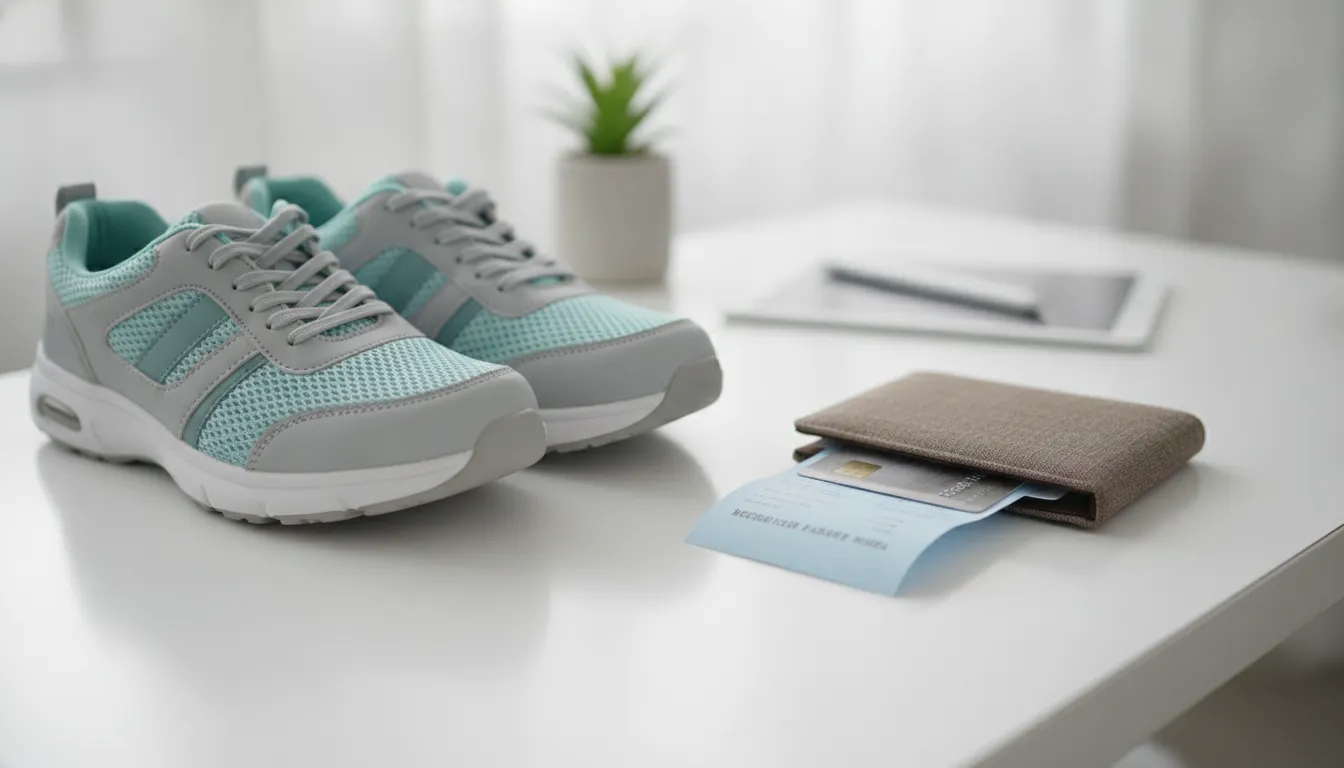
Chronic foot pain can turn a simple walk into a major task for millions of Americans. While special shoes offer relief, the rules for using pre-tax funds to pay for them are often confusing.
Are orthopedic shoes HSA eligible is a question that depends on if the footwear is used to treat a specific medical condition. According to the IRS, orthopedic shoes can qualify for HSA and FSA use. They must be prescribed to treat or manage a diagnosed condition like chronic foot deformity or severe arthritis. However, you mostly need a Letter of Medical Necessity (LMN) from a doctor. This proves the shoes are for medical care rather than just personal comfort or style. While shoes themselves need strict proof, items like orthopedic shoe inserts and diabetic shoes are often more easily approved with the right forms. According to WithFlex, both HSA and FSA accounts mostly follow the same federal rules for medical necessity on these purchases.
Knowing the exact rules helps you avoid losing your pre-tax funds on a purchase that might get denied. You must know how the IRS views medical need and what papers you need to keep for your records. We can start by asking the core question, Are orthopedic shoes HSA eligible? The path begins by asking,
Are orthopedic shoes HSA eligible?
Yes, you can use your HSA funds for orthopedic shoes, but only in some cases. The IRS has strict rules for what counts as a medical cost. You cannot buy these shoes just for comfort or style. To fit the rules, the shoes must treat or help a clear health issue. They must also be ordered by a doctor or health expert.
What makes shoes a medical need?
For an item to be a medical need, it must help find, cure, or treat a disease. It can also help fix a part of the body that does not work right. This is not like shoes you buy for work or daily use. Most plain shoes do not meet this goal. You can only use HSA dollars if the shoes serve a true health use.
There is one more key rule from the IRS. You can only use HSA funds for the extra cost of the shoe. If a normal pair of shoes costs $50 and the medical ones cost $150, only $100 is covered. This is the part that is more than the cost of a basic shoe. Always check your HSA reimbursement rules to see how to claim this extra cost.
Health issues that may qualify for HSA use
Many foot and leg problems can make these shoes a medical need. Doctors often tell people to buy them for long-term pain or bone issues. Here are some common health issues that might let you use your HSA funds:
- Diabetic foot issues that need special care.
- Severe flat feet or high arches.
- Long-term heel pain or plantar fasciitis.
- Leg length differences.
- Severe bunions or foot sores.
Each of these issues must be found by a doctor. You cannot guess and expect your HSA to cover the cost. The Internal Revenue Code says the cost must go toward a clear disease or body function. This is why keeping a clear record of your health issue is so vital.
Why you need a Letter of Medical Necessity (LMN)
An LMN is a short note from your doctor. It explains why you need the shoes for your health. This note helps prove to the IRS that the shoes are not just for daily use. Without an LMN, your HSA claim may be denied. The note should list your exact health issue and how the shoes will help.
Buying orthotic inserts is often easier than buying whole shoes. These inserts are already seen as health tools by the IRS. But for full shoes, the LMN is your best tool to avoid issues. It acts as a shield if you are ever asked to prove your spending was right.
Orthopedic shoes vs. orthotics and inserts
What makes footwear orthopedic?
True orthopedic shoes are made to treat a foot or leg issue. They have features like extra depth and firm heels to help you walk better. Many people ask, are orthopedic shoes HSA eligible? The answer depends on why you buy them. You cannot use pre-tax funds for shoes you buy just for comfort or style. They must be a tool for your health.
To qualify, a doctor must find that you have a health issue. This might be a foot shape problem or a long-term injury. Under IRS rules, medical care expenses must treat or prevent a disease. This means your shoes must do more than just feel good. Most plans will not cover shoes that you could find at a normal shoe store without a doctor’s help. You need proof of a medical need.
Custom orthotics versus store-bought inserts
There is a big difference between custom orthotics and plain inserts. Custom orthotics are molded to fit your foot. A medical pro makes them to fix how you walk or stand. Store-bought inserts or insoles are sold in most drug stores. They provide cushioning but are not made for your unique feet. One is a medical device, while the other is just for comfort.
You can find that are orthotics FSA eligible when they treat a health issue found by a doctor. Most over-the-counter inserts also count as medical devices. This makes them easier to buy with HSA or FSA cards than full shoes. Shoes have a higher bar for proof because they are also used for daily life. Orthotics only serve a medical need, which makes the rules simpler.
| Type of Support . | Custom Fit . | HSA/FSA Eligible? . | Requires LMN? . |
|---|---|---|---|
| Orthopedic Shoes . | Partial to High . | Only if medical . | Yes, almost always . |
| Custom Orthotics . | Full Custom . | Yes . | Often required . |
| Standard Insoles . | Low/None . | Often Yes . | Usually no . |
| Diabetic Shoes . | High . | Yes . | Yes . |
Rules for shoe reimbursement
If your shoes meet the rules, you might not get the full cost back. The IRS says you can only pay for the extra cost with your HSA. This is the amount that is more than a normal shoe would cost. For example, if a normal shoe costs $60 and an orthopedic shoe costs $150, you can only use $90 from your HSA. This rule keeps the funds focused on health needs rather than daily clothing.
You will also need a Letter of Medical Necessity (LMN). This letter from your doctor shows why the shoes are a part of your care. It connects the purchase to your specific health need. Without an LMN, your plan may deny the claim. This is true for both HSA and FSA accounts. Keeping clear records is the best way to make sure your HSA reimbursement rules are followed right. Always keep your receipt in a safe place.
When only the medical cost difference may count
One of the more complex rules from the IRS involves how much of your purchase is actually eligible for pre-tax funds. If you’re asking are orthopedic shoes HSA eligible, the answer often depends on the cost of a normal pair of shoes. In many cases, you can only use your HSA or FSA to pay for the extra cost that makes the shoe medical. This means your plan may only reimburse the price gap between the medical shoe and a standard version.
The extra cost rule
The IRS view is that some part of a shoe’s cost is a personal expense for daily life. Since most people need shoes to walk, the base price of a comparable, non-medical shoe is usually not a qualified expense. Under Section 213(d) of the Internal Revenue Code, only the amount paid for the “medical care” portion counts. For example, if a pair of medical shoes costs $300 but a similar normal pair costs $100, only the $200 difference may be eligible.
How plans apply this nuance
Plans often look at whether the footwear has a dual use. Items used for general health or personal style do not count as qualified medical expenses under current rules. You’ll need to show that the shoes are used to treat a specific medical condition. This is why having a Letter of Medical Necessity (LMN) is so important. It helps prove that the shoes are a medical need rather than just a lifestyle choice.
Calculating your reimbursement
To get your money back, you must follow specific HSA reimbursement rules and keep clear records. You should save the receipt for the medical shoes and note the cost of a similar pair of standard shoes. While this step adds a bit of work, it ensures your claim stays compliant with tax laws. Using a tool like daylii can help you track these details and map your medical needs to the right spending rules.
Do you need a Letter of Medical Necessity?
If you want to know are orthopedic shoes HSA eligible, the answer usually rests on one piece of paper. This form is a Letter of Medical Necessity, or LMN. For some health items like bandages, a simple receipt works fine. But for shoes, the IRS needs a bit more proof. Since shoes are things you wear for style or comfort, the IRS sees them as personal costs by default. To use your tax-free health funds, you must show they are part of your medical care.
The role of the LMN
The IRS has clear rules about what counts as medical care. Under section 213(d) of the tax code, expenses must be for the diagnosis or treatment of a disease. Most standard footwear does not meet this bar. But if a health expert finds that you need specific shoes for a health issue, the rules change. An LMN acts as a bridge between a personal item and a medical expense. It tells your plan manager that the shoes are a tool to manage your health. Without this letter, your HSA or FSA card may be declined at the store.
This rule is very common for dual-purpose items. These are things that healthy people use but that also have medical benefits. For example, shoes give general support for anyone. But HSA reimbursement rules state that the cost only counts if the item treats a diagnosed health issue. If you buy shoes for casual walking or work comfort, they will not qualify. You must have a clear medical reason to use your funds.
What to include in your letter
Your doctor or podiatrist should write the LMN on their office letterhead. It must be clear and direct. The letter should link your foot health to the shoes you want to buy. This is key for items like diabetic shoes or custom footwear. A weak letter might lead to a denied claim, so it is best to get the details right the first time. Your letter needs to be specific to your case.
Make sure your medical letter has these key points:
- A specific health diagnosis like plantar fasciitis or diabetes.
- The name of the treatment or the exact type of shoe needed.
- A clear note on how the item helps your condition.
- The length of time you need to use the shoes.
- The signature of your doctor or medical provider.
Tips for a smooth claim
Getting your LMN before you shop is the best path. Some stores might ask to see it, or your plan might ask for it during a review. Both HSA and FSA plans follow the same rules for medical proof. It is also wise to keep a copy of the letter and your receipt in a safe place. If you ever face an IRS audit, these papers will show that your spending was legal. Your plan might also only cover the cost that is more than a normal pair of shoes.
The IRS usually only lets you pay for the extra cost of the shoe. For example, a normal shoe might cost fifty dollars. If your medical shoe costs one hundred, you can only use your HSA for the fifty-dollar gap. This makes sure that you only use pre-tax funds for the medical part of the purchase. It is a good idea to check with your plan manager about this rule before you buy. They can tell you exactly how much of the cost is allowed.
At daylii, we help you make sense of these complex rules. Our system helps you find items that fit your needs and follow the law. By using your pre-tax dollars for the right health costs, you can save a lot of money. Just remember to start with a visit to your doctor. A few minutes of their time can save you from a big headache later. Once you have your letter, you can shop with ease and keep your funds working for your health.
Diabetic shoes and foot conditions that can qualify
Your Health Savings Account (HSA) can pay for gear that treats or prevents a real health issue. The IRS says medical care includes tools that help the body function better. If you have a foot condition, you may wonder are orthopedic shoes HSA eligible for your case. Most shoes for general comfort do not count. But when shoes act as a medical device to treat an ailment, they often fit the rules.
Managing diabetes and neuropathy
People with diabetes often need special shoes to protect their feet. High blood sugar can lead to nerve damage, also known as neuropathy. This makes it hard to feel sores or cuts. Custom shoes for diabetes help lower the risk of ulcers and infections. According to tax rules, diabetic shoes designed to treat a medical condition may qualify for reimbursement. You will need a doctor to show that these shoes are a part of your care plan.
Correcting structural foot issues
Severe foot pain from structural problems can also make shoes a medical need. Conditions like plantar fasciitis or heavy pronation may require shoes with unique support. Arthritis in the toes or ankles can also make standard shoes painful to wear. The IRS defines medical care expenses as payments for the cure or mitigation of disease. If your doctor prescribes footwear to fix a structural issue, it is more likely to meet HSA standards. Always check your plan to see what they require for proof.
Recovery and post-injury care
Foot injuries or surgery may require you to wear special footwear during healing. This might include shoes that keep the foot still or take weight off a certain area. These items help you get back to your normal life safely. Since they treat a specific injury, they fall under the category of medical care. Keep in mind that HSA reimbursement rules require you to save your receipts and your doctor’s note. This helps prove that the shoes were for health and not just for style or comfort.
How to get reimbursed for orthopedic shoes
Getting back your money for health gear does not have to be hard. Many people wonder if their plan covers shoes that help with foot pain or injury. While the rules can seem tight, following a clear path helps you get your funds back with less stress. You just need to show that the shoes are a tool to treat a real health issue. Using your pre-tax dollars is a smart move for your health and your bank account.
Getting your paperwork ready
The most vital part of the process is the proof of medical need. The IRS has strict rules for what counts as care. They define medical care as costs for the diagnosis, cure, or treatment of a disease. It also covers things that affect how your body works. You can find more details on these rules at the IRS website. Before you buy anything, you must talk to your doctor. They will need to confirm that you have a health issue like diabetes or foot pain that needs special shoes.
A simple note is often not enough for the plan manager. You usually need a Letter of Medical Necessity (LMN). This letter tells the story of why you need this exact product. It links your diagnosis to the shoes you want to buy. Without this paper, your claim might get turned down. Getting this ready first saves time and avoids gaps in your health care. It is much easier to get a letter before you spend your money than after.
- Check your plan rules. Start by looking at your plan documents to see how they handle special footwear. Knowing these details early helps you avoid simple mistakes that lead to a denial.
- Get a prescription or LMN. Ask your doctor to write a letter that says are orthopedic shoes HSA eligible for your specific health needs. This paper should list your diagnosis clearly.
- Pick the right shoes. Shop for shoes that meet the needs your doctor described. Make sure the store gives you a full receipt that lists the item name.
- Pay for the shoes. You can use your HSA or FSA card if the store accepts it. If not, pay with your own money first and get it back later once your claim is approved.
- Submit your claim. Log in to your plan portal and upload your receipt and LMN. Be sure to fill out all the fields in the form to avoid a long wait for your check.
- Keep your records. Save a copy of every paper you send and keep these records for at least three years. Having a digital folder makes it easy to find them if you ever need to show proof.
Tips for a smooth claim
Timing is everything when it comes to health spending. Most plans have a date each year when you must finish your claims. If you wait too long, you might lose the chance to get your funds. It is best to send in your paperwork as soon as you have your shoes. This keeps your cash flow healthy and reduces the risk of lost receipts. Many people find that doing it right away is the best way to stay on top of their HSA reimbursement rules.
You should also check if your shoes are for general health or a specific issue. The IRS does not allow claims for items that are just for general wellness. This means shoes for a job or just for walking to stay fit do not count. The shoes must treat a specific problem that a doctor found. If you are not sure, daylii can help you check if an item fits the rules before you spend your cash. Being early about your spending saves you from future headaches.
Common mistakes that lead to denied claims
Most denied footwear claims do not fail because the person was trying to do something unreasonable. They fail because the purchase looks like a normal consumer shoe purchase when the administrator reviews it. The more your documentation connects the shoes to a diagnosis, treatment plan, and medical need, the easier the claim is to understand.
Buying supportive shoes without a diagnosis
A shoe can feel therapeutic and still be treated like an ordinary personal expense. Running shoes, walking shoes, recovery slides, and arch-support sneakers may help you feel better, but comfort alone is usually not enough. If your provider has not documented a condition such as diabetes-related foot risk, plantar fasciitis, arthritis, neuropathy. Severe pronation, post-surgical recovery, or another foot issue, your claim may not show the medical purpose clearly.
Skipping the Letter of Medical Necessity
For orthopedic shoes, the LMN is often the difference between a clean reimbursement file and a confusing one. A short note that says “needs better shoes” may not be specific enough. A stronger LMN names the diagnosis, explains why ordinary shoes are not appropriate, identifies the type of footwear or feature needed, and gives a treatment timeframe. Keep the LMN with your receipt, not in a separate folder you will have to hunt for later.
Using a vague receipt
Administrators usually need to see what you bought, when you bought it, how much you paid, and who sold it. A credit card line item is rarely enough because it does not prove the product category. Save an itemized receipt that lists the shoe name or model. If the retailer provides an eligibility page or product details, save that too. The goal is to make the claim easy to verify without a long back-and-forth.
Assuming every HSA-labeled product is automatically safe
Some retailers label collections as HSA or FSA eligible, but your plan administrator still controls reimbursement. The retailer’s checkout experience can be helpful, especially when it routes through eligibility verification, but it does not replace your plan documents. If a product sits close to the line between comfort footwear and medical footwear, check before you buy.
Confusing shoes with inserts
Orthotics, insoles, and inserts can have different documentation expectations than full shoes. daylii already covers that distinction in its guide to orthotics and FSA eligibility. For this purchase, make sure your paperwork matches the actual item. If you bought shoes, do not submit the claim as inserts. If you bought inserts, do not rely on a shoe-focused product page.
Think of the process as a paper trail, not a paperwork burden. A diagnosis, an LMN when needed, an itemized receipt, and a quick eligibility check can turn a confusing claim into a much simpler decision.
Frequently asked questions
Are orthopedic shoes HSA eligible?
Orthopedic shoes may be HSA eligible when they are used to treat a diagnosed medical condition and you have the documentation your plan requires. They are usually not eligible just because they are comfortable or supportive.
Do I need a Letter of Medical Necessity for orthopedic shoes?
Often, yes. A Letter of Medical Necessity can explain the diagnosis, why ordinary shoes are not enough. Which footwear features are medically needed, and how long the treatment is expected to last.
Are diabetic shoes HSA eligible?
Diabetic shoes may qualify when they are connected to diabetes-related foot care and supported by a prescription, LMN, or other plan-required documentation. Check your administrator before buying if the product is not clearly verified.
Can I use HSA funds for orthotics and shoe inserts?
Orthotics and inserts can be eligible when they treat a medical condition, but they are not the same as full orthopedic shoes. Keep the product category, receipt, and provider documentation aligned with what you actually purchased.
Are FSA and HSA rules different for orthopedic footwear?
FSA and HSA accounts generally use the same qualified medical expense framework, but each administrator may ask for different proof. Verify the item, documentation, and reimbursement process before you spend.
Ready to check your HSA or FSA eligibility with daylii?
Orthopedic footwear rules can feel needlessly complicated, especially when the answer depends on your diagnosis, plan administrator, receipt, and Letter of Medical Necessity. daylii helps make that decision simpler by giving you a clearer way to understand what may qualify before you spend or submit a claim.
Ready to make your health dollars easier to use? Start with daylii to check HSA or FSA eligibility and move forward with more confidence.