
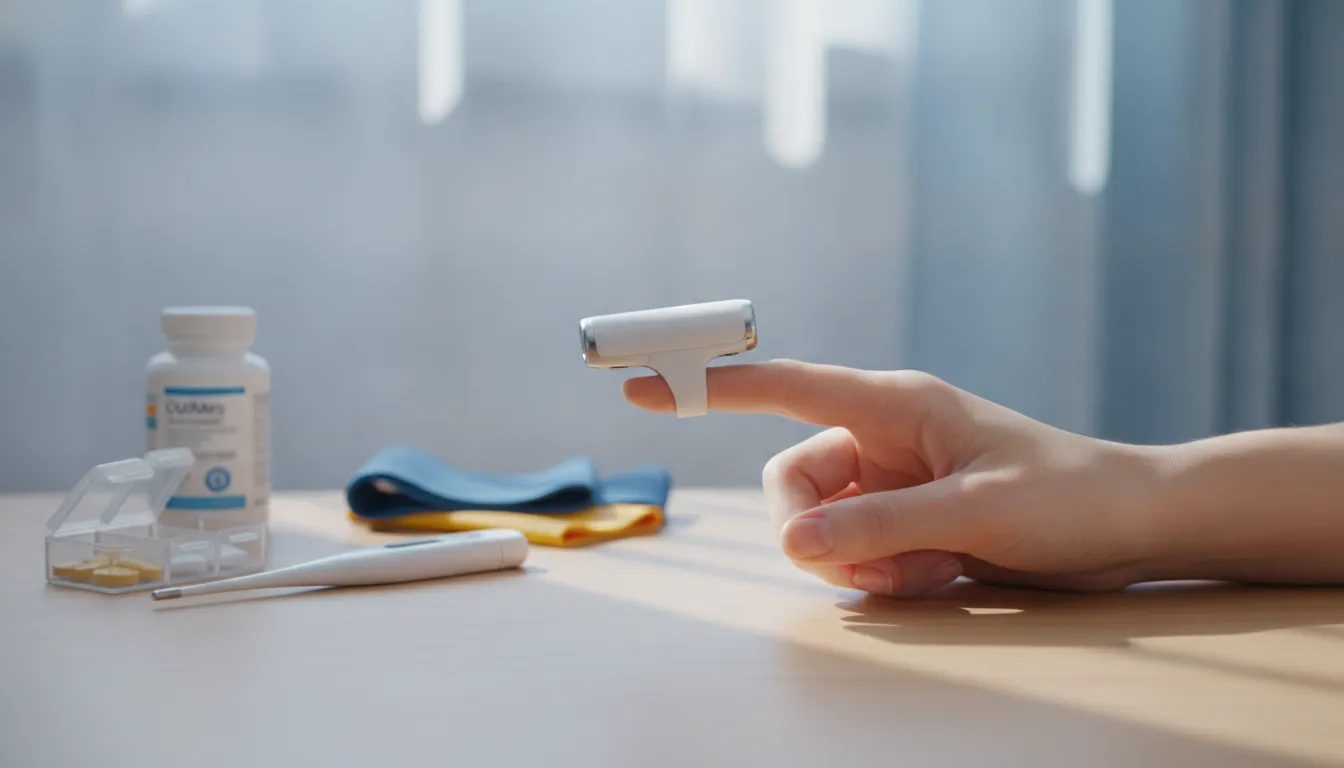
Medical monitors for your blood oxygen levels are essential tools for managing health conditions like asthma or COPD. These small devices provide fast data that helps patients make informed decisions about their daily care.
Are pulse oximeters FSA eligible is a common question for many people who need to track their blood oxygen levels for a health condition from their own home. These small tools are considered eligible for reimbursement under Flexible Spending Accounts (FSAs) and Health Savings Accounts (HSAs) because they serve a very specific and recognized medical purpose. According to the IRS, medical expenses include the costs of equipment and diagnostic devices needed for the diagnosis, cure, or treatment of a physical disease or chronic illness. While most models qualify, you should always save your receipt and use a tool like daylii to stay compliant while managing your health and saving your hard-earned money.
Check your pulse oximeter eligibility with daylii
Navigating the rules for tax-free spending can feel confusing when you are trying to make the right health purchase. You need to know which items qualify and what records to save before you shop.
We will look at specific rules in the section Are pulse oximeters FSA eligible? where the path to smarter spending begins.
Are pulse oximeters FSA eligible?
Pulse oximeters are tools that track blood oxygen. If you have a Flexible Spending Account (FSA) or a Health Savings Account (HSA), you might want to use your pre-tax funds to buy one. The good news is that pulse oximeters are usually covered. They are seen as medical tools that help you track your health.
IRS rules for medical tools
The Internal Revenue Service (IRS) decides what counts as a health cost. The IRS says diagnostic devices needed to find or treat a sickness are valid costs. Since a pulse oximeter checks the oxygen in your blood, it fits this rule. This means you can use your account to pay for the tool without paying tax on that money.
But the tool must be for a medical need. It should not be just for general fitness. For example, if you use it to track a lung issue, it is likely fine. But if you just want to see how your body works after a run, the rules may be more strict. Always check if you have a medical reason to buy the tool. Using daylii can help you find out if your purchase can be documented.
Account type differences
Not all tax-free accounts work the same way. Pulse oximeters are valid for standard FSAs, HSAs, and Health Reimbursement Arrangements (HRAs). These accounts help pay for care and gear. If you have an HSA, you can buy a tool at any time. The funds in your HSA do not go away. This makes it easy to plan for health costs over a long time.
But some accounts have other rules. A pulse oximeter is not okay for a Limited-Purpose FSA (LPFSA). This type of account usually only covers dental and eye care. Also, you cannot use a Dependent Care FSA (DCFSA) for these tools. DCFSAs are for child care or adult care costs while you work. Knowing which account you have will help you make smarter eligible spending choices.
Proof and paperwork
Most of the time, you can buy a pulse oximeter with your benefit card. Many stores that sell health gear will know if the tool is okay to buy. They use a system to check items at the check-out. This makes it fast and easy for you. You just swipe your card and the system does the rest.
Even if the sale is easy, you should keep your receipts. Sometimes the people who run your plan will ask for proof of the buy. They want to make sure the money went to a real medical need. In some cases, you might need to see the documentation requirements for medical devices to show why you need the tool. Keeping good records will stop problems later and keep you in the clear.
Why oxygen monitoring can qualify as eligible medical equipment
The IRS has strict rules for what counts as a medical cost. To qualify, a tool or service must be for “medical care.” This means it should find, treat, or prevent a physical or mental illness. It is not enough for an item to just be good for your health. It must have a clear medical goal. For many people, knowing the standard for medical expenses is the first step in using their pre-tax funds.
The medical purpose test
The core of the rule is the medical purpose test. This test asks why you bought the item. If you bought it to track a health issue, it likely qualifies. Diagnostic devices fall into this group. These are tools that help find or track a disease. They are different from wellness products that you use just to stay fit. The law looks at if the item is mostly for medical care.
For example, a heart rate tool you use for gym workouts may not qualify. But a tool used to track heart health for a medical issue will. The goal is to support people with real health needs. This focus helps the IRS decide what is a true medical cost and what is a lifestyle choice.
How pulse oximeters fit the rules
Pulse oximeters are small, easy to carry tools. They check your blood oxygen levels by shining light through your skin. Since these devices track a key vital sign, the IRS views them as diagnostic tools. This is why you can often say yes when asking are pulse oximeters FSA eligible for your home health kit.
These tools are helpful for people with breathing issues like asthma or COPD. By checking oxygen levels at home, you can see if your treatment is working. This type of tracking helps you and your doctor manage your health without extra office visits. Because the device has a clear medical role, it fits well within the tax rules for medical tools.
Staying safe with records
Even when an item is on the list of eligible goods, you still need to be careful. You should always keep your receipts. In some cases, your plan manager might ask for a letter of medical necessity from a doctor. This note explains why the device is needed for your care. It acts as a bridge between the tool and your health issue.
Following the documentation requirements for medical devices protects you from tax issues. It also helps you get paid back for the cost. At daylii, we use AI to help you track these details. Our system checks your buys against current rules. This proactive way of working helps you spend your funds with confidence. You can focus on your health while we handle the hard rules of compliance.
What documentation do you need for FSA or HSA reimbursement?
You might wonder, are pulse oximeters FSA eligible? The short answer is yes, but you must prove it. Your health plan needs proof to show your money went to real medical care. This is a key part of staying in line with IRS rules. Even if your card works at the store, you may still need to show a receipt later. Plan managers often check buys to make sure they follow the law. Keeping good files saves you from stress during tax time.
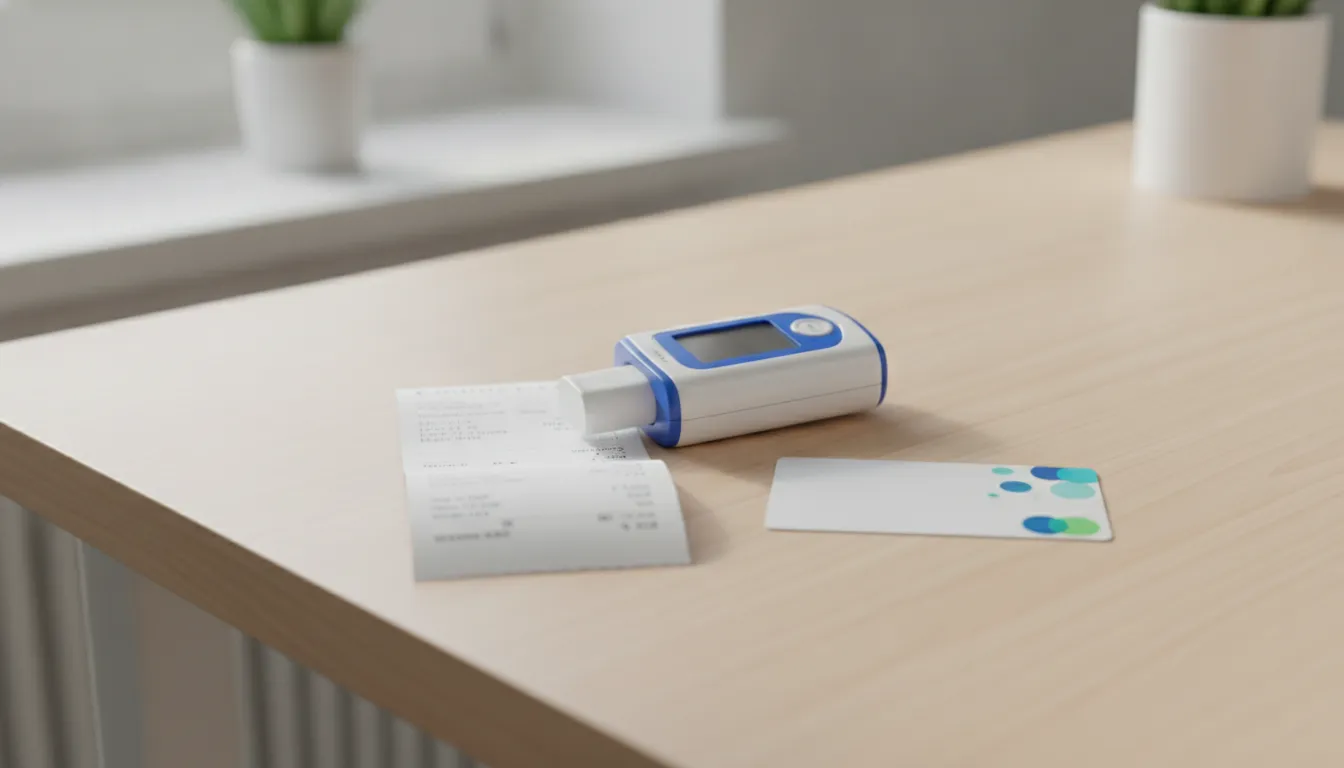
The itemized receipt checklist
- Store or merchant name
- Purchase date
- Specific item name, such as pulse oximeter.
- Final price paid.
- Proof of payment or reimbursement method.
A simple credit card slip is not enough for a health plan. You need an itemized receipt. This document gives the full story of your buy. It must show the date and the name of the store. It also needs to list the specific item. If the receipt just says “medical supply,” your plan might deny the claim. They need to see the words “pulse oximeter” to know it is a valid medical tool. This helps them check that the buy fits under medical expenses for diagnostic devices.
You also need to show the final price and how you paid. If you paid with your own cash, you will use this receipt to get your money back. If you used your benefit card, the receipt proves the swipe was for a health item. Many stores now use a system to flag health items at the till. This makes it easier, but you should still save the paper. Modern tools like daylii can help you track these documentation requirements for medical devices without the mess of paper files.
When a doctor note is required
Some medical tools are in a gray area. A pulse oximeter monitors your oxygen levels. The IRS says these tools are medical if they help find or treat a sickness. If you buy one just for fun, it might not count. To be safe, your plan may ask for a letter of medical necessity from your doctor. This letter explains why you need the tool for your health. It should name your condition, such as asthma, and state how the tool helps you. Without this note, you might have to pay tax on that money.
- Keep your itemized receipts. Every buy needs a record showing the store name, the date, and a clear list of what you bought.
- Check the product name. Make sure the receipt clearly shows the words “pulse oximeter” so the plan knows it is a valid tool.
- Check the payment proof. Your receipt should show the total cost and how you paid. This links the buy to your health account.
- Get a doctor’s letter if needed. If your plan asks for more proof, ask your doctor for a letter of medical necessity to explain your need.
- Store your records safely. Use a digital tool or a folder to keep all your records. The IRS suggests keeping them for at least three years.
Waiting for a plan manager to ask for proof is a risk. If you lose a receipt, you might lose your tax savings. The daylii system makes this process simple and proactive. By using AI, daylii helps you find and save the right proof at the time of the buy. This keeps your account in good standing all year. It also helps you see where your health dollars go. A little work now saves a lot of time and money later.
How should you check eligibility before buying from a general retailer?
When you shop at a large store, you will often see “FSA or HSA Eligible” badges on product pages. These tags are meant to help you find items that your health plan will cover. But you should be careful. General marketplaces often host many different sellers. Some sellers may add these tags just to boost their sales. This can happen even if the item does not meet IRS rules. These labels are a good first step, but they are not a promise. You should always look for the specific model number before you buy.
Why product labels can be tricky
One big problem with general stores is that product names can be vague. A pulse oximeter made for sports may look just like one made for medical use. But the IRS has strict rules. They state that medical expenses must be mostly to treat or prevent a physical illness. Items that are only for general health or fitness do not qualify for pre-tax funds. This is why checking the exact SKU is so vital. If the store’s data is not clear, your health card may be denied at the register.
How stores check items at checkout
Most major shops and drugstores use a special system to check items. This system uses a master list to verify each product during checkout. When you swipe your FSA or HSA card, the system scans the items in your cart. If the store finds the item is a qualified health cost, the payment goes through. If the item is not on the list, the card will be turned down for that part of the sale. This helps ensure you only spend your funds on items that the rules allow.
Managing plan rules and marketplace shifts
Your plan manager is the final judge of what is eligible. Even if a store says a tool is fine, your plan may have its own set of rules. For example, some plans require a doctor’s note for certain health tools. It is a good idea to learn about the documentation requirements for medical devices before you buy. Always keep your receipts in a safe place. If your manager asks for proof, you will need to show the date, the cost, and the health reason for the buy.
Marketplace listings can change fast. A product that was eligible last month might not be today. This can happen due to new tax rules or changes to the product itself. This is where daylii can help. We use an AI tool to check products at the SKU level against current rules. This check helps you avoid the confusion of random tags. By using daylii for smarter eligible spending, you can shop with trust. This way, you stay in line with the law and keep your health funds safe.
FSA, HSA, LPFSA, and DCFSA eligibility at a glance
Choosing the right account for your health spending can save you money. Most people use a Flexible Spending Account (FSA) or a Health Savings Account (HSA). These let you use pre-tax dollars for health costs. This means you do not pay income tax on that money. But you must know which accounts allow health gear. Not all plans share the same rules.
How these tax-advantaged accounts differ
A standard health FSA or HSA is the most common way to buy health tools. These accounts cover things that diagnose, cure, or treat a disease. Since pulse oximeters measure blood oxygen, they fit the IRS rules for medical expenses. Most people can buy them with their health card. It is a simple way to track your health at home without paying full price.
Other accounts have much narrower rules. A Limited-Purpose FSA (LPFSA) usually only covers dental and vision work. You cannot use it for a pulse oximeter. A Dependent Care FSA (DCFSA) is even more limited. It only covers care for kids or adults while you are at work. You should not try to use a DCFSA card for health gear. Checking your smarter eligible spending options helps you pick the right card for each trip to the store.
It is also vital to know about the “use-it-or-lose-it” rule. FSAs often require you to spend your funds by the end of the year. If you have money left, buying a pulse oximeter is a smart move. HSAs are not the same because the money rolls over every year. This makes the HSA a great tool for long-term savings. daylii makes it easy to see what is eligible.
| Account type. | General purpose. | Pulse oximeter eligible. | Key constraint. |
|---|---|---|---|
| Health FSA. | General medical costs. | Yes. | Funds may expire each year. |
| Health HSA. | General medical costs. | Yes. | Requires high-deductible plan. |
| LPFSA. | Dental and vision only. | No. | Very limited scope. |
| DCFSA. | Child or adult care. | No. | Not for medical items. |
Specific rules for pulse oximeters
So, are pulse oximeters FSA eligible for everyone? For most users with a health FSA or HSA, the answer is yes. You can often find these devices at your local drug store or online. Most of the time, you do not need a letter of medical necessity to make the buy. This is because oximeters are viewed as diagnostic tools. They help you track your health status in real time.
Even so, you must follow the rules to stay compliant. You should always keep your store receipts in case of an audit. Your plan might ask for proof that the item is a health device. daylii uses an AI engine to check products against IRS rules. This helps you meet the documentation requirements for medical devices without the stress. It is an active way to manage your health dollars.
Plan rules can also vary by employer. Some plans might have a list of pre-approved items. Others might require you to pay first and ask for a refund later. If you have an LPFSA, you might pair it with an HSA. This lets you use the LPFSA for new glasses while your HSA pays for a heart monitor. Always check your plan docs to be sure.
How daylii makes SKU-level eligibility clearer
The hardest part of eligible spending is often not the broad rule. It is the exact product in front of you. A shopper may understand that medical monitoring equipment can qualify, then still face a confusing product page. A general marketplace cart, a vague FSA/HSA badge, or a receipt that does not clearly show what was purchased. That is why the question is bigger than “are pulse oximeters FSA eligible?” It is also about whether the specific SKU. Seller, account type, and documentation trail support a clean purchase or reimbursement.
daylii is built around that SKU-level gap. Instead of forcing people to interpret eligibility after the fact, daylii’s vision is to map products against eligibility standards such as IRS Publication 502 and SIGIS IIAS logic before the shopper is left guessing. That matters for items like pulse oximeters because the same category can appear across pharmacies, big-box retailers, medical supply sites, and broad marketplaces. The product may be medically useful, but the checkout and recordkeeping experience can vary by merchant and plan.
From category-level guesses to product-level confidence
Traditional eligible spending often relies on broad categories. That can work for obvious items, but it breaks down when a product sits between home wellness, medical monitoring, and general retail. A pulse oximeter is a good example. It is commonly used to monitor oxygen saturation, but a shopper still needs to know whether the listing is treated as eligible. Whether their plan administrator may ask for more proof, and whether the merchant can process an FSA or HSA card correctly.
daylii’s approach is to make the experience more proactive. Rather than placing the burden entirely on the user, daylii connects the purchase decision to eligibility context, documentation needs, and clinically relevant reasons for use. That is the same pain point behind related questions such as documentation requirements for medical devices and when a letter of medical necessity may be needed for products that are not always clearly eligible.
Why provider-linked eligibility matters
Some purchases are simple because the product is plainly medical. Others become clearer when they connect to a diagnosis, provider recommendation, or care plan. daylii’s provider-linked eligibility vision helps close that loop. If a user is monitoring oxygen saturation because of a documented medical need, the eligibility context becomes easier to organize and explain. That does not remove the need to follow plan rules. But it can reduce the uncertainty that causes people to abandon eligible purchases or pay out of pocket unnecessarily.
The goal is not to turn daylii into a traditional e-commerce store. The goal is to make FSA and HSA spending feel less fragmented, more compliant, and more useful in real life. For a pulse oximeter, that means helping a shopper understand the item, the account type, the receipt, and the reason for purchase in one connected flow.
Common mistakes to avoid when using FSA or HSA funds
Pulse oximeter eligibility is usually straightforward, but small mistakes can still create reimbursement friction. The safest approach is to treat every purchase like it may be reviewed later. If your plan administrator asks for proof, you want a clear paper trail that shows what you bought. Where you bought it, when you bought it, and why it fits your account rules.
Mistake 1: Assuming every marketplace listing is eligible
A product title that says “FSA/HSA eligible” is helpful, but it should not be your only check. General retailers can host multiple sellers, duplicate listings, bundles, and accessories that are not always categorized the same way. One pulse oximeter may process cleanly with an FSA card, while a similar listing may require reimbursement after purchase. Before buying, check the product details, the checkout behavior, and your plan’s rules.
Mistake 2: Keeping only the card statement
A credit card or FSA card statement usually proves that money changed hands, but it may not prove what you purchased. Keep the itemized receipt. It should show the merchant, date, product name, amount, and enough detail to connect the purchase to a pulse oximeter rather than a generic order number. If the receipt is vague, save the product page or order confirmation as a backup.
Mistake 3: Confusing medical monitoring with general wellness
Many shoppers see home health devices as one broad category. FSA and HSA rules are more specific. Products that diagnose, monitor, treat, mitigate, or prevent a medical condition are easier to support than products marketed only for general wellness. A pulse oximeter has a clearer medical monitoring purpose than many wellness gadgets, but you should still avoid stretching the claim beyond your actual use.
Mistake 4: Using the wrong account type
A health FSA or HSA is not the same as a dependent care FSA. A limited-purpose FSA is also different because it is usually restricted to dental and vision expenses. If a pulse oximeter is eligible under one account type, that does not automatically make it eligible under every benefit account you have. Check the account before checkout so you do not create a denial that could have been avoided.
Mistake 5: Ignoring plan administrator follow-up
Even when a purchase is eligible, your administrator may ask for documentation. Respond quickly and provide the cleanest evidence available. If they ask for a doctor’s note or letter of medical necessity, do not invent one or rely on generic product language. Ask your provider what documentation is appropriate for your situation.
See how daylii makes FSA and HSA eligibility clearer before you shop
Frequently asked questions
Are pulse oximeters FSA eligible?
Pulse oximeters are generally FSA eligible when used to monitor oxygen saturation as medical equipment. Keep an itemized receipt and check your plan rules because administrators can still request documentation.
Can I buy a pulse oximeter with my HSA?
In many cases, yes. HSAs can be used for qualified medical expenses, and a pulse oximeter used for oxygen saturation monitoring is typically treated as medical equipment. Save the receipt for your tax records.
Do I need a letter of medical necessity for a pulse oximeter?
Not always. Many pulse oximeters are clearly medical monitoring devices. But your administrator may request a provider note if the reason for purchase is unclear or if your plan applies stricter documentation rules.
Are pulse oximeters eligible for LPFSA or DCFSA?
Usually no. A limited-purpose FSA is generally limited to dental and vision expenses, and a dependent care FSA is for dependent care costs, not medical equipment. Check your plan documents before using either account.
Ready to make eligible spending feel simpler?
Pulse oximeter eligibility should not require shoppers to decode product listings, account rules, receipts. And reimbursement steps on their own. daylii is building a smarter way to connect health needs with FSA and HSA eligibility at the SKU level. So people can make qualified purchases with more clarity and less second-guessing.
Learn more about daylii and see how a more proactive FSA/HSA experience can help turn confusing benefit dollars into confident health decisions.