
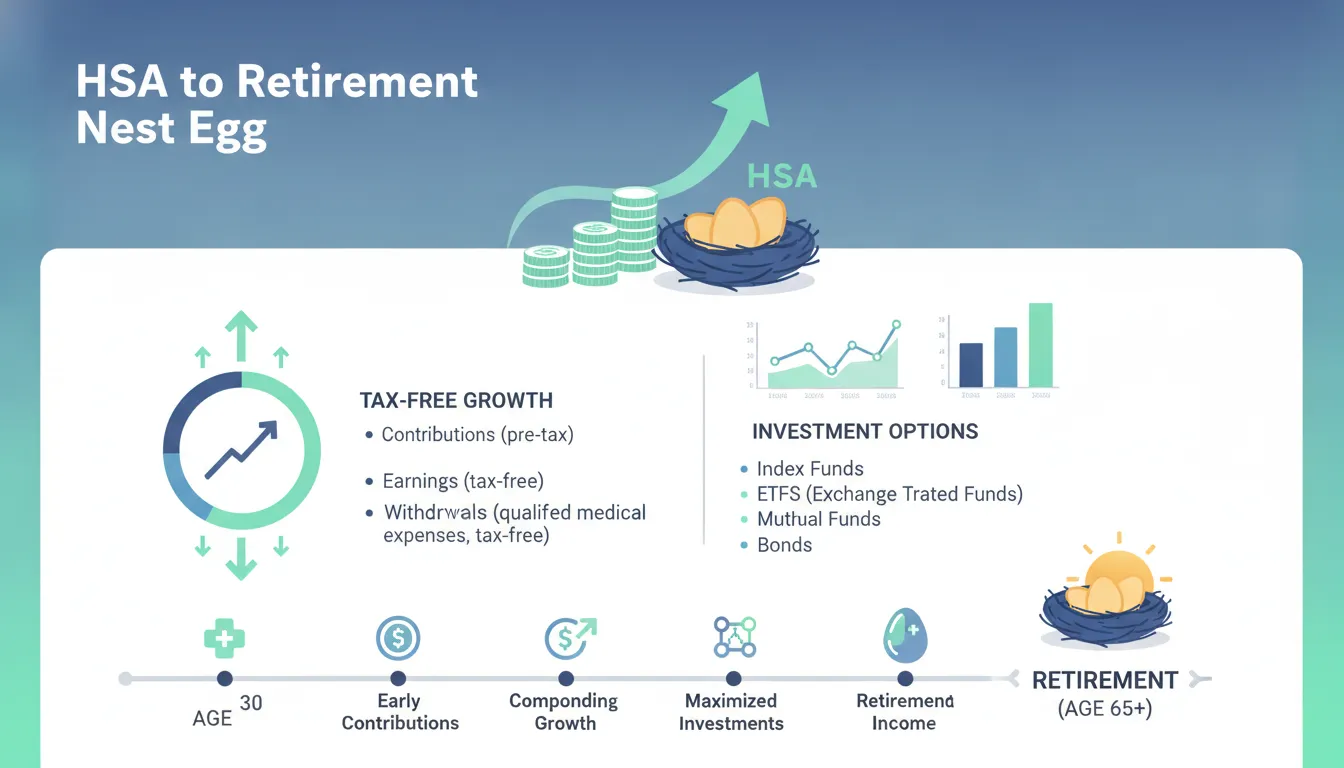
A retired couple can expect to spend an average of $351,000 on healthcare bills during retirement. Paying these bills with cash today lets your health savings account grow into a powerful retirement engine.
Ready to grow your healthcare savings? Start optimizing your HSA investments with daylii today.
An HSA investing guide helps you build wealth by treating your health savings account as a retirement fund instead of a simple spending card. By paying for medical costs with cash today, your contributions can grow and compound in the stock market for your future retirement years. According to the Michigan Civil Service Commission, this account offers a unique triple tax advantage that no other retirement plan can match today. Your contributions are pre tax, investments grow tax free, and withdrawals are tax free when used to cover qualified healthcare bills during retirement. This strategy lets you build a dedicated nest egg that will protect your family and your wealth as you age.
But how do you switch from using your health savings account for immediate needs to using it for retirement? To help you make this choice, we should first explore the key reasons behind Why Use an HSA as an Investment Vehicle. Here is how.
Hsa Investing Guide: Why Use an HSA as an Investment Vehicle?
Most people treat a Health Savings Account (HSA) like a simple checking account. They spend the cash on health bills right away. This common habit means they miss a massive chance to build wealth. If you treat your HSA as an investment account, you can grow your money for decades.
The triple-tax benefit
An HSA is unique because it offers a triple-tax advantage for your savings. First, your deposits are tax-free, and your investments grow without any tax. Second, you do not pay taxes when you take money out for medical bills. No other retirement account has all three of these tax breaks.
If you let your money grow, you use compound interest. Over ten or twenty years, your tax-free growth can add up to a huge sum. This HSA investing guide can show you how to start. When you do not spend your HSA cash on small doctor visits, you let the market do the hard work for you.
Exemption from payroll taxes
Most people know that 401(k) plans lower your income tax, but those payroll savings still face FICA taxes. HSAs are different. When you save through a payroll plan, you skip both income and FICA taxes. If you work for yourself, you can learn about HSA tax advantages for self-employed workers to save even more.
No required minimum distributions
Other retirement plans force you to take money out at a certain age, which are called required minimum distributions. If you do not take them, you face big tax fines. An HSA has no such rules. Your money can stay in the account to grow for as long as you live.
After you turn 65, the rules get even better. You can still use the money tax-free for health bills, but you can also take money out for any other reason. If you do, you only pay normal income tax on those withdrawals. This makes your HSA act just like a traditional IRA once you reach retirement age.
This perk makes the HSA a great tool to fight rising healthcare costs. A retired couple age 65 can expect to pay about $351,000 in out-of-pocket medical costs. While a 401(k) can help, you will pay tax on those payouts. But an HSA lets you pay with tax-free funds, making your retirement nest egg go much further.
HSA Contribution Limits: How Much Can You Invest for Retirement?
To build a strong health portfolio, you must first know the rules. The IRS sets strict caps on how much cash you can put into your health savings account each year. Maxing out these limits is the key first step in maximizing your HSA savings. Doing this lets you move more money from cash into long-term investments.
IRS contribution limits for 2025 and 2026
According to an Investopedia study, the caps rise each year to keep up with inflation. For 2025, you can put in up to $4,300 for self-only plans and $8,550 for family plans. In 2026, these caps go up to $4,400 for self-only plans and $8,750 for family plans. If you are 55 or older, you can add an extra $1,000 catch-up deposit to your account each year.
Maxing out these caps is the best way to use this HSA investing guide. When you save the max, you have more funds to invest in stocks or mutual funds. Over time, compound growth can turn these small tax-free funds into a large retirement nest egg. This growth is key to beating the high cost of healthcare when you retire.
High-deductible health plan requirements
To put money into an HSA, you must be in a high-deductible health plan (HDHP). The IRS defines the exact deductible and out-of-pocket limits that these plans must have. You can view these precise rules in the official IRS Publication 969. If your health plan does not meet these guidelines, you cannot make HSA deposits for that year.
HSA funds versus FSA rollover rules
Many people confuse an HSA with a Flexible Spending Account (FSA). But FSAs have much lower deposit limits and a strict use-it-or-lose-it rule. If you do not spend your FSA funds by the end of the year, that money is gone forever. This loss makes it hard to build long-term wealth with an FSA.
In contrast, HSA funds belong to you forever. The money does not expire at the end of the year and there are no required minimum distributions. You can let the cash roll over year after year while it grows through investments. This makes the HSA a far better tool for retirement saving than any standard FSA.
HSA Spending vs. Investing: Which Strategy Is Right for You?
Choosing how to use your HSA is a major financial decision. You can spend the funds now on medical bills, or you can invest them for the long term. Both paths offer unique perks, but they serve different goals. Your choice depends on your cash flow and your health needs.
Two different HSA paths
The spender path is the most common way people use an HSA. You make pre-tax contributions and use the cash for current medical costs. This strategy is great for near-term planning and maximizing your HSA savings on today’s care. It gives you instant tax relief when you buy medicine or see a doctor. But spending your funds now means you miss out on decades of compound growth.
The investor path treats the HSA as a second retirement account. Instead of spending the funds, you let them grow in stocks or mutual funds. This option is crucial because health costs in retirement can be high. In fact, a retired couple can expect to pay about $351,000 in out-of-pocket medical costs, according to government estimates. An HSA investing guide can help you build a plan to meet these costs.
| Strategy. | Best For. | Tax Treatment. | Growth Potential. | When to Use. |
|---|---|---|---|---|
| Spend Now. | Immediate care costs. | Tax-free withdrawals. | None (cash balance). | When cash is tight. |
| Invest for Later. | Long-term wealth. | Tax-free growth and use. | High compound growth. | When you can pay out of pocket. |
The cash target strategy
You do not have to choose just one option. Many people use a hybrid approach called a cash target strategy. Under this plan, you keep a set amount of cash in your account for current medical bills. For example, you might set a cash target of $2,000 or $2,500. You invest any money above that limit to build long-term wealth. This framework helps you pay for today’s care while still growing your assets.
Keeping a cash reserve protects your investments from sudden market drops. If a health emergency occurs, you can use your cash buffer. You will not have to sell your stocks at a loss to pay the bill. This balance of safety and growth is key to a solid HSA investing guide.
The pay yourself back later plan
Another powerful method is the pay yourself back later plan. You pay for your current medical bills out of your own pocket. You save all your receipts but do not take money from your HSA. This lets your entire account balance grow tax-free for years. Since the IRS has no deadline for withdrawals, you can get your cash decades later. You get tax-free cash in retirement to cover the costs you paid long ago.
This strategy works best if you have a stable income. You must be able to handle current health costs without using HSA cash. Over time, compound growth can turn small tax savings into a large nest egg. It is a great way to build wealth if you do not need the money today.
How to Start Investing Your HSA Funds
Starting your journey with this HSA investing guide is a great way to grow your long-term health savings. But before you buy stocks or bonds, you must meet your provider’s rules. A health savings account offers unique perks, as shown in the state of Michigan HSA investment guide. Using these tax-free funds to invest can turn a simple health plan into a strong retirement tool.
Check Your Account Cash Balance
Most HSA providers do not let you invest every dollar. Instead, they require you to keep a cash reserve. This cash minimum is often between $1,000 and $2,000. It stays in your account to cover short-term medical costs. This cash buffer protects you from having to sell investments when you get sick. If you want to start maximizing your HSA savings, you must first build this base. Keeping cash on hand means you can pay for doctor visits without touching your investments.
Six Steps to Start Your Investments
Once your cash balance is high enough, you can begin. Follow these six steps to set up your account:
- Meet the minimum cash balance. Keep enough cash in your main account to satisfy your provider’s reserve threshold before you move money to investments.
- Activate your investment account. Log into your HSA provider’s online site, find the investment tab, and agree to the rules to turn on the tool.
- Choose your asset allocation. Decide how to split your funds between stocks, bonds, and cash based on your age and risk level.
- Select your target funds. Look for low-cost index funds, broad ETFs, or target-date mutual funds that match your investment goals.
- Set up auto transfers. Set up monthly plans to move any money above your cash threshold into your chosen funds.
- Monitor and rebalance your portfolio. Check your account once or twice a year to make sure your asset mix still fits your long-term plan.
Know the Transfer Rules and Limits
You must also know the exact transfer rules for your provider. For example, Optum Bank sets its standard investment threshold at $2,000. You cannot transfer funds if your cash balance is below this line. When you do make a transfer, you must move a minimum of $100. If your cash balance later falls below $2,000, you can still spend your cash. But you cannot move more money to your investments until your cash balance goes back over the limit. Knowing these limits helps you avoid extra fees and plan your savings.
Best HSA Investment Options for Long-Term Growth
When you treat your health savings account as a retirement tool, choosing the right assets is the key to building wealth. You can build wealth by putting your cash into assets like stocks, bonds, and mutual funds, much like a 401(k) plan. This approach is a great way to grow your balance over time. Many people miss out on this growth because they use their HSA only for short term bills. It helps with maximizing your HSA savings for future needs.
Types of Assets for Your Portfolio
Most providers offer a range of mutual funds and exchange traded funds (ETFs) for your portfolio. Index funds are a great choice because they track a broad market index like the S&P 500. These funds have low costs, which means more of your money stays in your account to grow. If you prefer a simple path, you can choose a target-date fund. These funds adjust your mix of assets on their own as you get closer to your target retirement year.
Here is a common example of how you can split your funds for long-term growth.
- Broad Market Index Funds: These funds buy stocks in hundreds of large companies to match the growth of the whole market.
- Bond Funds: These assets provide lower risk and steady income, which helps protect your money.
- Foreign Funds: These funds invest in companies outside the country to give you global reach.
Matching Assets to Your Investment Timeline
Your plan should match how much risk you can handle. This risk level is based on when you plan to use the money. If you are young and have a long time before retirement, you can take more risk with stocks. Stocks can lose value in the short term, but they offer the best chance for high growth over decades. If you are closer to retirement, you should shift your mix toward bonds and cash to protect your savings. This shift helps you avoid the need to sell stocks when the market is down.
Managing Costs for Better Long-Term Returns
High fees can eat into your gains over time. When you build your portfolio, check the expense ratios of each fund. An expense ratio is the annual fee a fund charges as a portion of your assets. A good HSA investing guide will tell you to look for funds with fees below 0.20 percent. Over twenty or thirty years, keeping these costs low can save you thousands of dollars that can go toward your future healthcare. Lower fees mean more of your compound growth stays in your portfolio.
Tracking HSA Growth with DayliiPulse
Many HSA providers do not offer good tracking tools. dayliiPulse acts as a real-time intelligence layer to solve this problem. It lets you monitor cash balances and investment growth in one simple dashboard. Since a couple retiring at age 65 may need $351,000 for medical costs in retirement, careful planning is vital. Clear analytics help you build the needed savings to meet this goal.
Real-time tracking and expense forecasting
The consumer view in dayliiPulse gives you full control over your healthcare funds. The platform tracks your cash balance and shows you how your investments grow over time. It also gives smart spending nudges to help you avoid costly mistakes. For example, it warns you before your pre-tax funds expire so you can use them in time. This feature helps you plan your contribution strategy each year.
With these analytics, you can forecast your future healthcare needs with ease. The tool estimates how much your HSA balance can grow by the time you retire. You do not have to guess if you are saving enough. Instead, you get a clear look at your projected wealth. This makes it simple to manage your healthcare portfolio for the long term.
Enterprise analytics for population health
For employers and TPAs, dayliiPulse offers a powerful population dashboard. It groups data to show how employees use their pre-tax health accounts. By tracking these trends, you can view total forfeiture rates and find where workers struggle. This helps HR teams design better benefit programs and reduce waste. It turns raw data into clear, useful plans for the whole group.
Using these tools, benefits teams can spot low usage and take action fast. They can send helpful tips to guide employees on how to save. When paired with automated HSA management tools, dayliiPulse creates a smooth workflow. Employers can lower costs while workers grow their long-term wealth. It is the complete system that most old-school HSA providers fail to offer.
Analytics that standard providers lack
Most standard HSA plans only give you a basic list of transactions. They do not help you see the big picture of your health savings. In contrast, dayliiPulse brings deep analytics to your daily financial habits. It shows you exactly how much your money can grow when you invest it. With these insights, you can stop treating your HSA like a simple checking account and start using it to build wealth.
Frequently Asked Questions
Is investing your HSA a good idea?
Investing your HSA is a smart way to grow your money for future healthcare costs. If you pay for current medical needs out of pocket, your HSA funds can grow tax-free. According to a state health guide, this account offers a unique triple-tax advantage. Your contributions are tax-free, your investments grow tax-free, and your withdrawals for healthcare are tax-free. This strategy builds a strong nest egg for retirement.
Can you invest HSA money in stocks?
Yes, you can invest your HSA cash in the market. Most providers let you choose stocks, bonds, and mutual funds, similar to a 401(k) plan. You can find more details in this HSA investment guide. Investing your funds allows your money to grow much faster than a standard savings account. This is a key step to build long-term wealth for your future healthcare needs.
Can I reimburse myself years after paying for medical care?
Yes, you can pay yourself back at any time. There is no deadline or time limit for HSA paybacks. According to this HSA guide, you can get reimbursed years later if your account was active when the expense occurred. This trick lets you keep your money invested so it can grow in the market for a longer time.
What happens to HSA funds after age 65?
Once you turn 65, your HSA works a lot like a traditional IRA. You can still use the funds tax-free for medical needs. But you can also withdraw money for non-medical costs without a penalty. You will only pay normal income tax on those withdrawals. This rule is explained in this state retirement guide. There are also no required minimum distributions, so your funds can stay in the account as long as you like.
Ready to Make Your HSA Work Harder for Retirement?
Your health savings account is one of the most powerful retirement tools available. And with the right strategy it can grow into a substantial nest egg for healthcare costs and beyond. Start by maxing out your annual contributions, investing for long-term growth, and tracking your progress with a tool that gives you real-time visibility into your balance and projections.
Get started today. Start with godaylii.com to see how DayliiPulse helps you monitor your HSA investments. It can forecast retirement healthcare expenses and make every pre-tax dollar work toward your future.