
Millions of people use daily supplements, yet most are shocked when their benefits card gets declined at the register. Knowing which items qualify under your plan can prevent this frustration and save you hundreds of dollars in pre-tax funds. Navigating these rules is simple once you know what plan administrators look for.
Start verifying your FSA-eligible vitamins today
To qualify as FSA eligible vitamins under IRS Publication 502, supplements must treat or prevent a diagnosed medical condition rather than support general health. Most daily multivitamins are excluded because the IRS does not cover products that are merely beneficial to general wellness. However, you can use your pre-tax funds to buy these products if a licensed provider writes a Letter of Medical Necessity that details how the supplement treats your specific illness. Prenatal vitamins and glucosamine are unique exceptions that are explicitly eligible without a doctor’s note. This means you can use pre-tax dollars for your health needs if you follow the correct clinical documentation pathway.
Before you purchase your next bottle of supplements, it is vital to learn how the IRS defines qualified medical care. Understanding the key guidelines in IRS Publication 502 will help you secure approval from your plan administrator without any stress. Let us look closer at What Makes a Vitamin FSA-Eligible Under IRS Publication 502? so you can shop with confidence.
FSA Eligible Vitamins: What Makes a Vitamin FSA-Eligible Under IRS Publication 502?
Managing your healthcare spending can be complex, especially when it comes to everyday supplements. If you want to use your tax-free funds for wellness products, you must understand the rules set by the government. The main guide for these rules is IRS Publication 502, which determines vitamin eligibility for tax purposes. Under these strict federal guidelines, not all health products qualify for tax-free spending.
To use your account for these purchases, the items must qualify as true FSA eligible expenses. This means they must meet the legal standard of medical care rather than general health. Understanding this boundary is the first step to maximizing your healthcare benefits without facing rejected claims or tax penalties.
The Legal Definition of Medical Care
To qualify as a medical expense under the tax code, a product must serve a specific purpose. The IRS defines medical expenses as the costs of diagnosis, cure, mitigation, treatment, or prevention of disease. These expenses must be primarily to alleviate or prevent a physical or mental disability or illness. If a product does not target a specific illness or bodily function, it does not meet this legal standard.
This definition is the foundation for all FSA spending decisions. When plan administrators review your claims, they look for a direct link between the product and a medical condition. Without this link, a supplement is simply a personal care item in the eyes of the law.
General Wellness vs. Medical Necessity
The biggest hurdle for supplement users is the line between daily wellness and medical need. The IRS excludes expenses that are merely beneficial to general health from being qualified medical expenses. This is why vitamins purchased for general health, immune support, or daily nutrition do not qualify as medical expenses under IRS guidelines. Even if a daily multivitamin makes you feel better, the law views it as a personal choice rather than a medical treatment.
For a supplement to cross the line from general wellness to medical care, a doctor must recommend it to treat a specific health issue. For example, a doctor might prescribe iron to treat anemia or vitamin D to treat a severe deficiency. In these cases, the supplement ceases to be a general wellness product and becomes a targeted treatment for a diagnosed disease.
Why Multivitamins Usually Fail the Test
Most daily multivitamins fail to qualify for easy FSA spending because of how they are marketed and used. These products are made for the general public to maintain baseline nutrition. They are not designed to treat a specific disease or deficiency. Because they serve a broad wellness purpose, plan administrators must reject them under normal circumstances.
To change this status, you must obtain a formal document from your healthcare provider. This documentation must prove that you need the specific vitamin to treat a diagnosed medical condition. Without this proof, your daily multivitamin will remain an out-of-pocket personal expense rather than an eligible medical cost.
Which Vitamins and Supplements Are Explicitly Covered Without a Doctor’s Note?
The rules of the Internal Revenue Service can feel strict when you shop for health items. Most daily supplements require a doctor to sign off before you can use your pre-tax funds. However, a select group of items bypasses this rule entirely. These specific choices are pre-approved, meaning you can buy them directly with your healthcare card without submitting extra forms.
The Select List of Pre-Approved Products
Only a few therapeutic supplements are eligible for purchase without professional documentation. According to official guidelines, prenatal vitamins and glucosamine are explicitly allowed by the IRS for tax-free purchase. The IRS recognizes these items as treatments for specific, well-defined physical needs rather than general wellness. For example, prenatal pills support fetal growth during pregnancy, and glucosamine addresses joint wear.
You can also buy joint health products like chondroitin and digestive aids like fiber laxatives without a doctor’s note. These items have a different legal status because they treat specific physical issues. This status sets them apart from standard daily multi-packs, which the IRS views as general nutrition products.
Why the IRS Grants Pre-Approved Status
The main factor in pre-approval is the clear medical purpose of the product. The IRS does not allow pre-tax funds for things that simply support general health. Most multivitamins fall into the general health category, so a Letter of Medical Necessity is typically required to buy them. This document proves to your plan administrator that the supplement is needed to treat a diagnosed medical issue.
Pre-approved items, however, have a direct and narrow therapeutic role. The IRS is confident that people buy prenatals or glucosamine for a specific care goal. Because these goals are clear, administrators do not need a doctor’s form to verify the medical need. This keeps the checkout process fast and simple for daily buyers.
Practical Examples of Approved Items
When you shop, you must still choose the right product types to match these rules. Standard prenatal pills with folic acid qualify for automatic approval. Joint supplements that combine glucosamine and chondroitin also pass the check at the cash register. These items are ready for tax-free payment at any pharmacy or grocery store.
In contrast, a standard bottle of daily vitamin C or zinc will not qualify automatically. You can get these items reimbursed, but only after you obtain a written form from your provider. Understanding this line helps you plan your health spending and avoid card rejections at checkout.
How to Get a Letter of Medical Necessity for FSA-Eligible Supplements
Buying everyday health items with tax-free funds often requires extra steps. While some products are covered automatically, most dietary supplements require a formal doctor’s note first. Navigating this process is straightforward if you know what plan administrators look for when reviewing your claims.
A Letter of Medical Necessity is a written document from a licensed healthcare provider. This document explains why a specific supplement is required to treat your diagnosed medical condition. According to IRS rules, vitamins used only for general health, daily nutrition, or immune support do not count as medical expenses under IRS guidelines. However, when a doctor prescribes FSA eligible vitamins to manage a clear medical issue, these products qualify for reimbursement.
The Step-by-Step Approval Process
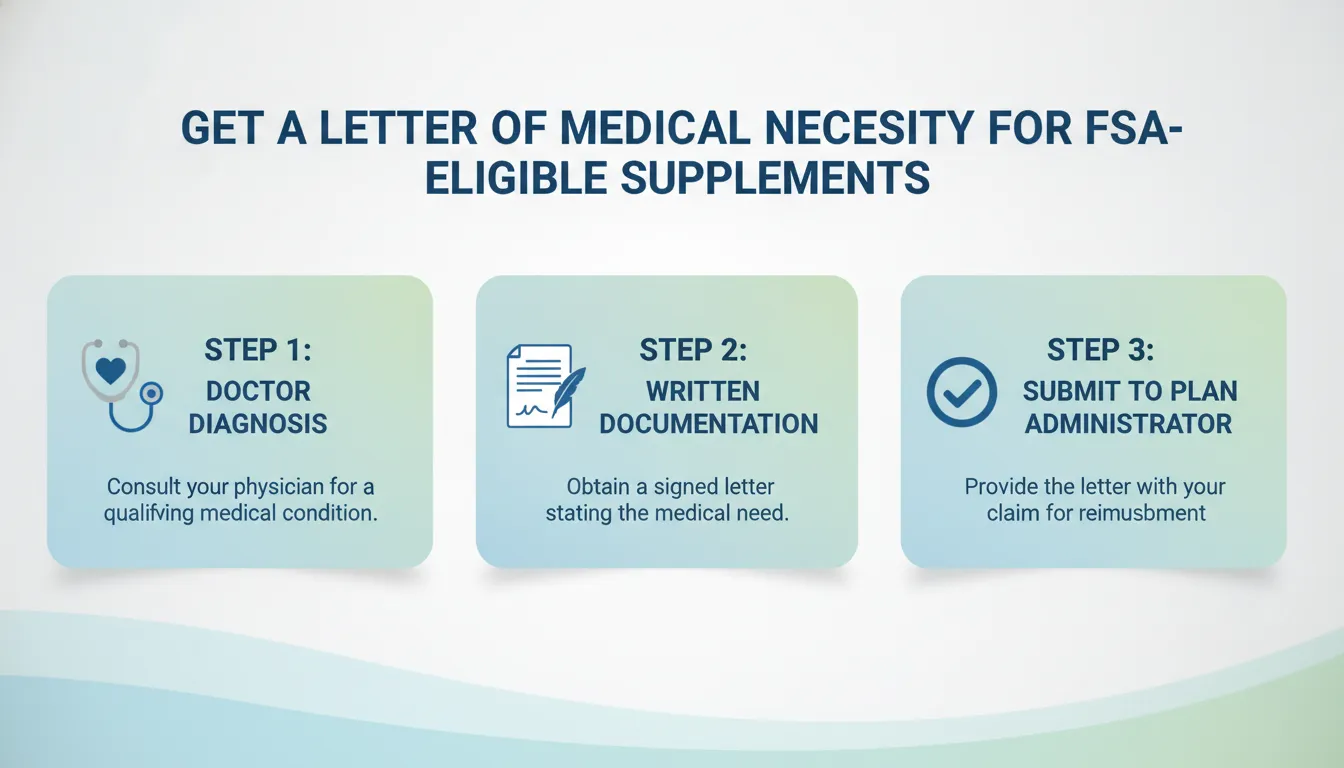
To buy your vitamins using tax-free dollars, you must follow the correct three-step Letter of Medical Necessity workflow. Failing to complete these steps in order can lead to a rejected claim.
- Get a formal diagnosis from a licensed provider. You must schedule a visit with a doctor, physician assistant, or nurse practitioner to evaluate your symptoms. Your provider must identify a specific medical condition, such as chronic iron-deficiency anemia or a severe vitamin D deficiency. General wellness goals or generic health concerns do not meet the strict IRS definition of medical care.
- Obtain written documentation from your doctor. Your provider must write a letter that names your specific diagnosis and outlines the treatment plan. This letter must list the exact vitamins or supplements recommended to treat the issue. The written statement must show how the product works to alleviate or prevent your specific physical illness. Under FSAFEDS guidelines, potentially eligible expenses always require this detailed provider documentation.
- Submit the completed document to your plan administrator. Once you have the signed letter, upload it to your benefits portal or submit it alongside your purchase receipt. This paperwork is essential for plan administrators to approve vitamin purchases that would otherwise be ineligible. Keep a copy of this document for your personal tax records, as approvals typically remain valid for one year from the date of the signature.
What a Good Letter of Medical Necessity Looks Like
A successful letter must be highly specific to satisfy your benefit coordinator. Vague statements like “patient needs supplements” are the most common cause of denied claims.
A strong document includes your full name, the provider’s signature, and the clinical diagnosis code. It must explicitly state how the supplement acts as medical treatment rather than daily nutrition. For example, if you need a high-dose supplement to treat joint pain, the document must detail how the therapeutic ingredients directly address your symptoms. Homeowners using the Letter of Medical Necessity pathway for other wellness items like air purifiers will find that the same level of diagnostic detail is required to secure approval.
FSA-Eligible vs. Non-Eligible: A Quick Reference Guide
Shopping for daily health products with pre-tax funds can be a puzzle. The Internal Revenue Service (IRS) divides common wellness products into clear classes based on their medical use. While some items are ready to buy at checkout, others require a doctor to sign off first. Understanding these rules helps you plan your health budget and avoid rejected claims at the end of the year.
The Supplement Eligibility Matrix
Not all health items share the same rules under tax law. The table below details how common product groups fit into your flexible spending account (FSA) based on federal guidelines.
| Supplement Category | FSA Eligible? | LMN Required? | Notes |
|---|---|---|---|
| Prenatal Vitamins | Yes | No | Explicitly allowed to support pregnancy health. |
| Glucosamine | Yes | No | Allowed without a note to treat joint issues. |
| Vitamin D | Conditional | Yes | Eligible only when treating a diagnosed deficiency. |
| Multivitamins | Conditional | Yes | Requires a doctor’s note to treat a specific illness. |
| Probiotics | Conditional | Yes | Only covered to manage a diagnosed gut condition. |
| Fish Oil/Omega-3s | Conditional | Yes | Eligible only to treat specific heart or joint issues. |
| Protein Powder | No | Yes | Excluded as food unless treating extreme muscle loss. |
Why Certain Supplements Are Always Eligible
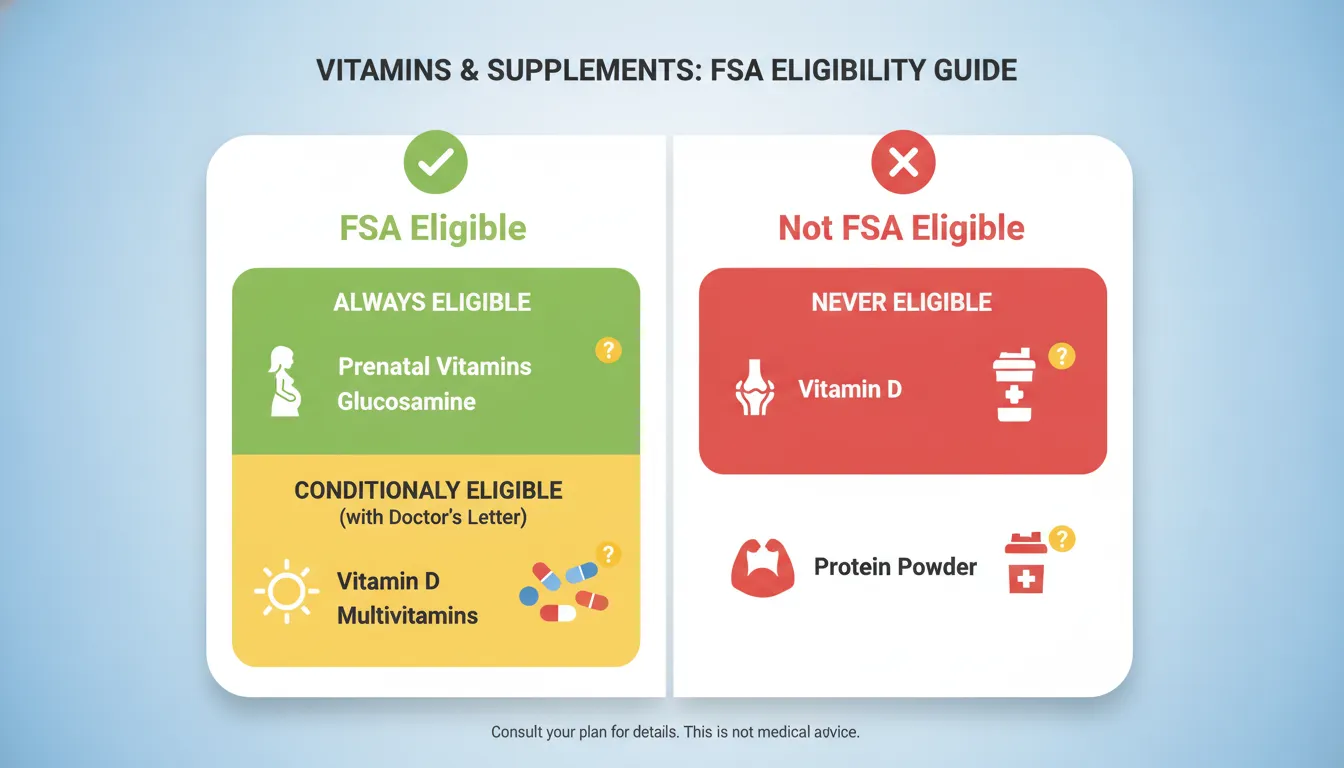
A few specific products do not require any extra paperwork from your doctor. Under IRS guidelines, prenatal vitamins and glucosamine are explicitly allowed for tax-free purchase. The IRS treats prenatal care as essential medical care rather than general health support. Similarly, joint health compounds like glucosamine are widely accepted by plan administrators without a doctor’s note because they target physical joint care directly.
The Role of a Diagnosed Medical Condition
For most daily supplements, eligibility hinges on why you are taking them. The IRS rules state that vitamins purchased for daily nutrition or immune support do not qualify as FSA eligible expenses because they are merely beneficial to general health. However, these same vitamins become eligible when used to treat a specific, diagnosed illness. For instance, if a blood test shows a severe deficiency, your provider can write a letter detailing how a daily dose of vitamin D acts as medical treatment.
How to Navigate the Letter of Medical Necessity Pathway
If your supplement is not on the pre-approved list, you must secure a Letter of Medical Necessity (LMN) from a licensed healthcare provider before you make your purchase. This document acts as a bridge between your medical treatment and your pre-tax account. It must explain your specific diagnosis, the exact supplement needed, and how that supplement helps manage your condition. Keeping detailed records of your LMN and checkout receipts ensures your plan administrator will approve the claim without delay.
How DayliiMarketplace Simplifies FSA Vitamin Shopping
Shopping for FSA eligible vitamins often leads to frustration at the checkout counter. Many people find their benefit cards declined because store registers cannot verify whether a specific supplement meets tax guidelines. This issue occurs because standard systems do not check individual item codes against complex rules. Our platform removes this friction. It checks eligibility in real time before you pay.
Ready to start saving? Schedule a free consultation today to see how we make your pre-tax dollars go further.
Real-Time SKU Verification at Top Retailers
Our system connects directly with major retail partners like Amazon, CVS, and Walmart. When you browse these stores through our portal, the verification engine analyzes the unique item codes of each product. This process is much more detailed than a simple category filter. It determines if a product is pre-approved or if it requires a doctor’s directive.
The database updates constantly to match the latest guidelines from Internal Revenue Service rules. This means you do not have to guess which brands or dosages are qualified. You can add items to your cart with confidence, knowing the system validates your choices before you swipe your card.
Instant Eligibility Indicators
As you shop, the interface displays clear visual badges next to each vitamin and supplement. A green badge indicates the product is pre-approved under your plan rules. A yellow badge indicates the item can be purchased if you have the proper medical documentation on file.
This step-by-step guidance stops you from buying ineligible products by mistake. It also shows you exactly what items qualify for immediate tax savings. By showing this data as you browse, we help you avoid checkout delays and awkward card declines.
Zero-Friction Clinical Integration
When a supplement requires a Letter of Medical Necessity, our tool coordinates with DayliiDiagnosis. This clinical feature links directly with electronic health record networks to map your diagnosis codes. If your doctor has recommended a supplement for a health condition, the platform finds the record automatically.
This smooth connection allows you to unlock tax savings on products that usually require manual claim forms. You do not need to print, sign, or mail paper documents. The system verifies your medical directive and matches it to your cart, making your vitamin shopping both simple and compliant.
According to GoodRx, daily vitamins for general health or daily nutrition are not typically covered. The IRS excludes wellness items that merely benefit your general health. However, vitamins become FSA eligible expenses when they treat or manage a specific, diagnosed medical condition. You must show the purchase has a clear medical purpose.
Only a few specific supplements are covered automatically. As noted by Metagenics, prenatals and glucosamine are explicitly allowed without a doctor’s note. This is because prenatals prevent birth defects and glucosamine treats joint pain. For almost all other dietary supplements, you must have a doctor prove a medical necessity to use your tax-free funds.
Yes, but a simple verbal recommendation is not enough. You must obtain a formal Letter of Medical Necessity from a licensed healthcare provider. This document must state your specific medical diagnosis, such as a severe vitamin deficiency, and explain why the supplement is required to treat it.
According to Flex, a Letter of Medical Necessity is a document written by a licensed healthcare provider. It shows plan administrators why a product is medically necessary for your care. By proving the vitamin is part of a treatment plan for a diagnosed condition, this document allows your provider to unlock FSA approval.
To get your claim approved, you must submit two documents to your plan administrator. First, you need the itemized store receipt that shows the purchase date and cost. Second, you must submit the signed Letter of Medical Necessity. You can also bypass this manual reimbursement process entirely by shopping on a platform like daylii to verify your items.
You can use your tax-free funds for vitamin purchases if you, your spouse, or your tax dependents have a diagnosed health condition that needs them. According to the IRS, the supplement must treat or prevent a specific disease or body issue to qualify. General wellness vitamins for other family members are not eligible.
Ready to verify your vitamin FSA eligibility?
Buying health supplements with pre-tax dollars can be confusing and often leads to frustrating card declines at checkout. Every single year, millions of FSA cardholders miss out on significant health savings simply because they avoid buying necessary items due to eligibility uncertainty. You can easily protect your hard-earned pre-tax funds from expiring unused by choosing a simple and proactive verification system before you make your final purchase.
By using an instant check at checkout, you ensure that every eligible vitamin, prenatal, or medical supplement is correctly covered under tax rules. This completely eliminates the guesswork and stressful paperwork of manual claims later.
Ready to shop with absolute confidence? Visit godaylii.com to start using DayliiMarketplace to verify FSA eligibility at checkout across Amazon, CVS, and Walmart today.