
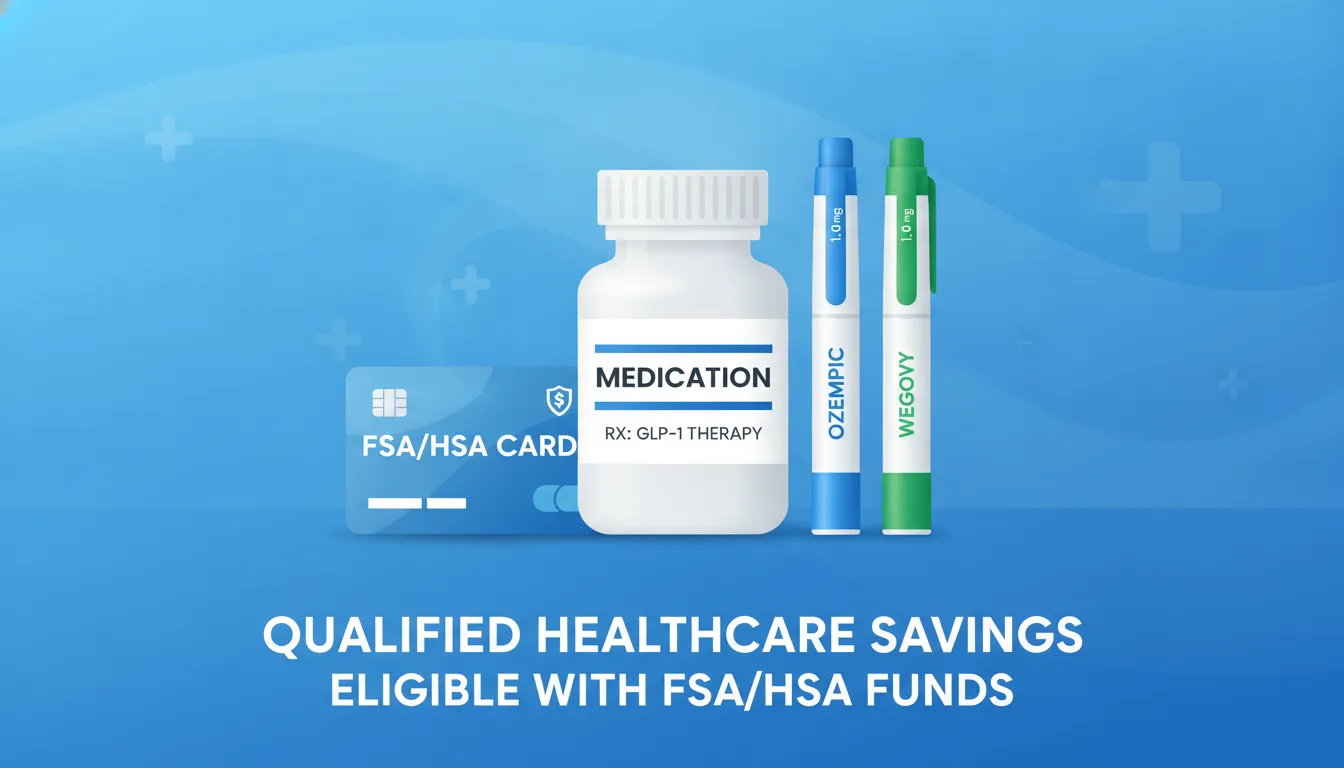
Most GLP-1 weight loss treatments cost more than nine hundred dollars for a single month. These high prices leave many people looking for ways to lower their out-of-pocket costs. Using your pre-tax health funds for FSA eligible medical expenses is one of the smartest ways to save on these drugs.
GLP-1 FSA eligible status depends mostly on why your doctor wrote the prescription and how they listed your medical need for treatments like obesity or diabetes. According to IRS rules, these drugs are generally eligible if used to treat a specific medical condition instead of just for general health. You will often need a prescription and a Letter of Medical Necessity from your doctor to prove the drug is required for your medical care. Once you have these papers, you can use your pre-tax funds to save about 30 percent on medications like Ozempic, Wegovy, Mounjaro, or Zepbound. The daylii platform will let you check the eligibility of items at the SKU level so you can shop with total confidence.
Understanding GLP-1 Medications for Weight Loss
GLP-1 medications are a class of drugs that mimic a natural hormone to help control blood sugar and reduce appetite. They work by telling your brain when you are full and slowing digestion. When prescribed for a diagnosed condition like obesity or type 2 diabetes, these drugs are typically eligible for FSA or HSA coverage. Brands like Ozempic, Wegovy, Mounjaro, and Zepbound fall into this category but differ in their approved uses and dosing.
GLP-1 drugs have changed how doctors approach weight management. They help people lose weight by altering how the body processes hunger signals. GLP-1 stands for glucagon-like peptide-1, a natural hormone that controls blood sugar and appetite. New drugs that mimic this hormone offer a path to sustainable weight loss. Since these are GLP-1 FSA eligible treatments when properly prescribed, many people use pre-tax funds to manage the cost.
What are GLP-1 agonists?
GLP-1 agonists are medications that act like the GLP-1 hormone your body produces naturally. This hormone tells your brain when you are full and slows how fast food leaves your stomach, helping you feel less hungry throughout the day. Drugs like semaglutide and tirzepatide use this mechanism to support weight loss. Because they are potent, these drugs require a prescription to treat a specific health condition or chronic illness.
There are two main types of these drugs available today:
- Single-action GLP-1 agonists: These target only the GLP-1 pathway. Semaglutide is the best-known drug in this group, found in Ozempic and Wegovy.
- Dual-action GIP/GLP-1 agonists: These target two pathways at once. Tirzepatide, found in Mounjaro and Zepbound, mimics both GLP-1 and GIP hormones for enhanced results.
How these drugs help you lose weight
Most people see significant changes when using these drugs alongside healthy diet and exercise habits. Clinical research shows patients typically lose 10 to 15 percent of their body weight over time. This happens because the drugs curb cravings and reduce what many describe as food noise, the constant urge to eat. Beyond appetite suppression, these drugs also help your body process sugar more effectively.
To maintain results, doctors recommend increasing protein intake and staying active to preserve muscle mass. The drugs make these lifestyle changes easier to maintain because hunger levels drop significantly. When you purchase these treatments, you may be able to use your FSA eligible medical expenses to cover the cost, saving hundreds of dollars each month.
Popular brands and their uses
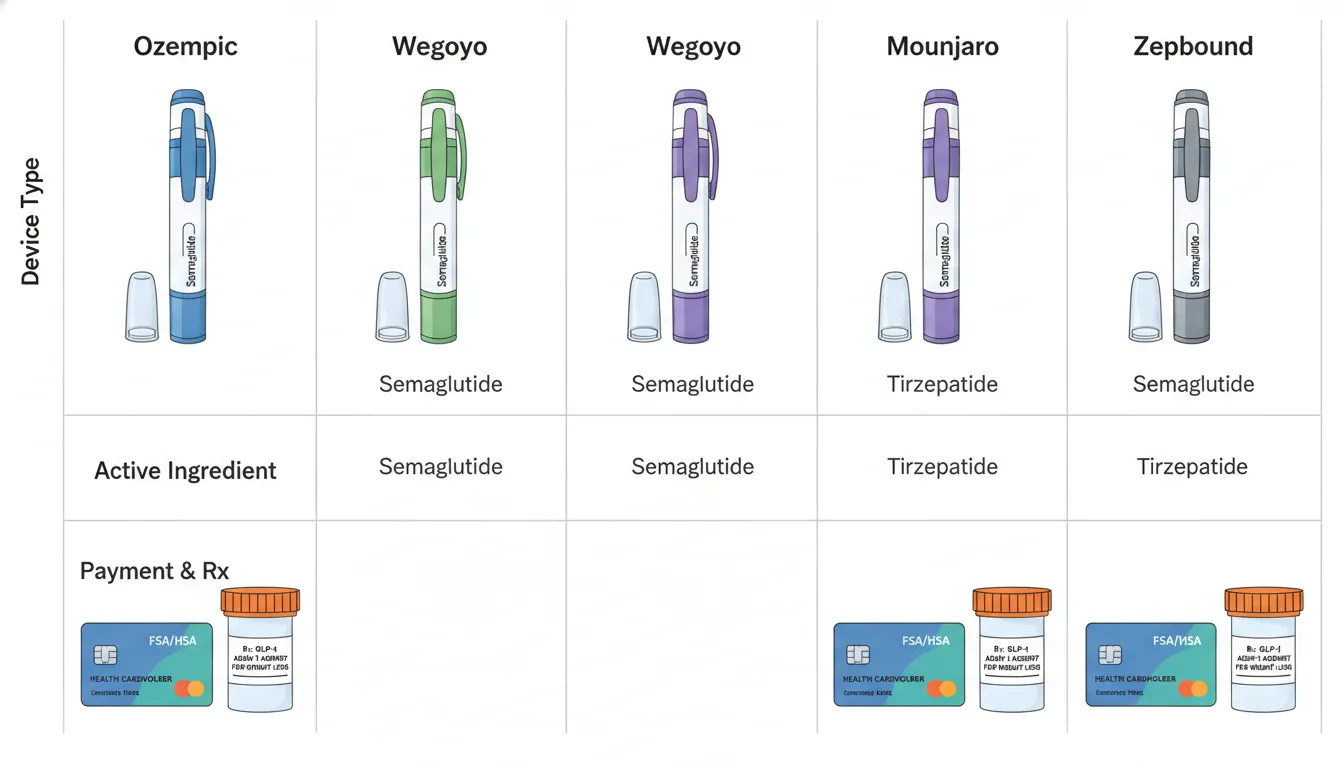
You will encounter several brand names for these medications. Ozempic and Mounjaro were initially developed to treat type 2 diabetes. Doctors discovered they also produced significant weight loss, leading to dedicated weight management brands. Wegovy contains the same active ingredient as Ozempic at a higher dose specifically for weight loss. Zepbound shares its active ingredient with Mounjaro and is approved for chronic weight management.
Each medication follows a specific dosing schedule to help your body adjust. Most are administered as a weekly injection. Your doctor starts you on a low dose to minimize side effects like nausea, then gradually increases it over several weeks to reach the optimal therapeutic level. This titration approach helps your body adapt and makes the treatment easier to tolerate.
Are GLP-1 Drugs FSA or HSA Eligible?
Most GLP-1 drugs qualify as FSA or HSA eligible expenses when prescribed to treat a diagnosed medical condition. The IRS permits pre-tax health fund usage for medications that diagnose, cure, or treat a specific disease. For GLP-1 drugs, this typically means having a diagnosis of type 2 diabetes or obesity. A valid prescription from a licensed physician is required, and a Letter of Medical Necessity may be needed to confirm the drugs medical purpose.
Most GLP-1 drugs qualify as FSA eligible medical expenses when used to treat a specific illness. The IRS classifies these as medical care when a doctor prescribes them to prevent or treat a physical or mental disease. If your situation meets these criteria, you can use your pre-tax funds to pay for the medication.
You can also use a Health Savings Account for these drugs. Like an FSA, an HSA can pay for HSA eligible expenses that a doctor confirms you need. The critical factor is that the drug addresses a health condition rather than serving cosmetic purposes.
IRS rules for drug eligibility
The IRS has clear guidelines about what constitutes a medical expense. According to IRS Publication 502, you can only deduct costs that alleviate or prevent a physical or mental illness. GLP-1 drugs qualify when they treat conditions like type 2 diabetes or cardiovascular disease. In these cases, the medication cost counts as a valid medical expense.
To use FSA or HSA funds, you need a valid prescription from a licensed physician. The IRS defines an eligible drug as one used in the diagnosis, cure, or treatment of a disease. When your doctor prescribes a GLP-1 medication for a specific medical reason, it generally satisfies IRS standards for pre-tax spending. Always keep your prescription documentation for your plan provider or tax records.
When weight loss drugs qualify
Weight loss medications occupy a nuanced position in tax-free spending rules. Under IRS Revenue Ruling 02-19, costs for a weight loss program qualify only when they treat a diagnosed medical condition. Obesity qualifies as a diagnosable disease, making GLP-1 drugs GLP-1 FSA eligible for patients with this diagnosis.
Your doctor must document that the medication serves the primary purpose of treating a disease rather than general wellness or cosmetic improvement. When the drug addresses conditions like hypertension or insulin resistance caused by excess weight, it meets the medical care test. Clear documentation of your diagnosis provides the strongest support for a successful claim.
Exclusions for general wellness
Not every use of a GLP-1 drug qualifies for tax-advantaged savings. The IRS strictly excludes expenses that are merely beneficial to general health. If you take the medication solely to feel better or improve appearance without a diagnosed condition, it does not qualify as an eligible expense. This applies even if the drug produces measurable health improvements.
Cosmetic uses are explicitly excluded from FSA and HSA spending. Weight loss without an accompanying diagnosis like obesity may not pass IRS scrutiny. To ensure compliance, discuss with your doctor the specific medical reason for the prescription and confirm it aligns with IRS medical care definitions.
Why Your Prescription Type Matters for FSA Eligibility
When evaluating FSA eligible medical expenses, the reason for your prescription carries the most weight. GLP-1 drugs prescribed for FDA-approved conditions like type 2 diabetes or obesity have a clear path to eligibility. Prescriptions written off-label may still qualify, but the documentation burden is higher.
Your prescription type determines whether GLP-1 drugs qualify for FSA or HSA reimbursement. On-label prescriptions for diabetes or obesity have the strongest eligibility path. Off-label prescriptions may qualify with a Letter of Medical Necessity. The key distinction is whether the medication treats a specific diagnosed condition rather than serving a general wellness purpose. Always confirm with your plan administrator before making a purchase.
Doctor’s diagnosis and IRS criteria
The foundation of GLP-1 FSA eligibility rests on your doctor’s diagnosis. When a physician diagnoses a qualifying condition and prescribes a GLP-1 drug as treatment, the IRS considers this a medical expense. Common qualifying diagnoses include type 2 diabetes, obesity (BMI of 30 or higher), and cardiovascular disease linked to weight.
Your medical records should clearly establish the diagnosed condition and its relationship to the prescribed medication. This documentation becomes especially important during FSA audits or HSA reimbursement requests. Learn more about how EHR integration supports medical necessity documentation for these cases.
Letter of Medical Necessity requirements
A Letter of Medical Necessity (LMN) serves as formal documentation from your healthcare provider confirming that a specific treatment is required for your medical condition. For GLP-1 drugs prescribed off-label or when the condition is not immediately clear from the prescription alone, an LMN strengthens your eligibility case significantly.
An effective LMN should include:
- Your diagnosed medical condition with ICD-10 codes
- Why the specific GLP-1 drug is medically necessary
- Alternative treatments tried and their outcomes
- Potential health consequences if the medication is not used
- Your doctor’s license information and signature
How Much Can You Save Using FSA or HSA for GLP-1 Drugs?
Using pre-tax FSA or HSA funds for GLP-1 medications can save you 30 to 40 percent on out-of-pocket costs, depending on your tax bracket. For medications costing $900 to $1,300 per month, this translates to $270 to $520 in monthly savings. Combined with manufacturer savings programs, the total annual savings on a single GLP-1 prescription can exceed $6,000.
The financial impact of using pre-tax dollars for GLP-1 medications is substantial. When you pay with FSA or HSA funds, every dollar you spend avoids federal income tax, Social Security tax, and Medicare tax. Depending on your tax bracket, this effectively gives you a discount of 30 to 40 percent on every purchase.
Consider this comparison for a typical GLP-1 prescription:
| Expense | Post-Tax Payment | FSA/HSA Payment | Your Savings |
|---|---|---|---|
| Monthly medication cost | $1,000 | $1,000 | N/A |
| Pre-tax value of $1,000 | You earned ~$1,430 to net $1,000 | You earned $1,000 to spend $1,000 | ~$430 saved |
| Annual cost (12 months) | $17,160 in pre-tax earnings | $12,000 in pre-tax earnings | ~$5,160 saved |
Beyond tax savings, many GLP-1 manufacturers offer copay savings programs that can reduce your out-of-pocket costs further. Combining these programs with FSA or HSA spending maximizes your savings on these expensive therapies.
How to Use Your FSA or HSA for GLP-1 Medications
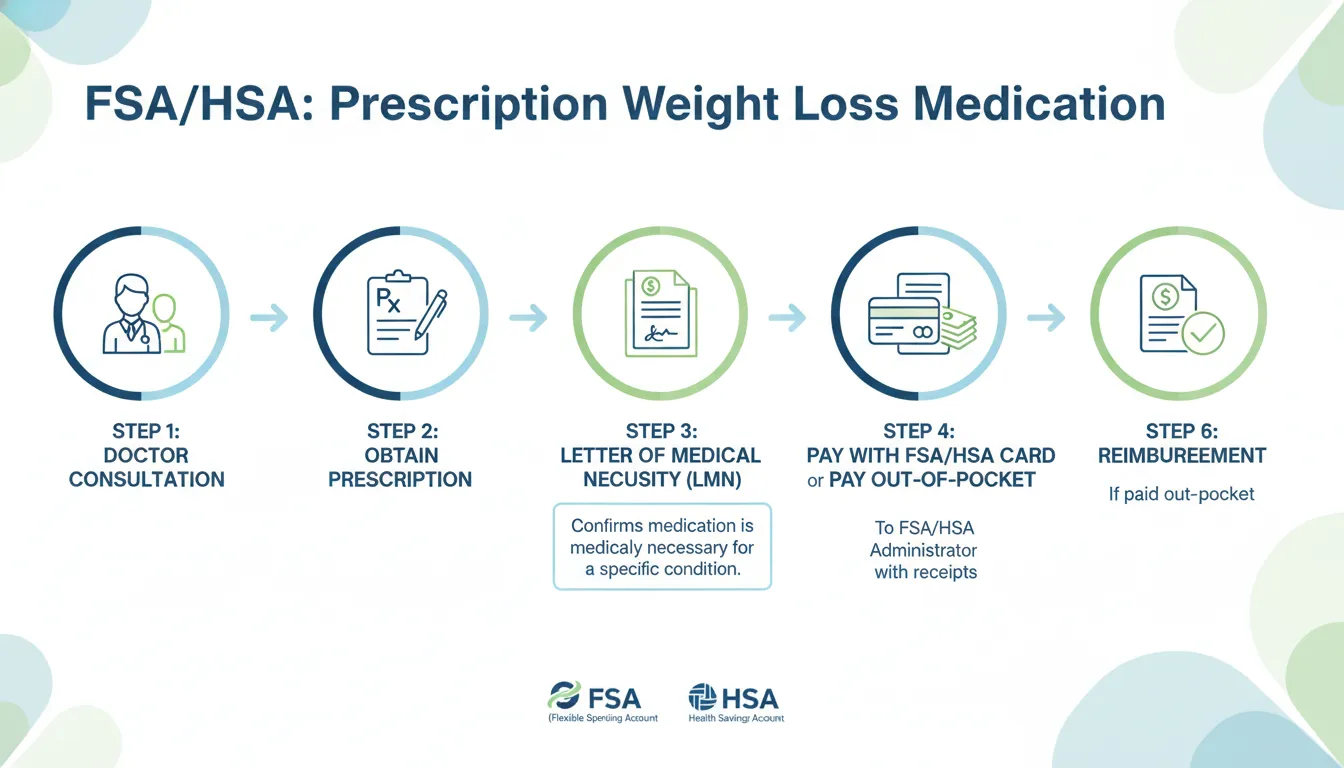
Using your FSA or HSA for GLP-1 medications involves confirming eligibility, obtaining proper documentation, and choosing the right payment method. Start by verifying your specific prescription qualifies under your plan rules. Obtain a Letter of Medical Necessity if needed. Then use your FSA or HSA debit card at the pharmacy or submit a reimbursement claim with your receipt and supporting documents.
The process of using pre-tax health funds for GLP-1 medications follows a straightforward path. Follow these steps to ensure smooth processing of your expenses:
- Confirm your diagnosis qualifies: Verify that your diagnosed condition (type 2 diabetes, obesity, or another qualifying illness) meets IRS standards for medical care.
- Get the right documentation: Ensure your prescription is current and obtain a Letter of Medical Necessity if your prescription is off-label or your plan requires additional verification.
- Check your plan balance: Log into your FSA or HSA account to confirm you have sufficient funds for the medication.
- Use your payment card: Present your FSA or HSA debit card at the pharmacy when picking up your prescription. Most pharmacy systems can process eligible prescriptions automatically.
- Save your receipts: Keep all documentation including the prescription label, receipt, and any supporting medical records for tax purposes.
- Submit for reimbursement if needed: If your card is declined or you paid out of pocket, submit a reimbursement claim with your supporting documents.
Many FSA and HSA plans also cover related expenses like diabetes testing supplies and nutritional counseling. Check your plan documents for the full scope of covered benefits. For more details on planning your healthcare spending, read our guide on FSA deadlines and year-end planning.
GLP-1 Drug Comparison: Eligibility and Savings
Each GLP-1 drug has distinct eligibility characteristics based on its FDA-approved indications. Wegovy and Zepbound are approved for weight management, making their FSA eligibility more straightforward than off-label use. Ozempic and Mounjaro are approved for type 2 diabetes and may require additional documentation for weight-loss use. Monthly costs range from $900 to $1,300 before insurance or FSA/HSA savings.
Understanding how each GLP-1 medication differs in FSA and HSA eligibility helps you make informed choices. The table below compares the four major brands across key factors:
| Drug | Active Ingredient | FDA-Approved For | Monthly Cost | FSA Typical |
|---|---|---|---|---|
| Ozempic | Semaglutide | Type 2 diabetes | $900-$1,000 | Yes, for diabetes |
| Wegovy | Semaglutide | Weight management | $1,300-$1,400 | Yes, with obesity diagnosis |
| Mounjaro | Tirzepatide | Type 2 diabetes | $1,000-$1,200 | Yes, for diabetes |
| Zepbound | Tirzepatide | Weight management | $1,000-$1,200 | Yes, with obesity diagnosis |
Key factors that influence eligibility across all four drugs include your specific diagnosis, the documentation your doctor provides, and your plan administrators policies. For off-label use of diabetes drugs for weight loss, a Letter of Medical Necessity becomes especially important. For insights on managing these expenses efficiently, explore modern FSA management approaches used by forward-thinking employers.
How daylii Makes GLP-1 Drug Eligibility Simple
The daylii platform is designed to simplify the process of determining whether your GLP-1 medication qualifies for FSA or HSA coverage. By integrating directly with your health plan and pharmacy data, daylii will let you check SKU-level eligibility before you purchase. This removes the guesswork from FSA and HSA spending and helps you maximize your tax-advantaged health benefits.
Navigating FSA and HSA eligibility for high-cost medications like GLP-1 drugs can be confusing. The daylii platform is being built to bring clarity to this process through several key features:
- DayliiMarketplace: This feature will let you check whether specific GLP-1 medications are eligible at the individual product level, showing real-time FSA and HSA status before you buy.
- DayliiReimburse: Submitting claims for GLP-1 prescriptions will be automated with AI-driven receipt parsing and direct connections to your health plan.
- DayliiDiagnosis: Integration with electronic health records will help match your diagnosis codes to eligible expenses, making the connection between your condition and your spending clear.
For more information about how daylii is approaching medication eligibility verification, read about EHR-based FSA eligibility and medical necessity documentation. The platform is designed to make managing your health benefits as straightforward as possible.
Frequently Asked Questions
Can I use my FSA for GLP-1 weight loss drugs without a prescription?
No. GLP-1 drugs require a valid prescription from a licensed healthcare provider to qualify as FSA eligible medical expenses. The IRS requires that medications treat a specific diagnosed condition, and a prescription is the primary evidence of medical necessity. Without a prescription, the IRS considers the expense as not medically necessary, and your FSA funds cannot be used.
Does Wegovy qualify for FSA or HSA coverage?
Yes. Wegovy typically qualifies for FSA and HSA coverage when prescribed for weight management in patients with a diagnosed obesity condition (BMI of 30 or higher) or overweight with a weight-related comorbidity. Wegovy is FDA-approved specifically for chronic weight management, which strengthens its eligibility case. A valid prescription and clear documentation of your diagnosis are essential for coverage approval.
What is a Letter of Medical Necessity for GLP-1 drugs?
A Letter of Medical Necessity is a formal document from your healthcare provider that explains why a specific GLP-1 medication is medically required for your condition. It typically includes your diagnosis, why the drug is needed, alternative treatments that were tried, and the potential consequences of not using the medication. This letter is often required for off-label prescriptions or when a plan administrator needs additional documentation to approve FSA or HSA reimbursement.
Can I use my HSA for Mounjaro if I do not have diabetes?
Using an HSA for Mounjaro without a type 2 diabetes diagnosis is possible but requires stronger documentation. Mounjaro is FDA-approved for type 2 diabetes, so off-label use for weight loss alone needs a Letter of Medical Necessity from your doctor. The letter should explain why Mounjaro is medically necessary for your specific condition, whether that is obesity, prediabetes, or another qualifying health issue, and document your diagnosis clearly.
How much can I save using FSA for Ozempic?
Using FSA funds for Ozempic can save you 30 to 40 percent on the medication cost compared to paying with after-tax dollars. With Ozempic costing approximately $900 to $1,000 per month, this translates to monthly savings of $270 to $400. Over a full year, you could save $3,240 to $4,800 depending on your tax bracket. These savings come from avoiding federal, state, and Social Security taxes on the money you spend.
Ready To Check Your GLP-1 FSA Eligibility?
Understanding whether your GLP-1 medication qualifies for FSA or HSA coverage does not have to be complicated. The daylii platform is designed to bring clarity to your healthcare spending, helping you make informed decisions about pre-tax health benefits. Whether you are starting a new GLP-1 treatment or looking to optimize your existing health spending, daylii will let you verify eligibility with confidence.