
Half of all health account users lose an average of $441 in forfeited funds every year because picking an FSA contribution amount is often more guesswork than science. But it does not have to be that way. The FSA open enrollment 2026 window is your annual opportunity to set aside pre-tax dollars for health costs, and choosing the right amount can save you hundreds in taxes while ensuring you do not leave money on the table.
Ready to stop losing your FSA funds? Start your free daylii account today.
FSA open enrollment 2026 is the yearly period when employees elect how much pre-tax income to divert into a Flexible Spending Account. For most workers this window runs from mid-November through early December 2025, and the amount you choose is locked for the entire 2026 benefit year. With Health Care FSA limits rising to $3,400, Dependent Care FSA caps at $7,500, and carryover rules allowing up to $680 to roll forward, knowing the numbers before enrollment opens is the single best way to avoid forfeiting your hard-earned dollars.
Once you understand the contribution limits, you need to decide how much fits your expected medical costs. The best starting point is knowing exactly what changed for 2026 and how each rule affects your take-home pay.
What Are the 2026 FSA Contribution Limits?
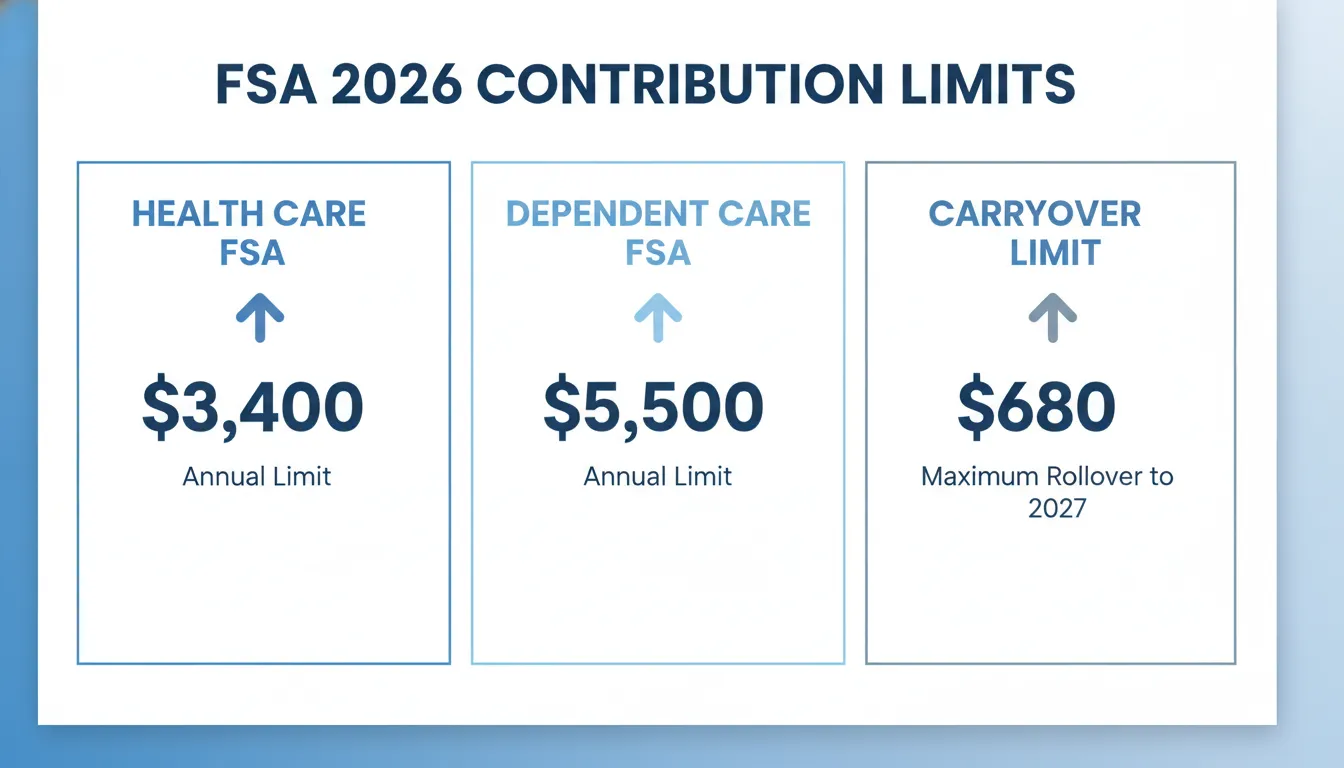
The IRS raised Health Care FSA contribution limits to $3,400 for 2026, up $100 from the prior year. The Dependent Care FSA ceiling increased to $7,500 per household, a significant jump from the $5,000 cap that applied before the SECURE 2.0 Act changes took effect. These higher limits mean more tax savings for families who plan ahead.
Health Care FSA Limits for 2026
The Health Care FSA limit has climbed steadily over the last few years. In 2026 you can contribute up to $3,400 of pre-tax income to your health account. That is a $100 increase over the 2025 cap, and it follows a multiyear trend of incremental inflation adjustments by the IRS. This money covers copays, dental work, vision care, prescription drugs, over-the-counter medications, and a wide range of medical supplies. If you and your spouse both have access to separate employer FSA plans, each of you can contribute the full $3,400, giving a couple up to $6,800 in combined tax-advantaged health savings for the year.
Contributions come out of your paycheck in equal installments across your pay periods, lowering your taxable income with every deduction. For the full list of eligible expenses, the IRS Publication 502 is the definitive reference. Covered categories include:
- Prescription drugs and over-the-counter medications (no prescription needed since the CARES Act)
- Eye exams, glasses, and contact lenses
- Dental cleanings, fillings, crowns, and orthodontia
- First aid supplies, sunblock, and menstrual care products
Dependent Care FSA Limits for 2026
The Dependent Care FSA (DCFSA) saw a major expansion under the SECURE 2.0 Act. For 2026 the household contribution limit is $7,500, up from $5,000 in prior years. Married couples filing separately can each contribute up to $3,750. This account covers child care for kids under age 13, elder care for dependent adults, and before- and after-school programs. The increase means families can offset more of their rising child care expenses with pre-tax dollars than ever before. If you pay for day care, summer day camp, or a nanny while you work, increasing your DCFSA election could save you thousands in federal income tax this year.
Carryover and Minimum Contribution Rules
Plans typically require a minimum annual election of $100. For the 2026 plan year you can carry over up to $680 in unused Health Care FSA funds into 2027, a $20 increase from 2025. This carryover buffer protects you from forfeiting every unspent dollar if your medical costs came in lower than expected. Not every employer offers the carryover option: some offer a 2.5-month grace period instead, and a small number offer neither. Check your plan documents before enrollment closes so you know exactly which safety net applies. Tools like daylii Pulse can help you track your balance in real time, making it easier to plan spending before deadlines hit.
FSA Open Enrollment 2026: When Does Enrollment Start?
Most workers will select their 2026 benefits between mid-November and early December 2025. Employers set their own exact dates, but the federal FSAFEDS program typically runs from mid-November through mid-December each year. Missing this window means no FSA for 2026, since the IRS does not allow late enrollment.
Do I have to re-enroll every year?
Yes. Unlike some health plans that auto-renew, FSAs require an active election during every open enrollment period. If you enrolled in 2025, your 2025 election does not carry into 2026. You must log into your benefits portal during open season and select a new dollar amount. If you miss the date, you will have no FSA for the 2026 plan year. According to the New York State Office of Employee Relations, open enrollment dates are strictly enforced, and the IRS does not allow late entries. Setting a calendar reminder for the first day of your company’s enrollment window is a small step that prevents a costly mistake.
When can I change my choice?
Once open enrollment closes, your contribution election is locked for the full 2026 plan year. The only mid-year adjustments come through qualifying life events: marriage, divorce, birth or adoption of a child, a spouse’s job change, or loss of other health coverage. Outside these exceptions, the amount you pick in late 2025 is what you will have for the entire year. This is why careful estimation matters so much: picking too low means paying more taxes, while picking too high risks leaving money on the table at year’s end.
To avoid guessing, start by auditing your 2025 medical spending so you can project 2026 needs from real data. Articles like what to do before your FSA deadline can help you think through year-end spending strategies that inform your next election.
Grace Period vs. Carryover: Which Is Right for You?
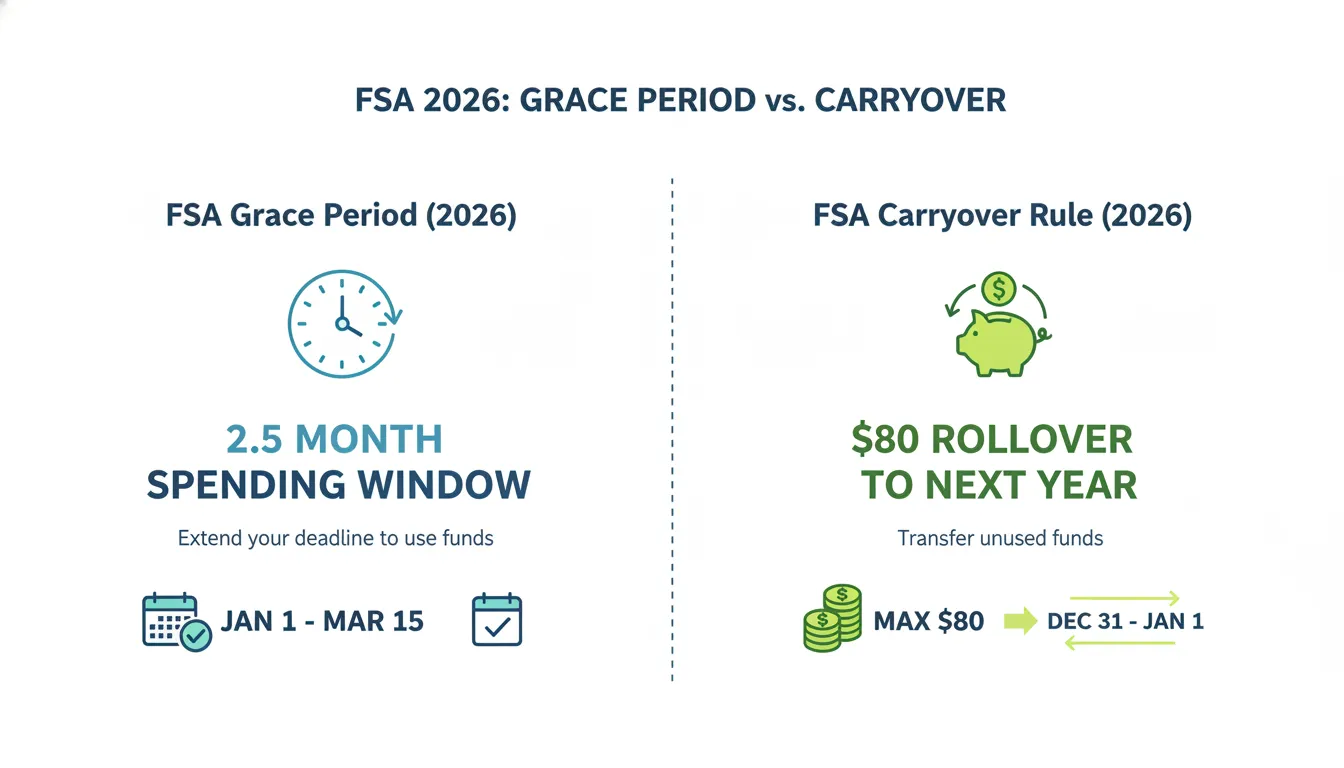
Employers typically offer one of two protections against the FSA use-it-or-lose-it rule: a carryover that rolls up to $680 of unused funds into the next year, or a grace period that gives you 2.5 extra months to spend the full balance. Knowing which plan your employer chose determines how aggressively you should estimate your contribution.
How the carryover rule works
A carryover lets you move up to $680 in leftover Health Care FSA money into the next plan year. If your balance on December 31 is $680 or less, the full amount stays in your account for 2027. You do not need to rush to spend every remaining cent in December. This option is popular because it is easy to track and eliminates the year-end spending panic that leads people to buy items they do not need. If your employer offers the carryover, you can contribute more confidently knowing a small surplus is not lost.
The 2.5-month grace period
A grace period extends your spending deadline by 2.5 months, typically until March 15 of the following year. You can use the previous year’s funds for any new eligible expense incurred during that window. This helps if you have known early-year costs: a January dental crown, February eye exam, or March prescription refill. The trade-off is that any money still unused after the grace period expires is forfeited entirely, with no carryover option. Most employers choose either the carryover or the grace period, not both. Confirm which one your plan offers before you make your 2026 election.
Key differences at a glance
| Feature | Carryover Rule | Grace Period |
|---|---|---|
| Main Benefit | Move up to $680 to next year | 2.5 extra months to spend |
| Time Limit | Stays in your account all year | Must spend by March 15 |
| Best For | Small leftover balances | Planned early-year costs |
| IRS Limit | $680 for 2026 | No dollar limit (all funds) |
| Availability | Plan-specific (Check your HR) | Plan-specific (Check your HR) |
How to Estimate Your 2026 Medical Expenses
Choosing your contribution amount comes down to forecasting your family’s healthcare costs for the coming year. A structured five-step process based on past spending, known procedures, and routine items produces a far more accurate estimate than guessing, and it reduces the risk of either forfeiting funds or leaving tax savings on the table.
The average FSA accountholder forfeits $441 per year because they over-contributed. But the opposite mistake is just as costly: underestimating means you pay income tax on money you could have shielded. Here is a practical system for landing in the right range.
- Audit last year. Pull your 2025 Explanation of Benefits forms and pharmacy records. Total every copay, prescription copay, dental visit, and vision expense from the past 12 months. Your insurer’s patient portal usually has a downloadable claims summary.
- Map out 2026 known events. List any scheduled surgery, planned dental crown, orthodontia for your child, new glasses or contact lenses, or specialist appointments you already know about. Add those line items to your baseline.
- Add routine maintenance costs. Factor in monthly prescriptions, annual physical copays, allergy medications, contact lens solution, and any standing therapy or chiropractic visits. These predictable costs are easy to overlook but add up fast.
- Include over-the-counter goods. Since the CARES Act made OTC medications eligible without a prescription, budget for pain relievers, cold medicine, allergy treatments, digestive aids, first aid supplies, sunblock, and menstrual care products. Those small weekly purchases become significant annual totals.
- Add a 10% buffer. Set aside extra room for unexpected urgent care visits, strep throat tests, or minor injuries. A buffer turns a good estimate into a safe one without risking material forfeiture.
If your employer offers a high-deductible health plan paired with an HSA instead, the math is different. You can compare the approaches in our guide on HSA chronic care management strategies to decide which account type fits your situation best.
How daylii Pulse Helps You Track FSA Spending
daylii Pulse is a real-time FSA and HSA balance tracker that connects directly to your accounts, categorizes your spending, and sends alerts before deadlines. It transforms the guessing game of contribution planning into a data-driven decision based on your actual healthcare spending patterns.
Real-time balance and spending alerts
Traditional benefit portals update slowly, often taking days to reflect a charge. Pulse connects directly to your accounts and shows your live balance, categorized by spending type: dental, vision, pharmacy, and medical supplies. You can set custom alerts that notify you when your balance drops below a threshold or when you still have significant funds left in November. These alerts help you avoid the year-end panic that leads to forfeitures. For a deeper look at how automation changes the reimbursement experience, read our breakdown of FSA receipt OCR and eliminating manual claims.
Smart analytics for your 2026 election
Instead of guessing your FSA open enrollment 2026 contribution, Pulse analyzes your past 12 months of spending to recommend an election amount. It considers your routine costs, one-time procedures, and seasonal patterns to produce a number that maximizes tax savings while minimizing forfeiture risk. It also integrates with DayliiMarketplace to suggest eligible products you actually need when you have a surplus, and with DayliiReimburse to automate claims so you never deal with paper receipts. Employers and benefits administrators interested in bringing these capabilities to their workforce can explore FSA management solutions for progressive employers.
Saving with a real-world example
One daylii user avoided $441 in forfeitures by using Pulse to track their spending mid-year. The tool flagged a growing surplus in October and suggested eligible items from the marketplace that the family genuinely needed. By linking with DayliiMarketplace and DayliiReimburse, they spent down the balance on useful products and filed claims without scanning a single receipt. Everything works in one dashboard to make health spending simple, transparent, and efficient.
If you are preparing for open enrollment and want to understand how these tools integrate with your existing benefits stack, visit the daylii blog for more articles on managing your health accounts effectively.
Frequently Asked Questions About FSA Open Enrollment 2026
Ready to take the guesswork out of your FSA election? Create your free daylii account and start tracking your health spending in minutes.
What is the FSA contribution limit for 2026?
The IRS has set the 2026 Health Care FSA maximum contribution at $3,400, which is $100 higher than the 2025 limit. For Dependent Care FSAs, the limit is $7,500 per household, up from $5,000 in prior years, or $3,750 per individual if filing taxes separately. The minimum annual election remains $100.
What happens to unused FSA money at the end of the year?
Depending on your employer’s plan, you may have two options. Some plans offer a carryover of up to $680 into the next plan year. Others provide a grace period of up to 2.5 months to incur new expenses. Your employer will choose one of these options, not both. Check your plan documents to know which applies to you.
Can I change my FSA contribution after open enrollment ends?
Generally, no. Once open enrollment closes, your election is locked for the full plan year. The only exceptions are qualifying life events such as marriage, divorce, the birth or adoption of a child, or a change in your spouse’s employment. Outside of these events, the amount you choose during open enrollment is what you will have for the entire year.
When does the 2026 FSA benefit period start?
For most plans, the 2026 benefit period begins on January 1, 2026. The last day to incur expenses under your Health Care FSA is typically December 31, 2026. If you have a Dependent Care FSA, you have until March 15, 2027 to use those funds. These dates are set by the IRS and apply to most employer-sponsored plans.
Can I use FSA funds for over-the-counter medications?
Yes. Since the CARES Act was signed into law, FSA funds can be used for over-the-counter medications and menstrual care products without a prescription. This change was made permanent and covers items like pain relievers, allergy medicine, cold and flu treatments, and digestive aids. You can also use your FSA for first aid supplies, sunscreen, and contact lens solution.
Ready to stop guessing and start saving? Sign up for daylii today and take control of your health spending with real-time balance tracking, automated reimbursement, and smart spending insights. Your pre-tax dollars should work as hard as you do.