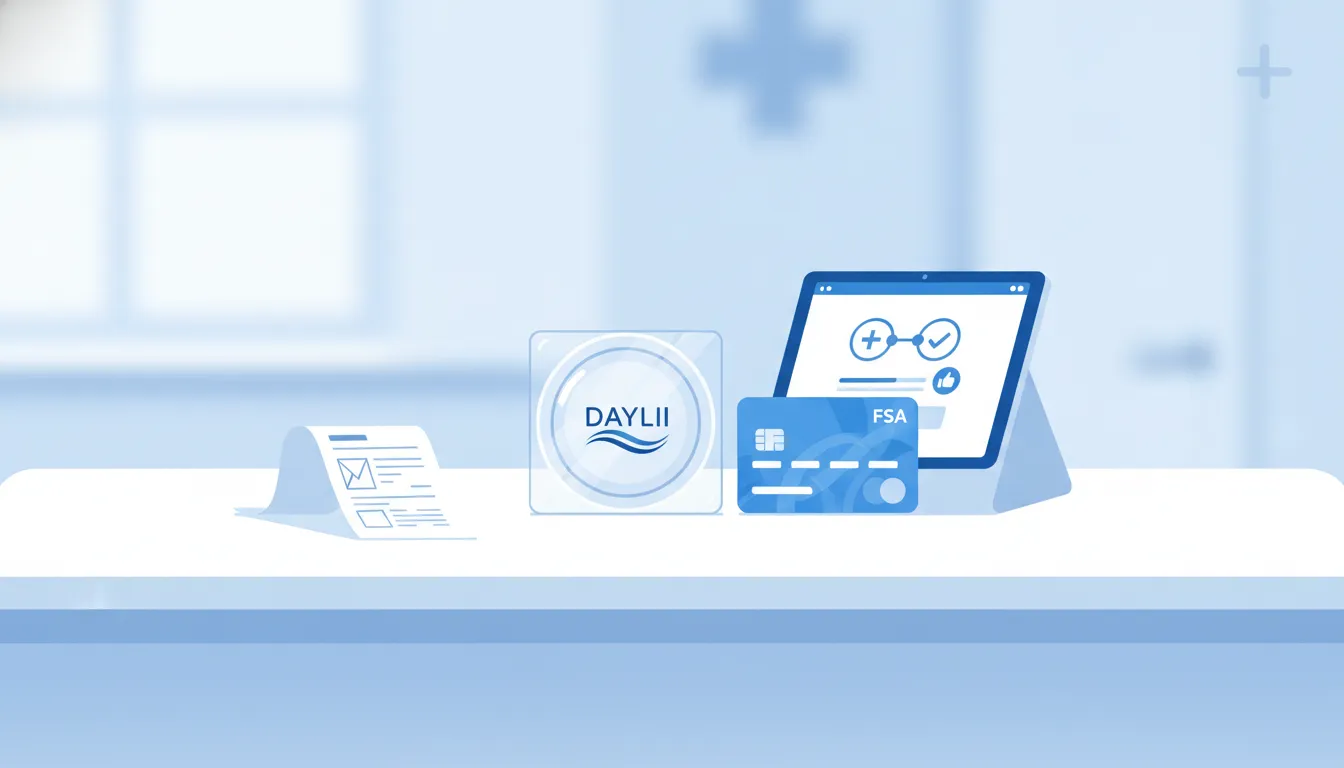
A declined benefits card should not turn a routine contact lens refill into a paperwork project. If you have a current prescription, an itemized receipt, and a clean checkout record, fsa eligible contact lenses can usually be paid with FSA funds or reimbursed after purchase.
Join Daylii for simpler FSA/HSA eligibility checks before you buy vision essentials.
Prescription contacts qualify because they correct vision. The official FSAFEDS expense list names prescription eyeglasses and contact lenses as covered expenses, and IRS guidance treats eye exams as eligible diagnostic care. Related items, such as contact lens solution, rewetting drops, cases, and sales tax or shipping tied to covered items, may also qualify. Cosmetic lenses without a prescription are different. They are usually not eligible because they do not treat or correct a medical condition.
This guide explains what qualifies, what records to keep, why some purchases get declined, and how Daylii helps reduce the guesswork around FSA and HSA spending. Use it before checkout, after a card decline, or when you are preparing a reimbursement claim.
Are FSA eligible contact lenses covered?
Yes. Prescription contact lenses are generally FSA eligible when they are used for vision correction. The key is medical purpose. Contacts that correct nearsightedness, farsightedness, astigmatism, or another diagnosed vision issue fit the health care purpose of a Health Care FSA. HSA funds generally follow the same medical-expense logic.
Your plan still matters. Some people have a limited purpose FSA, employer-specific rules, or a benefits administrator that asks for more documentation. That does not usually change the basic eligibility of prescription contacts, but it can affect how your claim is reviewed.
The prescription requirement
Eligibility begins with a valid prescription. The prescription connects the lenses to vision correction instead of personal style. If you buy colored lenses that also correct vision and require a prescription, they may be treated differently from cosmetic novelty lenses. If you buy colored lenses with no prescription, do not assume your FSA will cover them.
Keep a copy of your prescription with your receipt. You may never be asked for it, but it is useful if your plan administrator challenges the purchase or asks for proof that the lenses were medically necessary.
Related contact lens costs
The lens purchase is not the only line item to review. Contact lens cleaning solution, rewetting drops, and lens cases can support prescribed lens use. For a deeper breakdown of those care products, see Daylii’s guide to eligible contact lens solution costs.
Shipping, handling, and sales tax may also be eligible when they are tied to covered items. Mixed carts are where confusion starts. If your order includes eligible lenses, contact solution, cosmetics, sunglasses, and unrelated retail items, your receipt needs to clearly separate what was bought and how much each item cost.
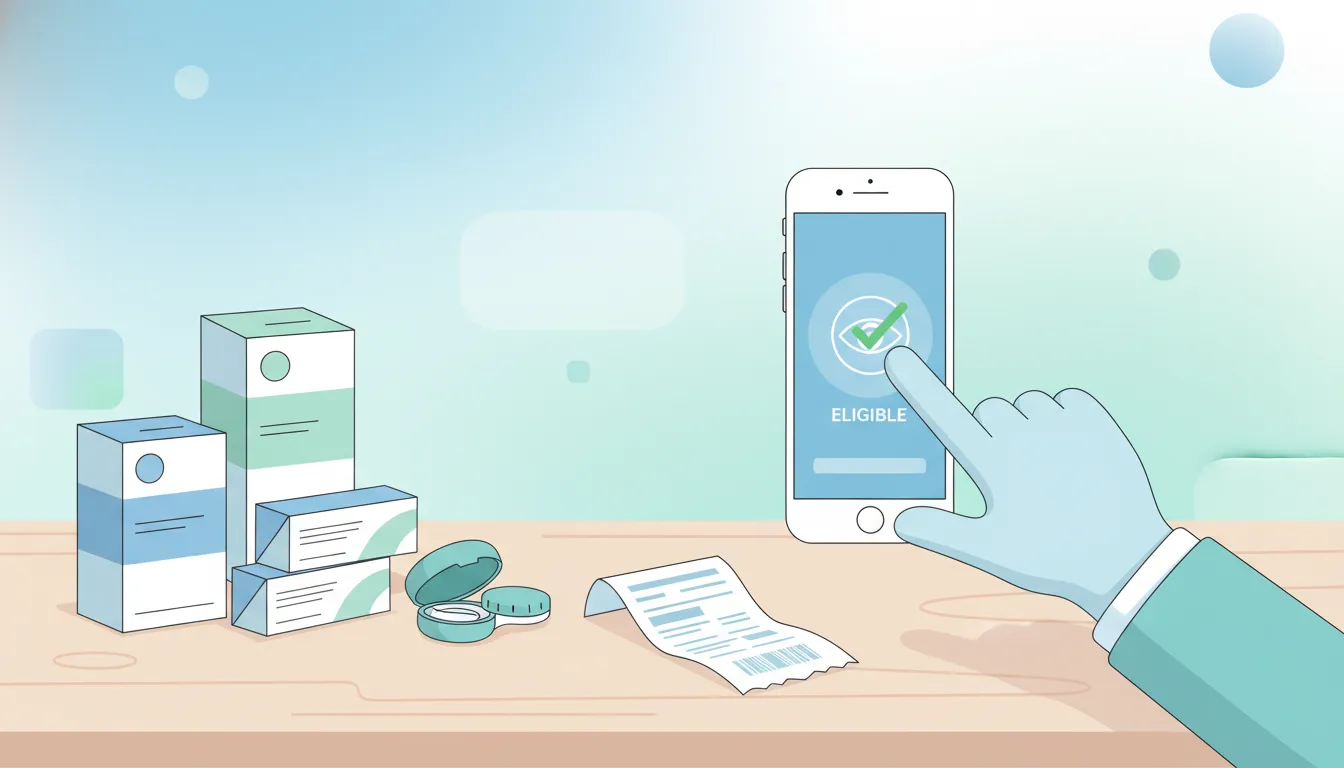
What contact lens expenses can you pay with FSA or HSA funds?
FSA and HSA funds can cover prescription contacts, related lens care supplies, and certain out-of-pocket vision costs. The cleanest claims connect each expense to vision correction or diagnostic eye care. If an item is only cosmetic, or if your receipt does not show enough detail, reimbursement can become harder.
Use this table as a practical starting point. It is not a substitute for your plan documents, but it shows how to think through the most common vision purchases.
| Vision expense | Likely FSA/HSA treatment | Best documentation |
|---|---|---|
| Prescription contact lenses | Generally eligible | Itemized receipt and prescription |
| Contact lens solution | Often eligible as lens care | Itemized receipt |
| Rewetting drops | Often eligible when used for contact lenses | Itemized receipt |
| Contact lens cases | Often eligible, including cases sold with solution | Itemized receipt |
| Eye exams | Eligible diagnostic care | Provider receipt or explanation of benefits |
| Copays, coinsurance, deductibles | Eligible when tied to covered care | Provider receipt or EOB |
| Cosmetic non-prescription lenses | Generally not eligible | Do not submit unless plan rules say otherwise |
Eye exams and insurance balances
An eye exam can be a covered medical expense because it helps diagnose vision needs and related health issues. If vision insurance pays part of the cost, your FSA or HSA may cover the eligible amount left over. That can include a copay, deductible, coinsurance, or balance after insurance.
Do not double dip. If insurance has already paid an amount, you should not submit the same amount for reimbursement. Save the explanation of benefits when insurance is involved, because it shows what was paid and what remains your responsibility.
Plan rules and eligible-item lists
Many shoppers start with broad eligibility lists, including Daylii’s overview of common FSA eligible items. That is useful for planning, but your administrator makes the final call for your specific plan. When a purchase is expensive or unusual, check before buying.
Daylii is building toward real-time SKU-level verification so consumers can see eligibility before they commit. That matters because benefit spending should not depend on guessing whether a retailer, receipt, or product category will pass review later.
How do you buy contacts with an FSA card or reimbursement claim?
You can usually pay for eligible contacts with an FSA card at checkout or buy them another way and submit a reimbursement claim. The better option depends on your retailer, your plan administrator, and whether your cart includes only eligible vision items.
An FSA card feels simpler when it works. Reimbursement is useful when the card is declined, when the retailer is not set up for benefits cards, or when insurance changes the final amount you owe.
Before you check out
Start by confirming that the prescription is current and that the retailer can provide an itemized receipt. If you are buying from a vision retailer, confirm that the order details identify the contact lenses rather than showing only a generic charge. If you are buying multiple items, separate eligible and non-eligible products into different transactions when possible.
That small checkout habit can save time. A single mixed receipt with vague descriptions may trigger a documentation request. A clean receipt with product names, date, merchant, and amount paid is easier to substantiate.
FSA card payment or reimbursement
If your FSA card works, keep the receipt anyway. A card approval does not always mean the purchase is fully substantiated. Your administrator may still ask for proof later.
If you pay with a credit card, debit card, or cash, submit a claim through your plan administrator. Include the itemized receipt, prescription if requested, and insurance documents if the claim includes a remaining balance after vision insurance. Daylii’s broader guide to FSA and HSA card eligible stores can help you think through where card payments are more likely to work.
Claims for a mixed order
Mixed orders are common. You might buy contacts, contact solution, eye drops, sunglasses, and unrelated personal items in one cart. The claim should only include eligible expenses. If the receipt is unclear, mark the eligible lines before you upload it or submit a short explanation with the claim.
What receipts and records should you keep for contact lens purchases?
Keep an itemized receipt, prescription details, insurance records, and any plan messages tied to the purchase. Good documentation answers three questions: what did you buy, when did you buy it, and why was it an eligible medical expense?
The most common mistake is saving only a card statement. A statement may prove that money changed hands, but it usually does not prove what you bought. FSAFEDS notes that credit card receipts, canceled checks, and balance-forward statements do not meet documentation requirements because they lack item-level detail.
Start with an itemized receipt
Your receipt should show the merchant, date, item name or description, and amount paid. If the order includes insurance, the receipt or explanation of benefits should show the remaining patient responsibility. If the order includes both eligible and non-eligible items, make sure each item is separated.
Digital receipts are fine when they contain the right detail. Save them as PDFs or screenshots before retailer portals expire or order pages change. If your plan administrator uses an app, upload the documentation as soon as you have it.
Add your prescription and insurance records
A prescription is especially useful for contacts because it proves medical purpose. Keep the prescription from your eye care provider with the purchase record. If you used vision insurance, keep the explanation of benefits or provider statement showing what the insurer paid.
This is also where Daylii’s planned receipt parsing can help. DayliiReimburse is designed to identify merchant, SKU, price, and eligibility details so users spend less time sorting paperwork after a purchase.
If your claim is challenged
A challenge does not always mean the expense is ineligible. It often means the administrator needs clearer proof. Respond with the itemized receipt, prescription, and any insurance record. If the order had mixed items, explain which line items are being claimed.
Keep communications from your administrator until the claim is fully resolved. If you need to appeal or resubmit, those messages show what was requested and what you provided.
Why might an FSA contact lens purchase be declined or denied?
An FSA contact lens purchase may be declined because the retailer, product code, receipt, plan rule, or mixed cart does not clearly prove eligibility at the moment of purchase. A decline is frustrating, but it is not always the final answer.
The best response is to identify whether the problem happened at checkout or during claim review. Checkout issues often involve card settings or retailer coding. Claim denials often involve missing documentation or ineligible items.
Card declines at checkout
Your card may be declined if the retailer is not coded for health care benefits, if the product is not recognized as eligible, if your balance is too low, or if the plan requires a different process. Some retailers support benefits cards better than others. Some online carts also struggle when eligible and non-eligible items are combined.
If the card fails, you can often pay another way and submit for reimbursement. Before doing that, confirm the expense is eligible and that you can get the documentation needed for your claim.
Receipt and prescription details
Claims can be denied when receipts are vague. A charge that says “online order” or “vision purchase” may not be enough. The administrator may need the product name, date, price, and proof that the purchase was for prescription contacts.
Prescription documentation matters most for colored lenses, specialty lenses, and any order that could be mistaken for a cosmetic purchase. The clearer the medical purpose, the easier the review.
Cosmetic lenses and mixed purchases
Cosmetic lenses without a prescription are generally not eligible. Mixed purchases can also create problems if the claim tries to include non-eligible items. Separate transactions are cleaner. If you already made a mixed purchase, submit only the eligible lines and keep the full receipt.
Daylii’s approach is built around this exact pain point. By checking eligibility in real time and parsing receipts after purchase, the platform aims to reduce avoidable card declines, rejected claims, and last-minute benefit confusion.
How Daylii makes vision benefit spending easier
Daylii is designed to make FSA and HSA spending feel proactive instead of confusing. For contact lens shoppers, that means clearer eligibility checks before checkout, better receipt handling after purchase, and fewer moments where a covered item feels uncertain.
Daylii is an AI-native platform for FSA and HSA dollars. The company is building tools across shopping, reimbursement, diagnosis-linked recommendations, and real-time benefit insights. For consumers, the goal is simple: spend eligible dollars with more confidence and less administrative work.
A clearer check before you buy
DayliiMarketplace is built around SKU-level eligibility verification. Instead of relying only on a broad category label, the platform is designed to check products against IRS Publication 502, SIGIS IIAS standards, and plan details where available. That is useful for categories like contact lens supplies, where the difference between eligible care and cosmetic use can matter.
Real-time verification is also helpful when shoppers move between retailers. Daylii’s planned retail network includes major names such as Amazon, Walmart, CVS, Walgreens, and Instacart. The point is not just more places to shop. It is more confidence that the item you are buying matches benefit rules.
Less work after checkout
DayliiReimburse is designed to turn receipt review into an automated flow. OCR and AI read the receipt, identify merchant and product details, match the purchase to eligibility rules, and support reimbursement submission. For contact lens buyers, that can reduce the friction of saving, organizing, and explaining every receipt.
This is especially valuable when an FSA card does not work at checkout. If the item is eligible but the card fails, reimbursement should not feel like a punishment. It should feel like a backup path.
Support when reimbursement needs another step
Some purchases still need human review, especially when insurance, prescriptions, or mixed carts are involved. Daylii’s value is in making the record cleaner before that review happens. A better receipt trail and a clearer eligibility check can make the administrator’s decision easier.
Get Daylii updates and prepare for easier FSA/HSA spending before your next vision purchase.
Smart buying tips before you use FSA funds for contacts
The smartest way to use FSA funds for contacts is to plan the documentation before you buy. That does not mean overthinking every order. It means setting up the purchase so eligibility is clear if your card, retailer, or plan administrator asks questions later.
Start with your prescription and plan
Confirm your prescription is current. Then review your plan rules, especially if you have a limited purpose FSA, a year-end deadline, or a plan that asks for extra substantiation on vision purchases. If you are unsure, contact your plan administrator before placing a large order.
Check your balance before checkout. If your FSA balance is lower than the purchase amount, decide whether you will split payment, use insurance, or submit a partial reimbursement claim later.
Build a clean checkout cart
Keep eligible and non-eligible items separate whenever possible. Buy prescription contacts and lens care supplies in one transaction, then buy unrelated retail items separately. Use retailers that provide itemized receipts and clear order details.
Vary your documentation by purchase type. For contacts, save the prescription. For solution and care supplies, save the receipt. For eye exams or insurance balances, save the provider receipt or explanation of benefits.
Keep records and plan ahead
Do not wait until the end of the plan year to sort out eligibility. FSA deadlines can create rushed purchases, mixed carts, and avoidable mistakes. If you know you will need replacement lenses, solution, or an eye exam, plan those expenses while you still have time to check details.
Daylii’s broader mission is to turn FSA and HSA dollars from a reactive scramble into a daily health spending tool. Contact lenses are a good example. The expense is routine, the eligibility is usually straightforward, and the paperwork should not be harder than the purchase itself.
Frequently Asked Questions
Are contact lenses FSA eligible?
Yes. Prescription contact lenses are generally FSA eligible because they correct vision. Keep your prescription and an itemized receipt in case your plan administrator asks for documentation.
Can I use my FSA for contact lens solution?
Contact lens solution, rewetting drops, and lens cases may be eligible when they support prescribed contact lens use. Read Daylii’s guide to FSA eligible contact solution for more detail on those related supplies.
Are non-prescription colored contact lenses FSA eligible?
Usually no. Non-prescription cosmetic lenses are bought for appearance, not vision correction. Prescription colored lenses may qualify when they correct vision and are supported by a valid prescription.
Can I use my FSA card directly at contact lens retailers?
Often, yes. If the card is declined, the expense may still be reimbursable. Pay another way only after confirming eligibility, then submit the itemized receipt and prescription details your plan requests.
Can I combine FSA funds with vision insurance for contacts?
Yes. FSA funds can usually cover eligible out-of-pocket costs after vision insurance, such as copays, deductibles, coinsurance, or remaining balances. Do not submit amounts already paid by insurance.
Ready to simplify your FSA contact lens spending?
FSA eligible contact lenses should be easy to understand: prescription lenses, clean receipts, clear plan rules, and no guesswork at checkout. Daylii is building the AI-powered eligibility and reimbursement layer that helps consumers use FSA and HSA dollars with more confidence.
Contact Daylii to get updates on smarter FSA/HSA eligibility checks and reimbursement support.