Sleep apnea equipment can include much more than a machine. Depending on the diagnosis and treatment plan, it may include a breathing device, mask, tubing, humidifier, oral appliance, or replacement supplies. If you are comparing options or wondering whether your health benefits may help pay, the safest approach is to identify the exact equipment first and then confirm the rules for that specific purchase.
What counts as sleep apnea equipment?
Sleep apnea is a condition in which breathing repeatedly stops or becomes shallow during sleep. Equipment supports a prescribed treatment, but equipment alone does not determine which treatment is right. The appropriate choice can depend on the type of apnea, symptoms, health history, test results, comfort, and a clinician's recommendation.
That distinction matters when you are shopping. A product may look similar to a prescribed device but still have different features, settings, fitting requirements, or documentation. Before looking at price or payment, ask the treating clinician or equipment provider for the name and specifications of the item you need.
Common categories include:
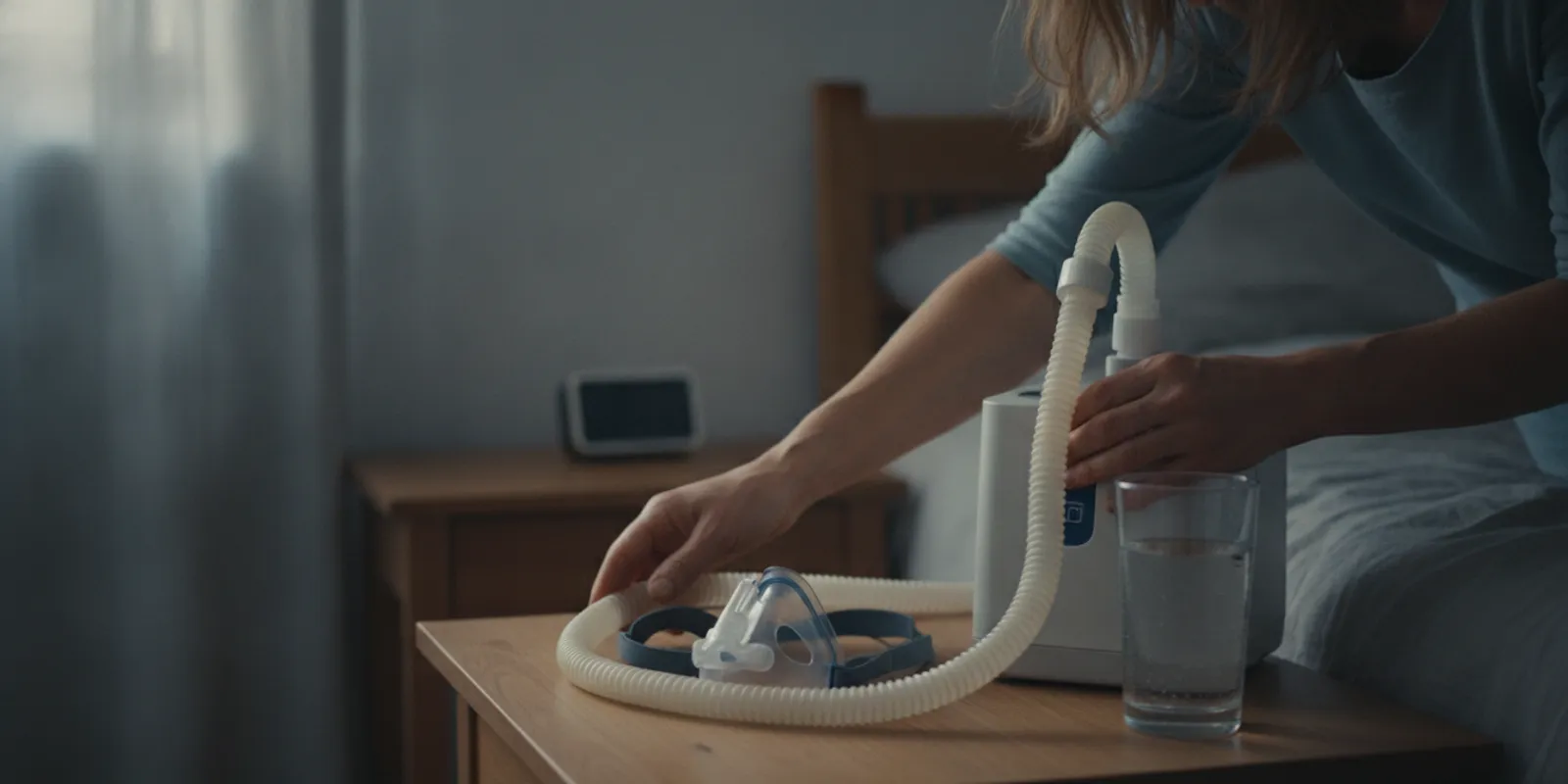
- Positive airway pressure devices: A PAP machine delivers pressurized air through tubing and a mask to help keep the airway open. CPAP is one familiar type. Other modes may be prescribed for some patients, but the correct mode and settings should come from the care team.
- Masks and interfaces: Nasal masks, nasal pillows, and full-face masks connect the user to the device. Fit can affect leaks, pressure points, dry air, and whether the equipment is comfortable enough to use consistently.
- Tubing, filters, and humidification: These components connect to or support the machine. Compatibility, cleaning directions, and replacement timing depend on the device and supplier.
- Oral appliances: A custom dental appliance may reposition the lower jaw or tongue for selected people with snoring or obstructive sleep apnea. It is not automatically equivalent to an over-the-counter mouthguard.
- Other prescribed supplies: A clinician may recommend additional components or a different treatment pathway based on the individual diagnosis.
It also helps to separate the initial equipment from ongoing care. A first purchase may include a device and mask, while later costs may involve replacement cushions, filters, tubing, fitting, repairs, follow-up visits, or testing. Those items may have different benefit and documentation rules.
How do the main treatment options compare?
The comparison below is for orientation, not a treatment recommendation. The American Academy of Sleep Medicine review indexed by PubMed describes oral appliance therapy for snoring and obstructive sleep apnea and can help explain where that approach fits in clinical discussions. Read the review on oral appliance therapy for snoring and obstructive sleep apnea, then ask your own care team what applies to you.
| Option | What it involves | Questions to confirm | Common records to keep |
|---|---|---|---|
| CPAP or another PAP device | Machine, tubing, mask, and sometimes humidification | Prescription, device type, settings, mask fit, supplier, and replacement schedule | Prescription, itemized invoice, receipt, and supplier documentation |
| Custom oral appliance | Dental device fitted for the individual and monitored over time | Clinical suitability, fitting provider, follow-up, and whether testing is planned | Prescription or clinical note, fitting invoice, receipt, and follow-up records |
| Replacement PAP supplies | New mask parts, filters, tubing, cushions, or related components | Compatibility, replacement timing, and whether the item is medically needed | Itemized receipt, product description, and benefit administrator guidance |
| Other clinician-directed care | A different device or treatment pathway based on the diagnosis | What role the equipment plays and which provider supplies it | Care documentation, invoice, receipt, and eligibility determination |
These options are not interchangeable. Someone who dislikes a mask should not assume that an oral appliance or a different machine is automatically appropriate. A mask problem may be addressed through a different interface, sizing, humidification approach, or clinician-guided adjustment. Changing equipment without discussing the issue can create new problems or leave the underlying condition inadequately treated.
Can FSA or HSA funds pay for sleep apnea equipment?
Some expenses related to treating a diagnosed medical condition may qualify for FSA or HSA payment, but eligibility is not determined by the words on a product page. The exact item, its medical purpose, the account type, the plan or administrator, and the supporting records can all matter. Do not assume that every accessory, comfort item, or replacement component qualifies simply because it is used with a medical device.
There is also a difference between using a benefits card at checkout and being entitled to reimbursement. A transaction may be declined because of merchant coding, a system limitation, or missing documentation even when the underlying expense may deserve review. Conversely, a payment that goes through is not necessarily a final eligibility determination. Keep the receipt and confirm the rules after a questionable transaction.
Before purchasing, check the account administrator's current guidance for the exact equipment. Ask whether a prescription, letter of medical necessity, diagnosis, or other documentation is required. If the administrator gives an answer in writing, save it with the product information. For a broader explanation of account qualification and common requirements, review FSA and HSA eligibility rules.
If you are still deciding which account to use, an explanation of FSA versus HSA basics can clarify differences in account structure and administration. The account type does not replace the need to verify the individual expense, but it can help you ask better questions before checkout.
What should you check before buying?
A short checklist can prevent a costly mismatch between the treatment plan, the product, and the benefit rules. Work through these steps before placing an order.
- Confirm the treatment plan. Ask which device or appliance is recommended, whether a prescription is needed, and whether the clinician has specified a mode, mask style, setting, or fitting process.
- Request a complete equipment list. Identify what is included in the initial setup. Ask separately about the machine, mask, headgear, hose, filters, humidifier chamber, power supply, carrying case, and any optional comfort items.
- Distinguish new equipment from replacements. A replacement cushion or filter may have a different product description and billing record than the original kit. Keep each invoice itemized instead of relying on a generic order confirmation.
- Check supplier requirements. Insurance, a benefits administrator, and a direct retailer may use different networks or paperwork. Confirm who supplies the equipment, whether the supplier needs a prescription, and what documentation you will receive.
- Verify benefit eligibility in advance. Give the administrator the exact product name, description, price, and medical purpose. Ask whether a prescription or letter of medical necessity is required before you buy.
- Compare the full cost. Include fitting, follow-up, replacement parts, shipping, repairs, and other recurring needs. A lower initial price may not reflect compatibility or the supplies required later.
- Plan for fit and training. Ask how the mask will be sized, how the device will be set up, and who to contact if leaks or pressure marks appear. Equipment that is technically correct still needs to be usable.
- Save records immediately. Keep the itemized receipt, prescription, clinical documentation, supplier correspondence, and administrator response together. Note the purchase date and the account used.
For more context on how eligibility questions can be evaluated, see dayliiIQ's eligibility engine overview. You can also use this guide to HSA purchases as a starting point, while still confirming the exact sleep apnea item with your administrator.
How should you handle a mixed order?
A sleep apnea order can contain medical equipment and ordinary household items in the same cart. For example, a prescribed mask might appear beside a decorative pillow, a general air freshener, or a nonmedical comfort product. A card approval or a single receipt does not necessarily establish that every line item is eligible.
Separate the items when possible. Ask the seller for an itemized invoice that names each product, and keep the medical equipment clearly identified. If a bundle combines a potentially eligible item with nonmedical additions, ask how the administrator wants the charge documented. You may need to pay for some items separately rather than asking the account to cover the entire bundle.
This approach is useful even when shopping at a large retailer. Product titles, package contents, seller information, and checkout coding can change. Review the listing and final receipt rather than relying only on a search result or a general label such as “health.” The article on FSA shopping and retailer options offers broader questions to consider when comparing purchase channels.
What if your FSA or HSA card is declined?
A declined card does not necessarily prove that the equipment is ineligible. Possible causes include a merchant category, an account restriction, an incomplete product description, a temporary processing problem, or a requirement for additional documentation. Write down the date, merchant, amount, and item involved, then contact the account administrator for the reason and next steps.
If you paid out of pocket, do not discard the receipt. Ask whether the administrator accepts a reimbursement request and what evidence is needed. Follow the applicable submission process and deadlines. The guide to a declined FSA card explains why a payment can fail and what information to gather. For recordkeeping and claim steps, see the FSA reimbursement guide.
Do not treat a card decline as a reason to alter a prescribed treatment or buy an unapproved substitute. Resolve the payment question separately from the clinical question. If the item is needed promptly, ask the supplier and care team what safe options are available while the benefits issue is reviewed.
How can you make PAP equipment easier to use?
Comfort and consistency are practical concerns. Give yourself time to learn how the mask connects, how the device starts, and how the equipment should be cleaned according to the manufacturer's instructions. Keep the machine on a stable surface with enough room for the hose. Avoid sharply bending or pulling the tubing, and follow the supplier's directions for replacing filters, cushions, and other components.
Tell the clinician or equipment provider about recurring leaks, dry mouth, nasal irritation, pressure marks, noise, claustrophobia, or difficulty keeping the mask on. The right response may involve fit, sizing, humidity, or another clinician-guided adjustment. Do not change prescribed settings on your own. A problem that seems minor can be a reason to ask for a timely review.
Travel adds another planning layer. Ask about packing the machine, power needs, backup supplies, and documentation before leaving. The Sleep Apnoea Trust offers practical advice for traveling with CPAP, including the added weight and volume of the device and related equipment. Use that information as preparation, and follow your own supplier's instructions.
What should you know about oral appliances?
An oral appliance is generally fitted for an individual, and follow-up can be important to assess comfort and treatment response. Ask who will evaluate whether it is suitable, how the device will be fitted, how adjustments work, and whether follow-up testing is part of the plan. A generic mouthguard purchased without clinical guidance should not be assumed to provide the same treatment.
When reviewing benefit payment, separate the appliance from related services such as a consultation, fitting, repairs, or follow-up. Administrators may treat each charge differently. Ask about each cost, request itemized documentation, and keep copies of the clinical records that explain the appliance's purpose.
If you are comparing an oral appliance with PAP, discuss the clinical tradeoffs with the care team rather than choosing solely on convenience or potential coverage. A benefit rule can answer whether an expense may qualify; it cannot decide which treatment is appropriate for your airway, symptoms, or health history.
How can you organize your records?
Create one folder, digital or paper, for the treatment and payment trail. Include the prescription or clinician recommendation, the equipment list, the supplier's estimate, the final itemized receipt, proof of payment, benefit correspondence, and any reimbursement submission. If you replace a part later, add the product name and purchase date.
A simple record can answer several questions quickly: What was purchased? Why was it needed? Who supplied it? Which account paid? What did the administrator say? These details are useful if a claim is reviewed or if you need to distinguish an eligible medical item from a nonmedical accessory in the same order.
Review your records before submitting anything. Make sure the receipt is readable, the product description is specific, and the amount requested matches the eligible line item. Avoid sending unrelated medical or personal information unless the administrator specifically asks for it.
Frequently Asked Questions
Is every CPAP accessory eligible for FSA or HSA payment?
No. The exact item and its medical purpose matter, and account or administrator requirements can differ. Verify each accessory before purchase and keep documentation that supports the expense.
Does a declined card mean the equipment is not eligible?
Not necessarily. A decline can result from payment processing, merchant coding, an account restriction, or a request for additional documentation. Contact the administrator to learn the reason and ask whether reimbursement or another review process is available.
Can I buy an oral appliance online instead of getting a custom one?
Do not assume an online, noncustom device is suitable treatment for sleep apnea. Ask a qualified clinician about diagnosis, treatment options, fitting, and follow-up before purchasing an appliance.
What paperwork should I save?
Keep the itemized receipt and any prescription, medical-necessity documentation, supplier paperwork, proof of payment, or administrator correspondence relevant to the expense. Follow the administrator's instructions for what to submit and when.
Should I change my PAP settings if the mask is uncomfortable?
No. Contact your clinician or equipment provider about leaks, pressure marks, dry mouth, or other problems. They can assess fit and explain adjustments that are appropriate for your treatment plan.
What is the safest next step?
Start with the clinician who manages your sleep apnea and request a clear list of recommended equipment. Then verify the exact purchase and documentation with your FSA or HSA administrator before using benefits, keep the records with your receipt, and ask for help promptly if the equipment is difficult to use.