

Over 59 million Americans hold health savings accounts that face new rules once Medicare coverage begins. You can still use your existing balance for tax-free premiums and health costs even if you stop adding new funds. Ready to take control of your health savings? Start using daylii to manage your FSA and HSA benefits with confidence.
Moving to federal benefits needs careful timing and knowledge of IRS limits. What happens to your HSA when you enroll in Medicare is the first question most seniors ask, and the path forward begins with the mandatory contribution cutoff.
What Happens to Your HSA When You Enroll in Medicare?
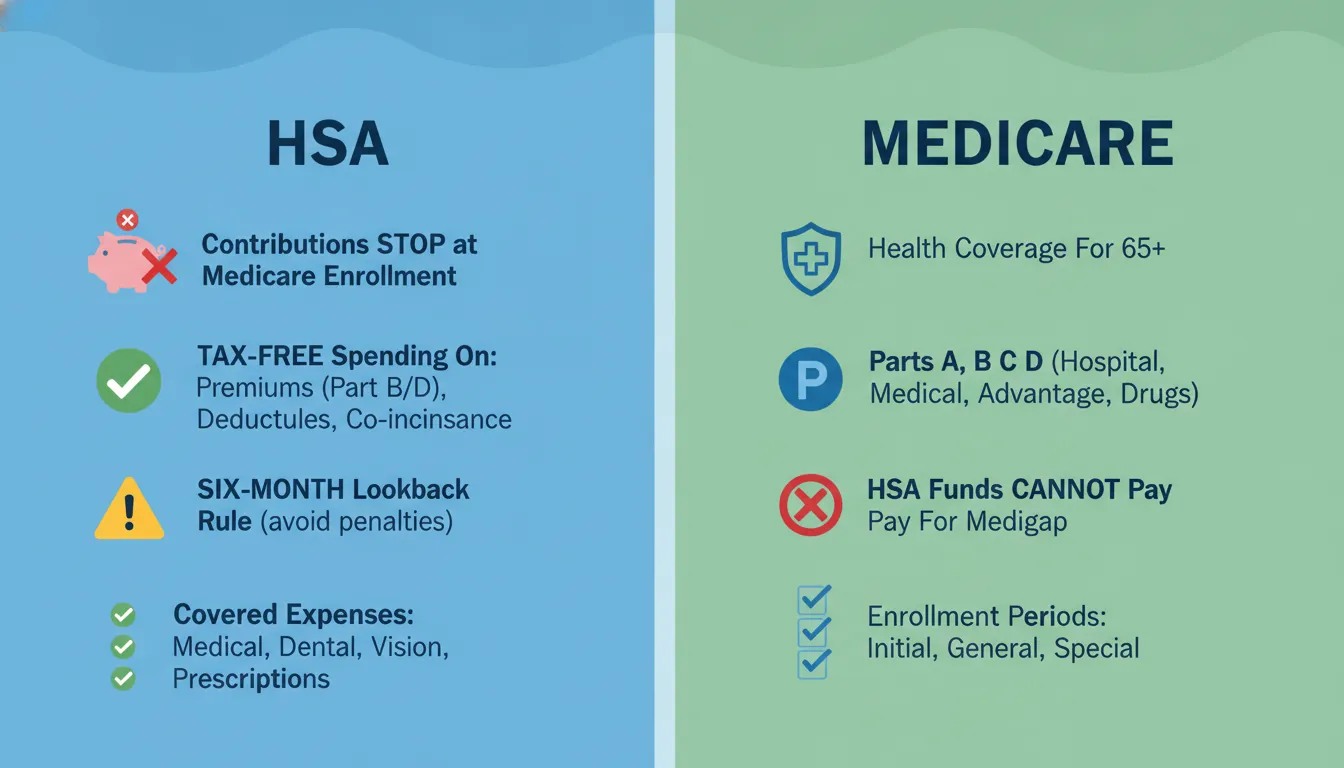
When you enroll in any part of Medicare, you must stop making deposits to your Health Savings Account (HSA). Your limit drops to zero starting the first day of the month your coverage begins. While you cannot add new funds, you can still spend your existing HSA balance tax-free on Medicare premiums and other health costs.
The stop-deposit rule
You lose the right to add money to your HSA once you join Medicare Part A or Part B. The law says you cannot have other health coverage and keep a high-deductible health plan at the same time. According to IRS Publication 969, your right to add money ends on the first day of the month you enroll. If you keep adding money after this date, you will face tax issues.
This rule applies even if you only sign up for Part A. Most people get Part A for free, so they enroll as soon as they turn 65. If you do this, your HSA deposits must end right away. You can still keep the account and let the money grow. The funds you already saved stay yours, and you can spend them on medical costs.
The six-month lookback trap
Many people face a surprise when they sign up for Medicare after they turn 65. Medicare Part A can backdate your coverage by up to six months. This means you might be in Medicare months before you even apply. If you put money into your HSA during that period, those funds count as extra deposits. This trap is common for those who work past 65 and delay their enrollment.
To stay safe, you should stop your HSA deposits at least six months before you sign up for Medicare. If you fail to do this, the IRS charges a 6% tax on the extra money. This tax applies every year the extra funds stay in your account. Planning ahead helps you avoid these fees while using HSA chronic care management tools to pay for your health needs.
If you find that you added too much money, you can fix the error. You must withdraw the extra funds and any earnings before you file your taxes. This helps you avoid the yearly tax penalty.
Pro-rata limits for 2026
If you join Medicare mid-year, you can only add money for the months you were eligible. For 2026, the full HSA limit is $4,300 for people with self-only plans and $8,550 for families. Those age 55 and older can add a $1,000 catch-up amount. You must divide these yearly totals by 12 to find your monthly limit. This is the pro-rata rule.
You then multiply that monthly amount by the number of months you were not in Medicare. For example, if your coverage starts in July, you can only add money for half of the year. If you go over this limit, you must pay the same 6% tax mentioned above. You should also check your FSA deadline rules if you have both types of accounts.
Can You Use Your Existing HSA to Pay for Medicare Costs?
Once you enroll in Medicare, you can no longer add new money to your Health Savings Account (HSA). However, your existing funds do not disappear. You can still use the money already in your account to pay for a wide range of Medicare costs. For many retirees, this is a smart way to manage health care costs during their later years. You can use HSA funds tax-free for Medicare premiums (Parts B and D), deductibles, and copays, but not for Medigap premiums. This helps bridge gaps in coverage and lowers out-of-pocket spending during retirement.
Using HSA Funds for Medicare Premiums
One of the best ways to use your HSA after age 65 is to pay for your Medicare premiums. Most people do not pay a premium for Medicare Part A, but Part B and Part D do have monthly costs. You can use your tax-free HSA funds to pay for these. In 2026, the standard monthly cost for Medicare Part B is $174.70. You can also use your account to pay for Medicare Advantage (Part C) plan costs. This help can make your fixed income go much further each month.
Medicare Deductibles and Copays
Beyond premiums, your HSA can cover your out-of-pocket medical bills. This includes your deductibles, copays, and coinsurance for all parts of Medicare. If you have a hospital stay under Part A or see a specialist under Part B, your HSA can pay those shares of the cost. Since Medicare does not cover everything, having an HSA balance acts as a safety net. It helps you avoid large, unexpected bills. You can find more tips in our HSA chronic care management guide.
What You Cannot Pay for With an HSA
There is one big rule to keep in mind. You cannot use your HSA funds to pay for Medicare Supplement insurance, also known as Medigap. If you use your HSA for Medigap premiums, you may have to pay taxes on that money. Knowing which costs are covered helps you plan your spending and save more over time.
| Medicare Cost | HSA Eligible? | Notes |
|---|---|---|
| Part B Premiums | Yes | Standard cost is $174.70 in 2026. |
| Part D Premiums | Yes | Covers drug plan monthly costs. |
| Medicare Advantage (Part C) | Yes | Covers Part C plan premiums. |
| Deductibles | Yes | Applies to Parts A, B, and D. |
| Medigap Premiums | No | Supplemental plan costs are not eligible. |
What About Flexible Spending Accounts (FSAs) and Medicare?
You may know that Medicare stops you from adding money to an HSA. But you might wonder how it affects your Flexible Spending Account (FSA). The rules for an FSA are often simpler to follow than those for an HSA. Unlike an HSA, your existing FSA funds often stay ready to use even after you sign up for Medicare. This makes the FSA a helpful tool for handling your health costs during this change.
How You Can Use Your FSA Funds
You can use your Health Care FSA to pay for many costs that you pay out of pocket. This includes Medicare premiums, deductibles, and copays. Using pre-tax money for these costs can save you a lot of cash each year. The IRS says that these funds remain usable for health care as you move to your new plan. This is a big win for people who worry about losing their account balance.
It is vital to check your exact plan setup. Most employers allow you to keep spending your balance on dental or vision care. If you have an FSA for health items, you can also buy supplies like test strips or monitors. This choice helps you fill the gap between your work plan and Medicare. Tools like daylii can also help you find items that your plan covers.
Carryover Limits and Deadlines
Most FSAs have a use-it-or-lose-it rule. This means you must spend your money by the end of the plan year. However, many plans now offer a carryover option. For the 2026 plan year, you can carry over up to $680 in unused funds. This rule helps you avoid the risk of losing your cash if you do not spend it all in time.
Every year, people lose about $3 billion to $4 billion in unused FSA funds. This happens because they do not track their deadlines or spending limits. Using the FSA deadline rules can help you keep your money. Knowing how much you can roll over lets you plan your spending better as you age. daylii helps you track these limits so you can use every dollar you saved.
Limited Purpose FSAs and Plan Rules
Some people choose to have a Limited Purpose FSA. This type of account only covers dental and vision costs. You can often keep this account even if you also have an HSA set up through an employer. Since Medicare does not always cover basic dental or vision care, these funds are very useful. They give you a way to pay for eye exams or tooth cleanings without using your main income.
Check with your HR office about your exact plan. Some companies may let you keep adding money to an FSA even after you start Medicare. While you must stop adding money to an HSA, you might still be able to use an FSA to lower your taxes. This path helps you get the most out of your benefits while you adjust to your new health costs.
What Medicare Expenses Are Still FSA and HSA Eligible?
You can use your HSA and FSA funds to pay for many health costs that Medicare does not cover. This includes dental care, vision exams, hearing aids, and prescription drugs. Your tax-free funds also help pay for Medicare costs like premiums and copays. This makes them a great tool for saving on care as you age.
Covering Medicare Gaps
Medicare is a helpful program, but it does not pay for everything. Original Medicare often leaves you with out-of-pocket costs for routine care. For example, it usually does not cover basic dental or eye care. You can find a full list of these gaps in IRS Publication 502. This document lists all health costs you can pay for with tax-free funds. Using your HSA or FSA to bridge these gaps helps you keep more money in your pocket.
Your funds are not just for doctor visits. They also cover common items you might buy at a store. This includes things like sunblock, bandages, and some over-the-counter drugs. If you use a Medicare Advantage plan, you might still have a high deductible. Your HSA or FSA balance can pay for these costs with tax-free money.
Dental and Vision Care
Most people find that their dental and vision needs grow as they get older. Since Medicare does not cover most of these costs, your HSA and FSA funds are very useful. You can use your balance to pay for dental cleanings, fillings, and crowns.
These funds also cover oral surgery if you need it. If you manage a long-term health issue, check out daylii’s HSA Chronic Care Management Guide to see how to plan your spending.
For your eyes, these funds cover the cost of vision exams, new eyeglasses, and contact lenses. You can even pay for things like prescription sunglasses. If you use contact lenses, your funds will pay for the cleaning solution too. This makes it much easier to keep your vision sharp without a large bill.
Hearing Aids and Prescriptions
Hearing loss is common for seniors, but hearing aids are often expensive. Luckily, you can use your HSA or FSA funds to buy hearing aids and batteries. These funds also help with the cost of prescription drugs. While Medicare Part D helps pay for medicine, you may still have copays. You can also use your funds for FSA eligible diabetes supplies like test strips and monitors.
Here are some other common items you can buy with your HSA or FSA funds:
- Physical therapy and chiropractic care
- Insulin and related supplies
- Walkers, canes, and wheelchairs
- Oxygen and breathing equipment
- Home health care services
By using these funds, you can lower your total healthcare costs. Since the money goes into your account before taxes, you save about 30 percent. This is a smart way to manage your health budget while you are on Medicare. It helps you get the care you need without spending too much cash.
What If You Work Past 65? Special Rules and Strategies
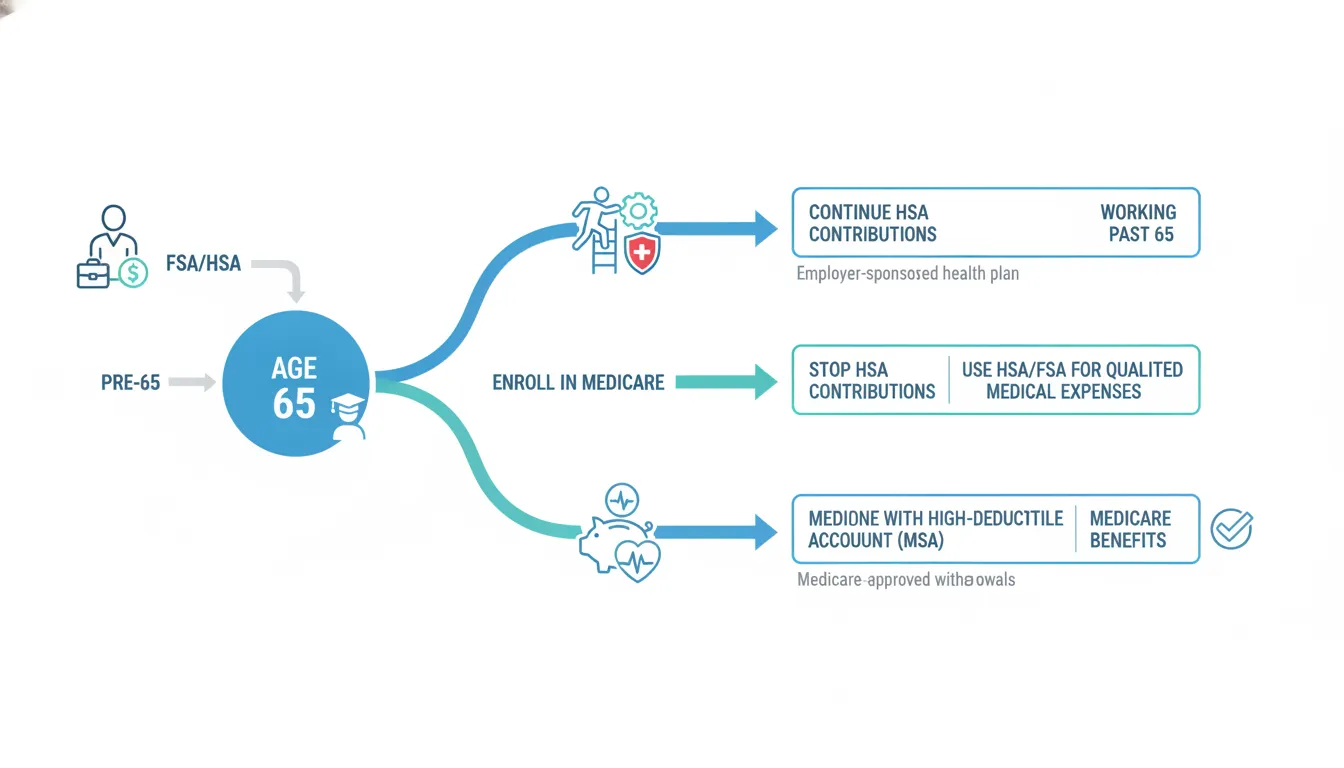
Working past age 65 changes how the rules apply to your health accounts. If you keep your job and have employer coverage, you may be able to delay Medicare and keep adding to your HSA. This gives you extra years of tax-free savings for health costs. But the rules depend on your employer size, your plan type, and your timing. A smart strategy helps you get the most from both your work plan and your future Medicare benefits.
Check your employer size first
The key factor is how many people your employer has. Companies with 20 or more workers must offer you the same group health plan as younger staff. If your employer has 20 or more employees, you can delay Part B without a late penalty. This also means you can keep adding to your HSA since you are not enrolled in Medicare. You should confirm your employer size with HR before making any decisions.
If your company has fewer than 20 workers, the rules shift. Medicare becomes your primary coverage, and you must enroll to avoid gaps. In this case, your HSA deposits must stop. You can still use the balance you already saved, but your saving years end once you enroll. Check with your benefits team to learn your exact situation.
Talk to your benefits administrator
Once you know your employer size, the next step is a conversation with your HR or benefits team. Ask them two key questions: Does your plan count as a high-deductible health plan? And does signing up for Medicare change your coverage? If you have an HDHP and are not on Medicare, you can keep adding to your HSA. Many people miss this chance because they assume they must take Medicare at 65.
You should also ask about your spouse’s coverage. If your spouse is not yet 65 and has their own HDHP, your Medicare status does not block them. They can keep adding to their own HSA each year. This is true even if you share a family insurance plan. Each person’s eligibility stands on its own under IRS rules.
Watch the six-month window
The biggest trap for people working past 65 is the retroactive Part A rule. When you do enroll in Medicare, your Part A coverage can go back as much as six months. This means you must stop HSA deposits at least six months before you plan to enroll. If you keep adding during that lookback window, the IRS will treat those funds as excess contributions subject to a 6% excise tax.
A good strategy is to set a calendar reminder for your planned retirement month. Count back six months and stop HSA deposits on that date. This gives you a clean window and avoids the tax penalty. You can find more tips in our HSA chronic care management guide to help you plan your health spending through retirement.
How daylii Helps You Navigate FSA, HSA, and Medicare
Managing health accounts alongside Medicare rules is complex. Every month, people face card declines, missed deadlines, and lost savings simply because they cannot find clear answers. daylii was built to solve these problems. The platform gives you real-time tools to check eligibility, track your balance, and spend your funds with confidence. Instead of guessing what your plan covers, you get clear answers before you reach the register.
Ready to take control of your health spending? Get started with daylii and know exactly what your FSA and HSA cover before you pay.
Know what your plan covers before you buy
One of the biggest frustrations for FSA and HSA users is not knowing if an item is covered. Studies show that 54% of cardholders have had their cards declined at checkout on items they thought were eligible. daylii fixes this with real-time SKU-level eligibility checks. Before you buy, you can verify that any product qualifies under your plan and IRS rules. This ends the guesswork and the embarrassment of a decline at the pharmacy counter.
Spend your balance easily through familiar stores
Having a health account does you no good if you cannot use it where you shop. daylii connects with major retailers you already trust, including Instacart, Amazon, CVS, and Walmart. You can shop for eligible items the same way you always do. The platform checks each item and tells you which ones your FSA or HSA covers. This makes it simple to spend down your balance on things you actually need.
Track your funds and avoid losing them
Every year, between $3 billion and $4 billion of FSA funds go unused. People simply lose track of their deadlines. daylii’s DayliiPulse dashboard helps you see your remaining balance, your plan deadlines, and items you might need. You get gentle nudges before your funds expire. This is especially helpful when you are also tracking Medicare enrollment dates. For more on managing deadlines, read our guide on FSA deadline rules.
Automated reimbursement without the paperwork
Submitting claims for reimbursement is one of the top reasons people avoid using their accounts. dayliiReimburse automates the whole process. You just take a picture of your receipt, and the platform reads the details, checks eligibility, and files the claim for you. The money lands in your bank account without forms or phone calls. This turns a chore that takes days into something that takes seconds and happens in the background.
Frequently Asked Questions
Can my spouse keep putting money into an HSA if I join Medicare?
Yes. Your Medicare status does not change the rules for your spouse. If they have their own high-deductible health plan and are not on Medicare, they can keep putting money into their own account. This is true even if you share a family plan. They just need to follow the IRS rules for their own HSA. It is a smart way to save for health costs in the future.
What is the penalty for making HSA payments after joining Medicare?
If you put money into your HSA after your Medicare start date, the IRS sees it as an extra amount. You will likely pay a 6 percent tax on those funds every year until you fix the mistake. You may also owe income tax on that money. It is best to stop all payments to your HSA before you sign up for Medicare to avoid these extra costs and tax bills.
Can I use my HSA to pay for Medicare Part B premiums?
Yes. You can use your HSA funds to pay for Medicare Part B, Part D, and Medicare Advantage premiums. These payments are tax-free if you use the money for yourself or your spouse. However, you cannot use HSA funds to pay for Medigap plans without paying taxes. Check your balance often to make sure you have enough to cover these monthly health fees as you age.
Do I need to stop my HSA payments six months before I start Medicare?
You may need to stop early because Medicare Part A coverage can start on a past date. This rule applies if you sign up for Medicare after you turn 65. Your coverage can go back as far as six months. Any money you put in during those months could lead to a tax bill. Most people stop their HSA payments half a year before they plan to join Medicare to stay safe.
What happens to my unused FSA funds when I switch to Medicare?
Most FSA funds do not roll over from year to year. If you have money left when you join Medicare, you should try to spend it on health needs. You can use your FSA for many costs like new glasses or dental work. For more help, you can read our guide on FSA deadline rules to see how to use your balance before it expires.
Ready to master your health benefits with Medicare?
Waiting to plan for Medicare can lead to high tax bills and missed savings on your care, which often costs you a lot of money. Every month you delay is a time when you might lose out on your health funds or face big tax penalties. You should set up a clear plan today to avoid these costs and keep more of your hard-earned money in your own pocket.
Ready to request early access? Sign up for daylii to start managing your FSA and HSA benefits with confidence and take control of your health spending. Our tools help you track every dollar and avoid the stress of complex rules. Set up your strategy today to make sure you never miss a chance to save on your care.