
Most parents spend over eighty dollars a month on standard baby diapers without any financial relief. While tax-free health accounts can help save money on medical care, basic baby supplies rarely qualify.
Asking ‘are diapers FSA eligible’ leads to a two-part answer under federal tax rules. According to the guidelines in IRS Publication 502, ordinary diapers for healthy infants do not qualify because the government views them as general welfare items. However, diapers and adult briefs used to treat a diagnosed medical condition, like severe illness or urinary incontinence, qualify as medical supplies. To get these costs reimbursed, you must have a doctor write a Letter of Medical Necessity. Our team at daylii makes checking these confusing guidelines simple so you never miss out on your tax savings. We help you scan your receipts, track your health spending, and submit claims without any of the usual stress or paperwork.
To help you navigate these tricky guidelines, we broke down everything you need to know. To understand the exact limits of your coverage, reading Are Diapers FSA Eligible? The Short Answer is the best place to begin. The path starts with
Are Diapers FSA Eligible? The Short Answer
So, are diapers fsa eligible? The short answer is mostly no. Under IRS rules, basic baby diapers are not eligible because they fall under general welfare. But diapers and incontinence briefs used to treat a diagnosed illness are eligible for reimbursement as medical supplies. You can find these on our complete A-Z list of eligible items.
Claim your FSA and HSA funds with daylii today.
IRS general welfare rules
The IRS makes a clear split between general health and medical care. In IRS Publication 502, the rules list diapers as a general welfare expense. This means you cannot buy basic baby diapers with your tax-free funds. Daily items used for basic infant care do not count as treatments for a disease.
This rule can feel hard for new parents. Benefit systems are often hard to use, and keeping track of receipts makes it worse. This is why daylii helps you check a curated list of eligible products with ease. By stopping slow checks, we help you get the most out of your health accounts.
The medical necessity exception
While normal baby diapers do not qualify, the rule changes when a doctor diagnoses a health issue. If a child or adult needs diapers to treat a specific illness, those supplies can become eligible. For example, a child with a severe physical issue may need special care. In these cases, the items are no longer seen as basic care.
To get reimbursement, you must prove the diagnosis. Your doctor will need to show that the diapers are primary tools to treat the illness. This proof is often called a Letter of Medical Necessity. With the right forms, you can submit the claim to your plan manager for approval.
For older kids, the rules are also clear. If a child needs diapers past the age of three because of a health issue, the cost can be covered. This often applies to kids with learning delays or physical issues. Parents must show the need relates to the health issue and not just routine child care.
Adult incontinence supplies
Adult briefs and diapers follow the same rules but have a clearer path to coverage. Many adults use these supplies to manage chronic health issues. Because these items are made to treat a physical issue, they are often seen as medical care.
If you or a loved one needs these supplies, it is wise to keep all receipts. Checking your plan guide before buying can prevent denied claims. Knowing these details helps you plan your health spending without any surprise costs.
Regular Baby Diapers vs. Incontinence Supplies
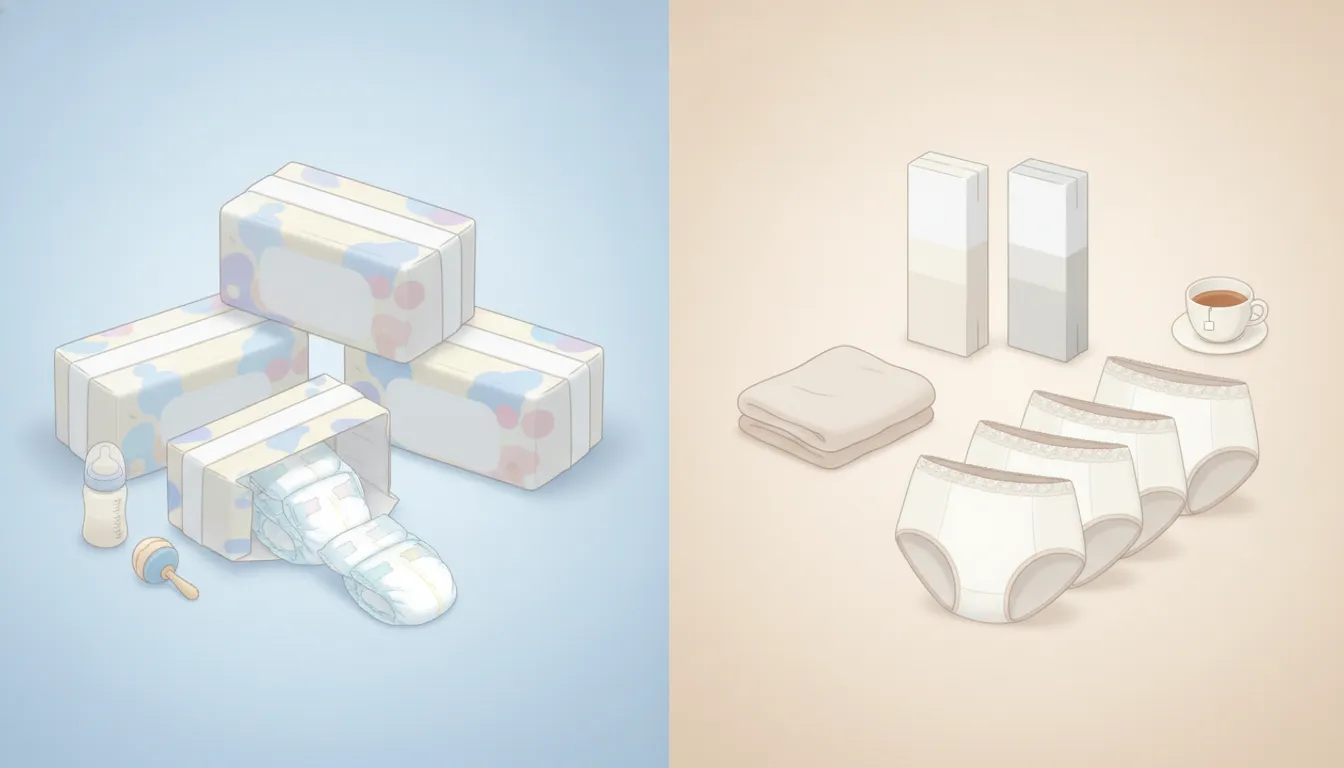
We must understand how the IRS views daily hygiene compared to medical care. Many people assume all absorbent products are covered by pre-tax funds, but the IRS makes a clear split based on medical need. Under IRS Publication 502, common items for general welfare do not qualify. This means normal everyday care is not eligible for pre-tax reimbursement, even if it keeps your family clean.
Key differences in purpose
Regular baby diapers serve a simple and natural purpose to keep infants clean during normal growth. Because baby care is part of general welfare, the IRS does not let you buy these items with pre-tax dollars. You cannot use your FSA card to buy baby diapers at the store. To find out what else you can buy, check our complete A-Z list of eligible items for your family.
The role of medical diagnosis
Medical incontinence supplies are different because they help manage a diagnosed health issue like loss of bladder control. For adults or older children, these supplies are medical needs rather than daily care items. Because they treat a specific illness, the IRS allows pre-tax funds to cover them. But you must have a doctor’s diagnosis to prove the medical need before you shop.
Many parents ask why they cannot buy baby diapers with pre-tax funds. Infants need diapers as a standard part of growing up, making them general welfare items. In contrast, adult briefs treat diagnosed issues like urinary incontinence. This direct medical link is what makes these supplies eligible for reimbursement through your health plan.
| Supply Type | Intended Use | Is It FSA-Eligible | Medical Necessity | Documentation Required |
|---|---|---|---|---|
| Regular Baby Diapers | Routine care for infants. | No. | No. | None, not eligible. |
| Specialized Pediatric Diapers | For older children with diagnosed conditions. | Yes. | Yes, treats a defect or illness. | LOMN from a doctor. |
| Adult Incontinence Briefs | Managing adult bladder or bowel loss. | Yes. | Yes, treats a medical condition. | LOMN or doctor prescription. |
| Disposable Underpads | Protecting surfaces from medical leaks. | Yes. | Yes, treats incontinence. | LOMN from a provider. |
Getting your claims approved
To get your claims approved by your benefits manager, you must show proof. This proof is often a Letter of Medical Necessity, also called an LOMN. A doctor must sign this letter to show that the diapers are needed to treat an illness. Without this paper, your plan manager will likely reject your claim and you will lose out on tax savings.
A proper Letter of Medical Necessity must include specific details. It should list your diagnosis, the treatment plan, and the expected time of use. The IRS requires this document to prove that your purchase directly treats a medical condition. Having this form ready will prevent delays when you submit your receipts to your plan provider.
Checking these rules can feel like dealing with a broken system. That is why daylii makes keeping your health savings simple and clear. Our tools help you check which items qualify under IRS rules in real time. You can also browse our curated list of eligible products.
Check any item’s FSA or HSA eligibility in seconds with daylii.
When Are Diapers Considered a Medical Supply?
Under tax rules, normal items can turn into medical supplies when you use them to treat a specific medical condition. Daily hygiene goods do not count, but the IRS allows tax-free funds for items that treat a diagnosed illness or defect. Knowing this path helps you make sure your buys meet the strict rules. It is also a great way to avoid losing your hard-earned funds at the end of the year.
The path of medical need
Plain baby diapers are not eligible for tax-free funds because they serve daily hygiene. But the IRS states that items used to ease or prevent a body defect or illness are eligible as medical care. To find other approved health goods, check our complete A-Z list of eligible items. This list makes it easy to spot eligible products for your whole family.
For diapers or briefs to count as medical supplies, a doctor must document the medical need. The doctor must show that the buy is for a specific health issue rather than daily baby care. This formal proof forms the base of your tax claim and protects you during plan audits. Without a provider’s written statement, your plan manager will deny the claim.

Adult incontinence and diagnostic data
Bladder issues are one of the most common reasons diapers are seen as a medical supply. Research shows that more than 60% of adult US women have urinary incontinence, which often goes untreated. For these people, absorbent briefs are vital goods to manage a real medical issue. Using pre-tax funds to buy these goods can save families hundreds of dollars each year.
If you want to know under what terms are diapers fsa eligible, the key is having a documented health issue. When you buy these supplies to manage a diagnosed condition, they are treated as medical care. With a doctor’s note, these buys count as eligible medical costs. This simple step shifts the item from an everyday expense to a tax-free medical supply.
The letter of medical necessity
To get a refund from your plan manager, you may need a Letter of Medical Necessity (LOMN). A doctor must write this letter to confirm that you need the diapers to treat a specific illness. This paper must state the direct link between your diagnosed condition and the briefs. The note must also explain how often you need these supplies.
Getting this letter is a simple step, but you must keep clear copies. Our curated list of eligible products shows many items that may need an LOMN. The daylii platform helps you track these files and check your FSA status in real time to avoid claim denials. By using our smart tools, you can easily match your receipts with the right doctor notes.
How to Check If a Diaper Is FSA Eligible
Checking if you can use tax-free funds for diapers can be slow and hard. The rules for these accounts are often dry and full of complex tax terms. Many parents feel lost when trying to read them by themselves. But knowing the steps can help you save money on health items.
Steps to verify eligibility
To buy diapers with your tax-free account, you must prove a medical need first. You cannot just buy them for standard baby care or general health. You must follow a clear path to get your funds back from your plan.
- Check the IRS medical care test. Under IRS guidelines, the diapers must treat, cure, or prevent a specific defect or illness. This is because the IRS decides eligibility based on medical necessity rather than general health.
- Get a doctor’s diagnosis. A licensed doctor must diagnose and write down the specific condition that makes these absorbent briefs or diapers a medical necessity.
- Get a Letter of Medical Necessity. If your plan administrator asks for proof, you will need your doctor to sign a Letter of Medical Necessity (LOMN).
- Confirm with the card issuer. Submit your receipts and provider documentation to your plan administrator to secure reimbursement.
- Save your purchase receipts. Keep every detailed receipt that shows the item description, date, and amount paid. This gives clear proof if your benefits team audits your spending.
How daylii simplifies your FSA checks
Checking these tax rules by hand is hard. The old way of buying healthcare goods is slow and forces families to guess. If you buy the wrong brand or size, you might lose your pre-tax money. This manual check wastes time and creates needless stress.
But daylii removes this stress with a real-time check. The daylii system lets you check if an item is covered in seconds. You do not have to search through thick tax books or worry about plan rules. The platform matches your item against IRS laws on the spot so you can shop with ease.
Using daylii helps you track your health spend and find covered items fast. If you want to view other covered healthcare goods, you can check our complete A-Z list of eligible items. This helps you use your pre-tax funds with confidence. By choosing daylii, you can stop guessing, avoid plan audits, and keep your hard-earned cash.
Other FSA-Eligible Baby Items to Know
While standard baby diapers are not often covered, many other child care items are. You can use your tax-free funds to buy many health supplies for your little one. Knowing what is covered helps you save money on daily health costs.
Zinc oxide ointments for diaper rash
Diaper rash is a common issue for many babies. If your child has sore skin, you can buy healing creams with your tax-free dollars. The FDA rules these creams as over-the-counter items, meaning zinc oxide ointments are fully covered. This means you do not need a doctor’s note to buy them at the store.
These thick creams form a safe shield on a baby’s soft skin to protect against wetness. Many parents use these ointments every single day to stop skin harm. Since they are health items, they get easy payback. Keeping some in your diaper bag is a smart way to be ready for rash flares.
Prenatal and pregnancy items
Your tax-free funds are also helpful before your baby even arrives. You can use your account to buy many prenatal items, such as vitamins and heart rate monitors. To find the best choices, you can check out this curated list of eligible products. It shows what you need to support a healthy start.
Paying for these goods does not have to be a chore, even if tax rules seem hard. In the past, you had to save every paper receipt and mail it in. Now, daylii makes it simple to track your health spend. We focus on fixing this broken system so you can focus on your baby.
Pumping and postpartum tools
Once your baby is born, your health needs will change. Breast pumps and milk storage bags are covered by your account, and you can also buy nursing pads. To check all your options, read our complete A-Z list of eligible items. It helps you buy baby gear without any stress.
Postpartum care is vital for your health. Items like perineal bottles and hot-or-cold therapy packs qualify for easy payment. Using your FSA debit card to pay at checkout cuts down on the forms you must fill out later. With daylii, you get a smart and simple way to manage these daily costs.
Ready to verify your diapers? Check their FSA or HSA eligibility with daylii today.
Frequently Asked Questions
Why are everyday baby diapers not FSA eligible?
Under IRS rules, ordinary baby diapers are classed as general welfare items instead of medical care. The IRS does not allow tax-free funds for daily hygiene products because they do not treat or prevent a specific illness. Even if an infant has sensitive skin, standard diapers do not qualify.
Can you use FSA funds to buy adult diapers?
Yes, adult diapers and absorbent briefs are eligible for tax-free spending. According to FSA Store, incontinence supplies are covered when used to manage a diagnosed medical condition. These products are treated as medical care supplies rather than daily hygiene goods, which makes getting your cash back much easier.
Are diaper rash ointments FSA eligible?
Yes, diaper rash creams and ointments are over-the-counter drugs that qualify for tax-free funds. According to clinical facts on DailyMed, products containing zinc oxide are active medical treatments. You can buy these at retail stores with your FSA or HSA card without needing a prescription from your doctor.
What documentation do you need to buy diapers with an FSA?
If you need diapers to treat a medical condition, you must get a Letter of Medical Necessity from your doctor. As noted by FSA Store, this letter must outline your diagnosis and show that the diapers are a vital part of your treatment. You should keep this paper along with your store receipts to support your claim.
Ready to check the FSA eligibility of your everyday household items?
Over seven billion pre-tax healthcare dollars expire unused every year because people do not know what everyday items they can buy with their pre-tax funds. Every day you wait to check your items is one more day you risk losing your hard-earned cash to complex pre-tax benefit expiration rules. You can easily use our complete A-Z list of eligible items to stop guessing and start saving on your daily home needs right now.